

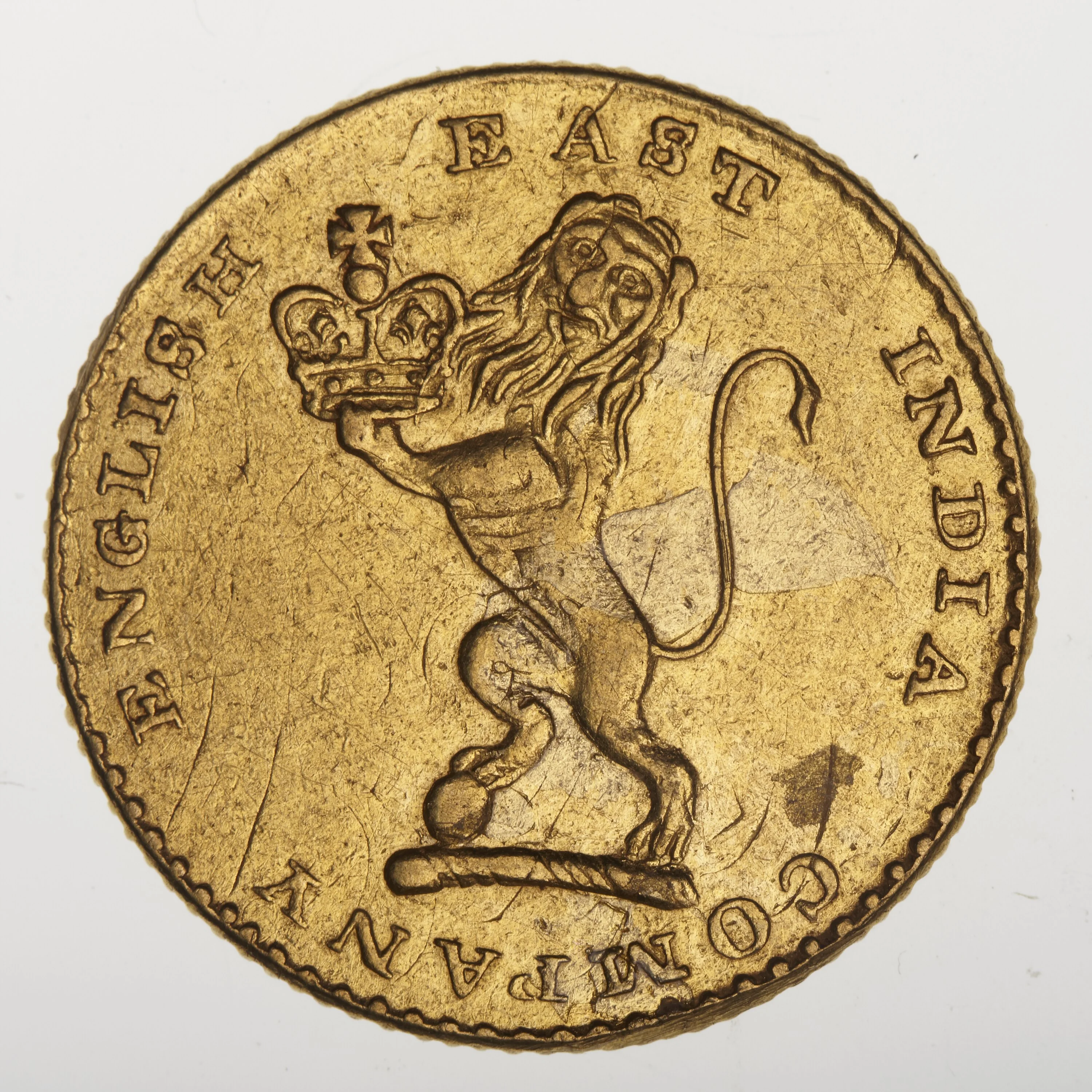
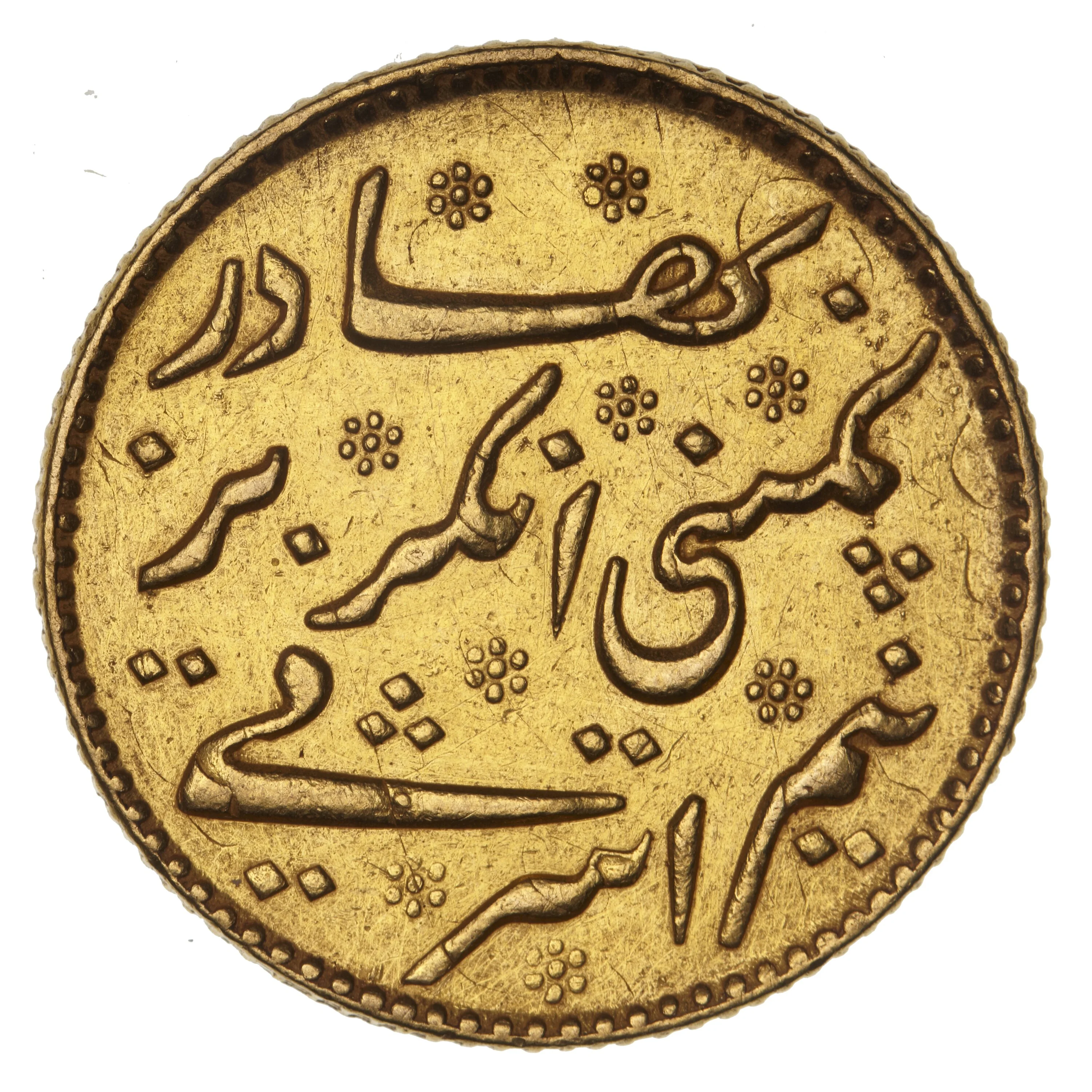
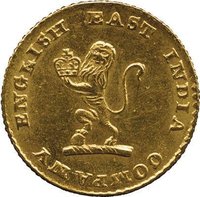
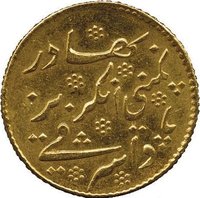
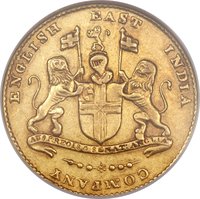
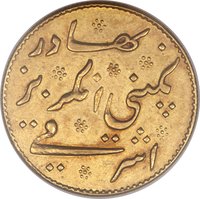
½ mohur – Madras Presidency
Add to wishlist
India
Context
Year: 1819
Country: India
Issuer: Madras Presidency
Currency:
(1691—1835)
Demonetized: Yes
Total mintage: 212,690
Material
References
KM: #
Numista: #25916
Value
Bullion value: $899.29
Mintings
| Year | Mint Mark | Mintage | Quality | Collection |
|---|---|---|---|---|
| 1819 | — | 212,690 |
Historical background
In 1819, the currency situation within the Madras Presidency was characterized by a complex and often chaotic multiplicity of systems, a legacy of pre-colonial and early Company rule. The primary unit was the silver Star Pagoda, but the wider economy operated on a dual standard of both silver and gold. Alongside this, a plethora of gold pagodas of varying weight and purity, silver rupees (including the Madras and Arcot rupees), and copper coins all circulated simultaneously. This proliferation created significant challenges for trade and administration, as exchange rates between these coins were not fixed and fluctuated based on metal content and local demand, leading to confusion and potential for fraud.
The East India Company administration, seeking greater fiscal control and uniformity, was actively attempting to assert a standardized system. Their efforts focused on establishing the Silver Rupee as the principal unit of account and transaction for official purposes, aiming to displace the gold pagoda's traditional dominance. However, this transition was incomplete and met with public resistance, as the gold-based system was deeply embedded in local custom, revenue collection, and temple economies. Consequently, in 1819, the Presidency existed in a state of monetary transition, with Company regulations clashing with entrenched commercial habits.
This instability was further exacerbated by a chronic shortage of small-denomination copper coins, essential for daily wage payments and minor market transactions. The scarcity led to the widespread use and counterfeiting of copper cash, often of inferior alloy, causing inflation in the bazaar economy and hardship for the poor. Thus, the currency background of 1819 was one of competing standards, administrative reform struggling against custom, and a fractured circulatory system that hindered both economic efficiency and stability.
The East India Company administration, seeking greater fiscal control and uniformity, was actively attempting to assert a standardized system. Their efforts focused on establishing the Silver Rupee as the principal unit of account and transaction for official purposes, aiming to displace the gold pagoda's traditional dominance. However, this transition was incomplete and met with public resistance, as the gold-based system was deeply embedded in local custom, revenue collection, and temple economies. Consequently, in 1819, the Presidency existed in a state of monetary transition, with Company regulations clashing with entrenched commercial habits.
This instability was further exacerbated by a chronic shortage of small-denomination copper coins, essential for daily wage payments and minor market transactions. The scarcity led to the widespread use and counterfeiting of copper cash, often of inferior alloy, causing inflation in the bazaar economy and hardship for the poor. Thus, the currency background of 1819 was one of competing standards, administrative reform struggling against custom, and a fractured circulatory system that hindered both economic efficiency and stability.
✨ Legendary