

½ Pagoda – Madras Presidency
India
Context
Years: 1807–1808
Country: India 
Issuer: Madras Presidency
Currency:
(1639—1817)
Demonetized: Yes
Total mintage: 500,800
Material
References
KM: #Click to copy to clipboard344
Numista: #25912
Value
Bullion value: $60.59
Obverse
Description:
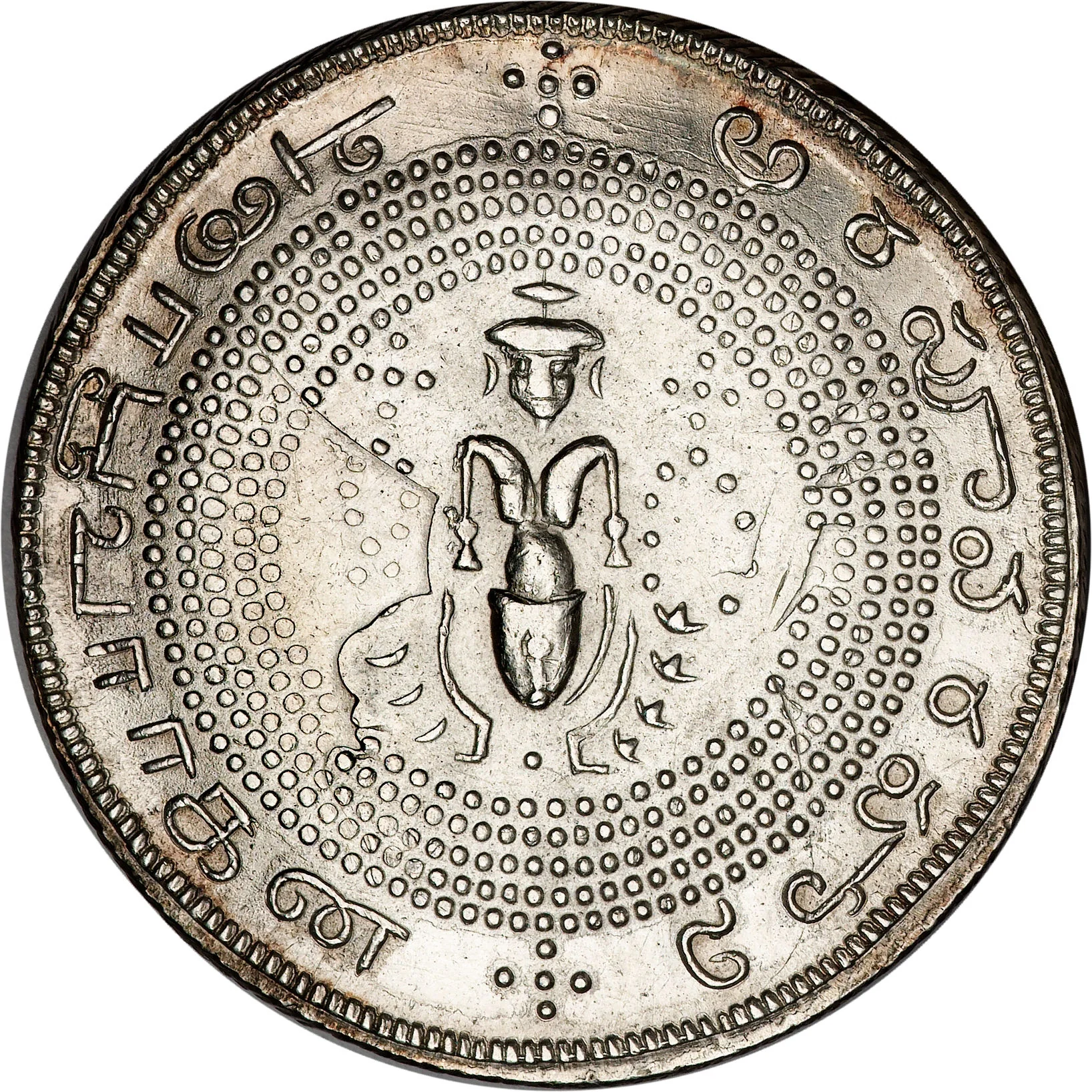
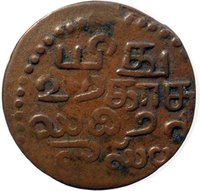
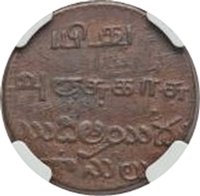
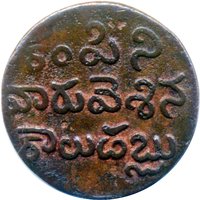
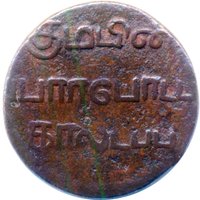
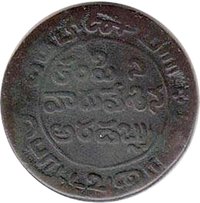
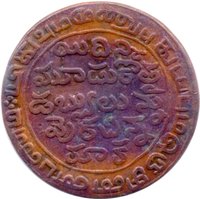
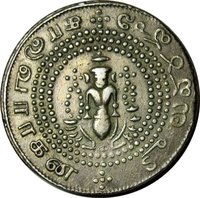
Forked ribbon with Tamil and Telugu legends around Vishnu, who holds a sword. Flanked by symbols and a lotus, all within a beaded double circle. Legends read: "Arai Boo Varagaana" (Tamil) and "Ara Pu Varahani" (Telugu).
Inscription:
அறை பூ வரகண (Tamil)
అర పూ వరాహని (Telugu)
అర పూ వరాహని (Telugu)
Translation:
Struck by Varaha.
Reverse
Description:
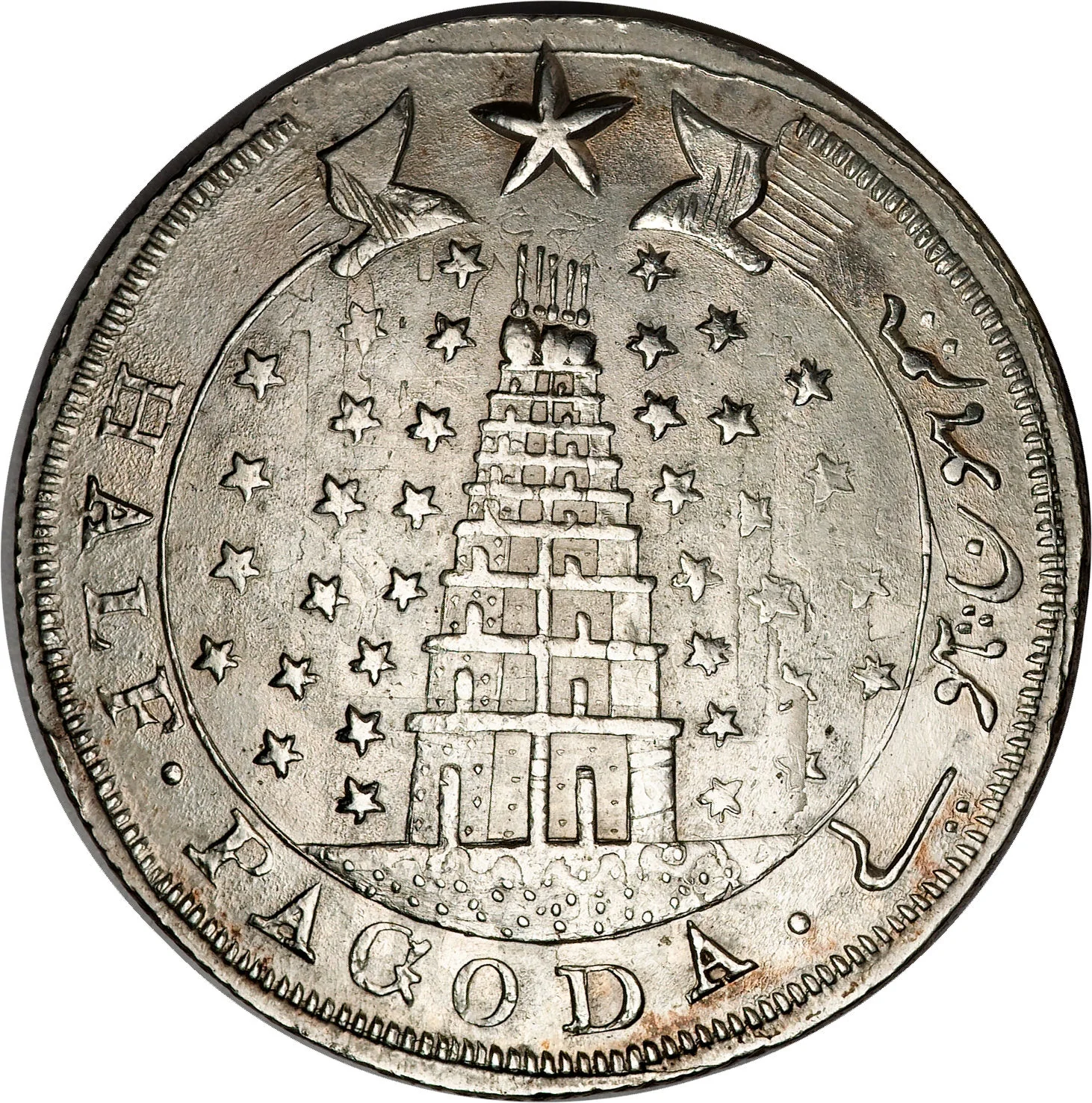
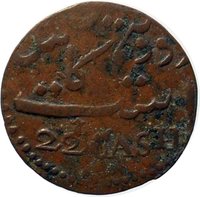
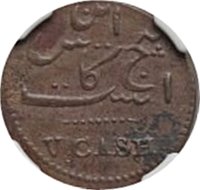
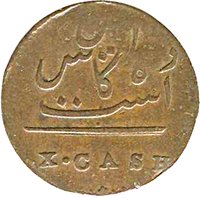
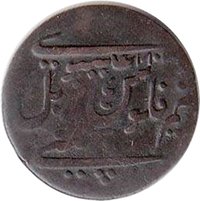
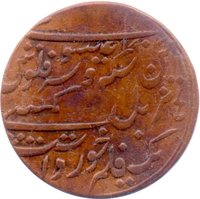
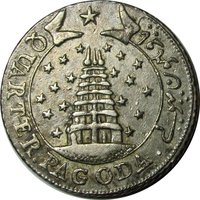
A seven-tiered temple gopuram is encircled by a buckled garter belt bearing a legend in English ("Half Pagoda") and Persian ("Nim hun phuli").
Inscription:
HALF PAGODA
Translation:
HALF PAGODA
Language: English
Edge
Oblique milled, grained right ////
Mintings
| Year | Mint Mark | Mintage | Quality | Collection |
|---|---|---|---|---|
| — | — | 500,800 |
Historical background
In 1807, the currency situation in the Madras Presidency was one of profound complexity and instability, characterised by a chaotic multiplicity of circulating mediums. The official currency was the silver Star Pagoda (valued at 3½ Company Rupees) and the Gold Pagoda, but these coexisted with a bewildering array of other coins: Arcot rupees (both silver and copper), various fanams, and a host of older, debased Mughal and regional issues. This proliferation led to wildly fluctuating exchange rates between districts, crippling commercial predictability and facilitating widespread fraud. The East India Company’s own financial struggles, exacerbated by the cost of the recent Anglo-Mysore and Anglo-Maratha wars, meant it lacked the bullion reserves to impose a uniform standard.
The core of the problem was a severe shortage of specie (precious metal coin), particularly silver. This scarcity was driven by the Presidency's chronic balance of trade deficit with both Britain and China, which drained silver out of the economy. To fill the void, the Company heavily relied on issuing copper coins and, most problematically, paper currency. These Bank of Madras notes, while an innovative attempt to solve the liquidity crisis, suffered from deep public distrust and were not accepted beyond a narrow circle of government transactions and European merchants, further fragmenting the monetary system.
Consequently, the Presidency’s economy in 1807 operated under a significant handicap. Trade and revenue collection were hampered by the need for complex conversions and the risk of receiving debased coin. The government recognised this crisis, and the period marked the beginning of serious, though slow-moving, administrative efforts towards reform. These would culminate decades later, but in 1807, the monetary landscape remained a tangled and inefficient patchwork, reflecting the broader challenges of transitioning from a collection of conquered territories to a coherent colonial administration.
The core of the problem was a severe shortage of specie (precious metal coin), particularly silver. This scarcity was driven by the Presidency's chronic balance of trade deficit with both Britain and China, which drained silver out of the economy. To fill the void, the Company heavily relied on issuing copper coins and, most problematically, paper currency. These Bank of Madras notes, while an innovative attempt to solve the liquidity crisis, suffered from deep public distrust and were not accepted beyond a narrow circle of government transactions and European merchants, further fragmenting the monetary system.
Consequently, the Presidency’s economy in 1807 operated under a significant handicap. Trade and revenue collection were hampered by the need for complex conversions and the risk of receiving debased coin. The government recognised this crisis, and the period marked the beginning of serious, though slow-moving, administrative efforts towards reform. These would culminate decades later, but in 1807, the monetary landscape remained a tangled and inefficient patchwork, reflecting the broader challenges of transitioning from a collection of conquered territories to a coherent colonial administration.
💎 Extremely Rare