

Obverse
Description:
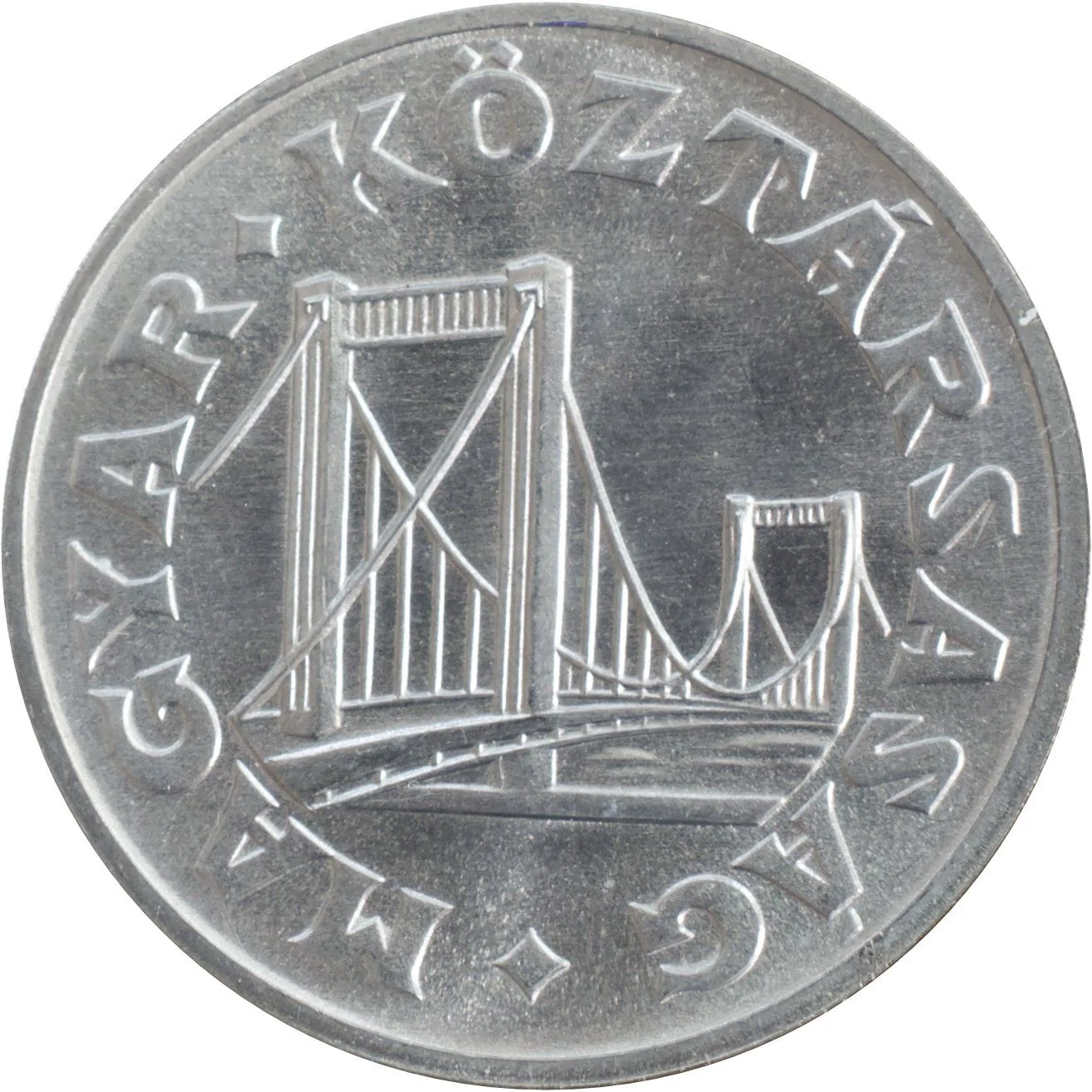
Budapest's Erzsébet Bridge.
Inscription:
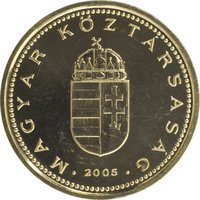
MAGYAR KÖZTÁRSASÁG ·
Translation:
HUNGARIAN REPUBLIC ·
Script: Latin
Language: Hungarian
Designer: Iván István
Reverse
Description:
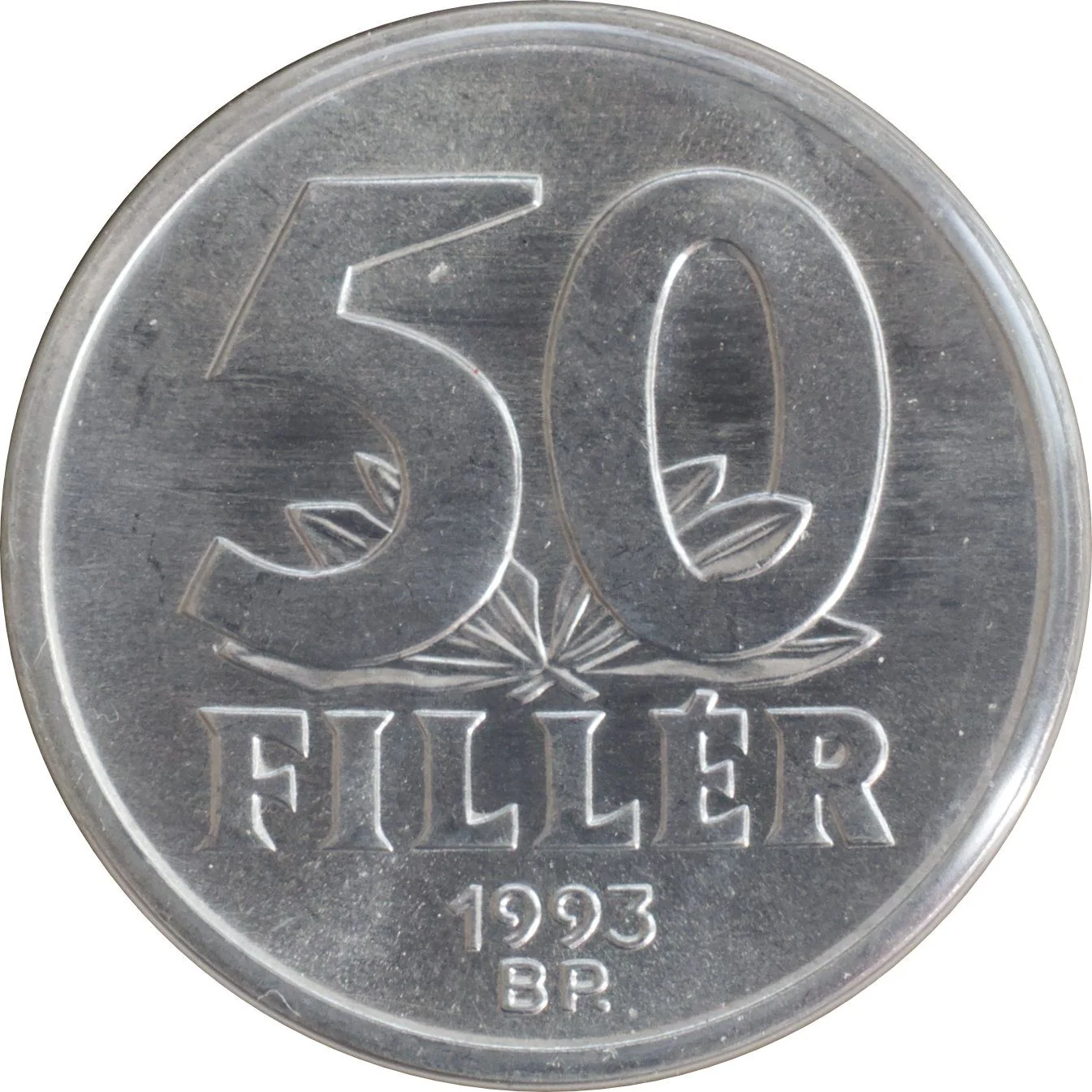
Denomination, legacy
Inscription:
50
FILLÉR
1991
BP.
FILLÉR
1991
BP.
Translation:
50 Fillér
1991
Budapest Mint.
1991
Budapest Mint.
Script: Latin
Language: Hungarian
Designer: Iván István
Edge
Plain
Mints
| Name | Mark |
|---|---|
| Hungarian mint | BP. |
Mintings
Historical background
In 1990, Hungary found itself in a complex and precarious currency situation, a direct legacy of its managed transition from a socialist planned economy. The national currency, the forint (HUF), was not freely convertible and existed under a system of multiple exchange rates—an official rate set by the National Bank of Hungary, a commercial rate for most foreign trade, and a thriving black market rate that reflected the currency's true, weaker value. This fragmentation created significant distortions, discouraged foreign investment, and symbolized the broader economic inefficiencies the new democratic government inherited.
The core challenge was a severe external debt crisis, one of the highest per capita in Eastern Europe, which consumed a massive portion of the country's hard currency export earnings for debt servicing. This debt burden, combined with persistent budget deficits and loose monetary policy, fueled inflationary pressures. While not yet in hyperinflation, prices were rising rapidly, eroding public trust in the forint and leading to widespread "dollarization," where citizens and businesses preferred to hold stable foreign currencies like the US dollar or Deutsche Mark for savings and major transactions.
Recognizing that a stable currency was fundamental for economic transformation, the Hungarian authorities embarked on a gradualist reform path. In 1990, they took initial steps by devaluing the forint and moving toward a unified, devalued exchange rate, while also seeking debt relief from international creditors. These actions laid the groundwork for more decisive measures in the coming years, including the introduction of a pre-announced crawling peg in 1995 to curb inflation and restore confidence. Thus, the currency situation in 1990 was a critical starting point, defined by the urgent need to stabilize the forint as the foundation for Hungary's integration into the global market economy.
The core challenge was a severe external debt crisis, one of the highest per capita in Eastern Europe, which consumed a massive portion of the country's hard currency export earnings for debt servicing. This debt burden, combined with persistent budget deficits and loose monetary policy, fueled inflationary pressures. While not yet in hyperinflation, prices were rising rapidly, eroding public trust in the forint and leading to widespread "dollarization," where citizens and businesses preferred to hold stable foreign currencies like the US dollar or Deutsche Mark for savings and major transactions.
Recognizing that a stable currency was fundamental for economic transformation, the Hungarian authorities embarked on a gradualist reform path. In 1990, they took initial steps by devaluing the forint and moving toward a unified, devalued exchange rate, while also seeking debt relief from international creditors. These actions laid the groundwork for more decisive measures in the coming years, including the introduction of a pre-announced crawling peg in 1995 to curb inflation and restore confidence. Thus, the currency situation in 1990 was a critical starting point, defined by the urgent need to stabilize the forint as the foundation for Hungary's integration into the global market economy.
🌱 Very Common