

Obverse
Description:
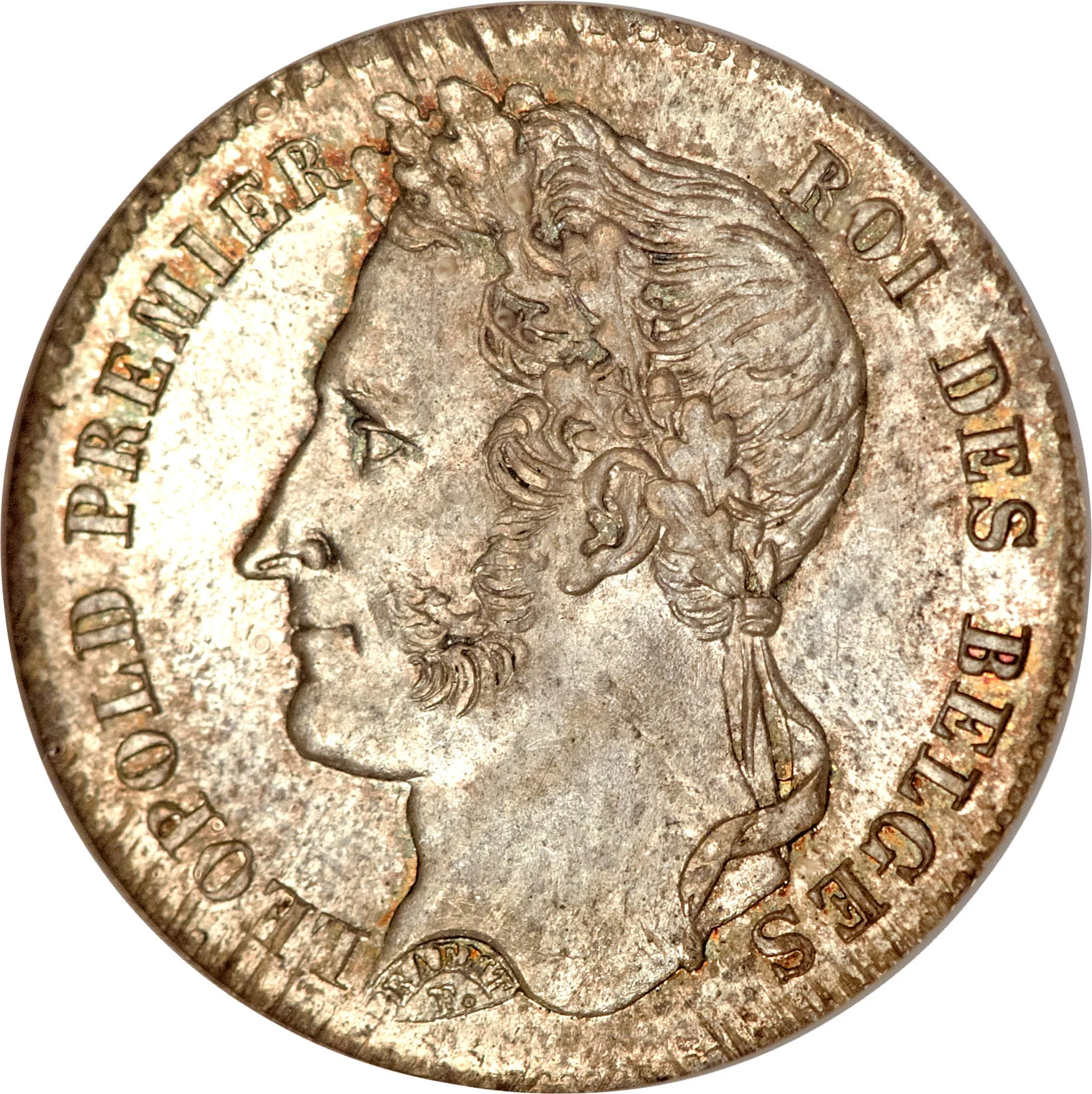
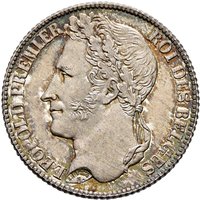
Leopold I of Belgium in left profile, wearing an oak leaf crown, with French legend encircling. Designer below neck.
Inscription:
LEOPOLD PREMIER ROI DES BELGES
BRAEMT F.
BRAEMT F.
Translation:
Leopold the First King of the Belgians
Braemt F.
Braemt F.
Script: Latin
Language: French
Engraver: Joseph-Pierre Braemt
Reverse
Description:
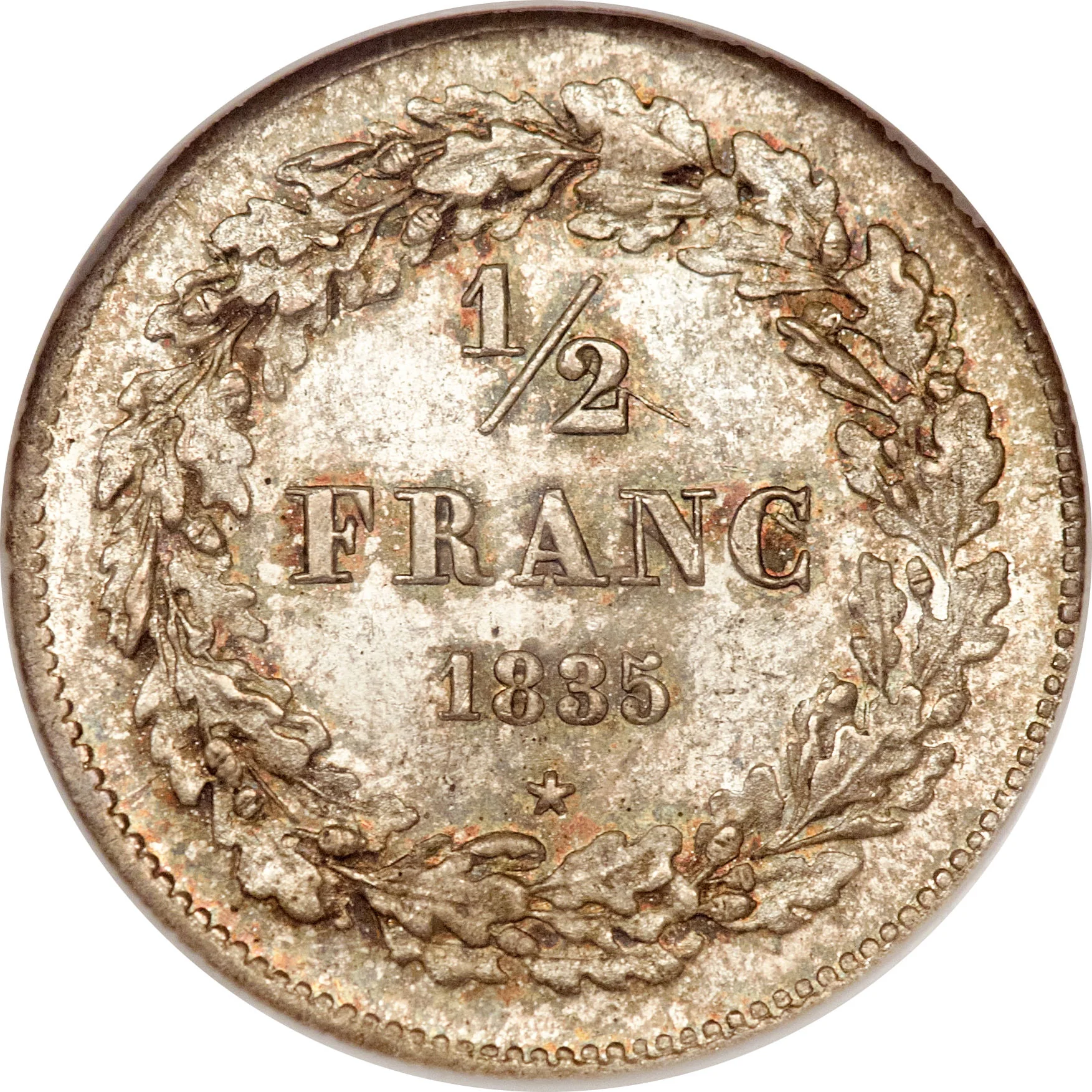
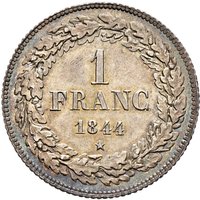
Value, year, and star in oak wreath.
Inscription:
1/2
FRANC
1835
★
FRANC
1835
★
Script: Latin
Engraver: Joseph-Pierre Braemt
Edge
Reeded
Mints
| Name | Mark |
|---|---|
| Royal Mint of Belgium | — |
Mintings
| Year | Mint Mark | Mintage | Quality | Collection |
|---|---|---|---|---|
| 1833 | — | — | ||
| 1834 | — | 1,578,047 | ||
| 1835 | — | 805,042 | ||
| 1838 | — | 550,367 | ||
| 1840 | — | 347,370 | ||
| 1841 | — | — | ||
| 1843 | — | 364,000 | ||
| 1844 | — | 1,584,000 |
Historical background
In 1833, Belgium was navigating the complex monetary aftermath of its recent independence. The new nation, established in 1830 after seceding from the United Kingdom of the Netherlands, inherited a chaotic currency landscape. Multiple coinage systems circulated simultaneously: Dutch guilders, French francs, and a variety of older regional and foreign coins. This lack of a unified national currency created significant confusion for commerce and state finances, hindering economic stability and the assertion of sovereign identity.
The Belgian government, under King Leopold I, had already taken decisive action by passing the Monetary Law of June 5, 1832. This law formally adopted the French franc as the basis for the Belgian monetary system, defining the Belgian franc as equal to the French franc and establishing a bimetallic standard based on fixed ratios of silver and gold. Therefore, by 1833, the legal framework was in place, but the practical work of replacing the heterogeneous coinage in circulation with new, nationally minted currency was a massive ongoing task.
Consequently, the currency situation in 1833 was one of transition and implementation. The Brussels mint was active, producing the new Belgian francs, but older foreign coins remained in widespread use as the new currency slowly permeated the economy. The primary challenges were logistical—physically minting enough coin—and confidence-building, ensuring public and commercial trust in the new system. This period was crucial for laying the monetary foundation for Belgium’s subsequent industrial and economic development.
The Belgian government, under King Leopold I, had already taken decisive action by passing the Monetary Law of June 5, 1832. This law formally adopted the French franc as the basis for the Belgian monetary system, defining the Belgian franc as equal to the French franc and establishing a bimetallic standard based on fixed ratios of silver and gold. Therefore, by 1833, the legal framework was in place, but the practical work of replacing the heterogeneous coinage in circulation with new, nationally minted currency was a massive ongoing task.
Consequently, the currency situation in 1833 was one of transition and implementation. The Brussels mint was active, producing the new Belgian francs, but older foreign coins remained in widespread use as the new currency slowly permeated the economy. The primary challenges were logistical—physically minting enough coin—and confidence-building, ensuring public and commercial trust in the new system. This period was crucial for laying the monetary foundation for Belgium’s subsequent industrial and economic development.
🌱 Fairly Common