

1 Rupee – Bengal Presidency
India
Context

Material
References
KM: #Click to copy to clipboard70
Numista: #25855
Value
Bullion value: $30.03
Obverse
Description:
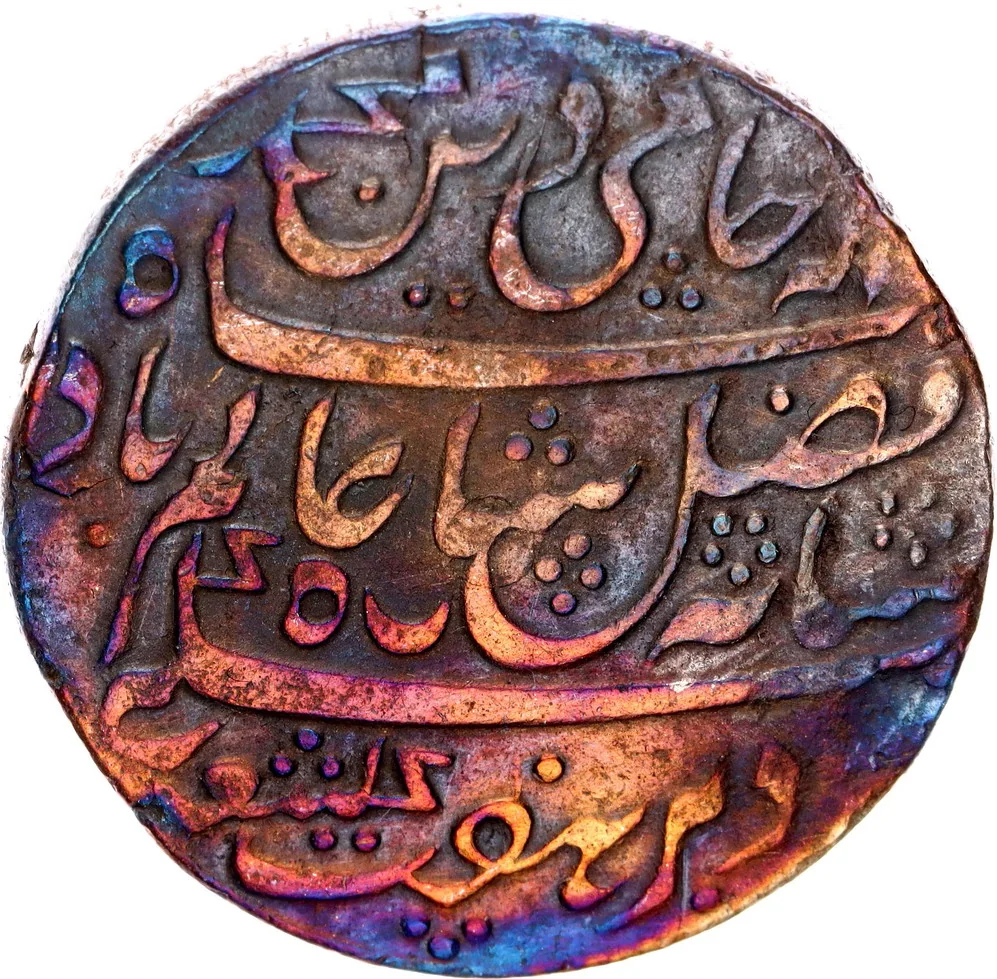
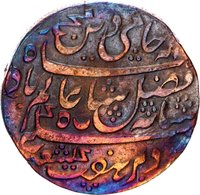
Struck coin across seven climes, by divine grace, protector of faith Muhammad Shah Alam, Emperor.
Inscription:
شاه عالم بادشاه
حامي دين محمد
ساى فضل لله
سكة زد بر حفت كشور
حامي دين محمد
ساى فضل لله
سكة زد بر حفت كشور
Translation:
Shah Alam, Emperor
Protector of the religion of Muhammad
By the grace of God
Struck coin throughout the seven climes
Protector of the religion of Muhammad
By the grace of God
Struck coin throughout the seven climes
Language: Persian
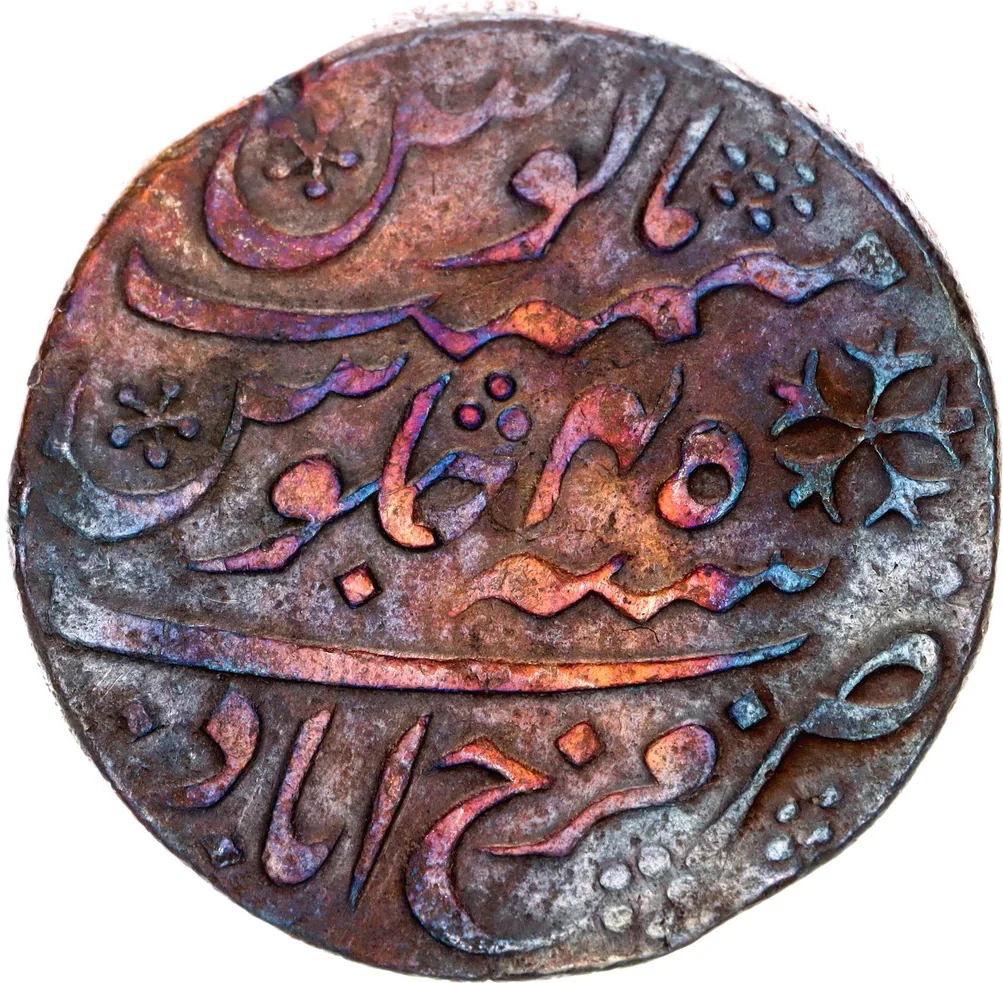
Reverse
Edge
Vertically milled (Straight grained) ||||
Mintings
| Year | Mint Mark | Mintage | Quality | Collection |
|---|---|---|---|---|
| — | — | — |
Historical background
In 1820, the Bengal Presidency's currency system was a complex and often chaotic bimetallic standard, officially based on both silver and gold but dominated in practice by the silver rupee. The primary unit was the Company's sicca rupee, a newly minted coin containing a specific weight and purity of silver. However, the monetary landscape was cluttered with a profusion of older, worn, and foreign coins still in circulation—including Mughal rupees, Arcot rupees, and gold mohurs—each valued at fluctuating discount rates against the sicca rupee. This created a persistent problem of exchange and uncertainty in trade, as merchants and revenue collectors had to navigate a maze of different valuations.
The system was under significant strain due to a chronic shortage of small change, which hampered everyday transactions. The government mint focused almost exclusively on producing silver rupees and gold mohurs, leaving a void for fractional currency. This gap was filled by a bewildering array of private and semi-official tokens, cut coins, and copper pieces of dubious value, leading to widespread forgery and localised confusion. Furthermore, the Presidency's finances were impacted by the steady drain of silver to China to pay for tea imports, exacerbating the scarcity of specie and creating underlying inflationary pressures.
Efforts at reform were ongoing but incomplete. The Coinage Act of 1818 had aimed to simplify matters by introducing a uniform "Company's Rupee," but the transition was slow, and old coins remained legal tender. The government's attempt to fix the exchange rate between the silver rupee and the gold mohur also proved unstable, as the market rate for gold frequently diverged from the official 15 silver rupees to 1 mohur. Thus, in 1820, the currency situation was one of an entrenched but problematic bimetallism, caught between the East India Company's desire for standardised control and the messy reality of a diverse, cash-starved economy reliant on a legacy of multiple circulating media.
The system was under significant strain due to a chronic shortage of small change, which hampered everyday transactions. The government mint focused almost exclusively on producing silver rupees and gold mohurs, leaving a void for fractional currency. This gap was filled by a bewildering array of private and semi-official tokens, cut coins, and copper pieces of dubious value, leading to widespread forgery and localised confusion. Furthermore, the Presidency's finances were impacted by the steady drain of silver to China to pay for tea imports, exacerbating the scarcity of specie and creating underlying inflationary pressures.
Efforts at reform were ongoing but incomplete. The Coinage Act of 1818 had aimed to simplify matters by introducing a uniform "Company's Rupee," but the transition was slow, and old coins remained legal tender. The government's attempt to fix the exchange rate between the silver rupee and the gold mohur also proved unstable, as the market rate for gold frequently diverged from the official 15 silver rupees to 1 mohur. Thus, in 1820, the currency situation was one of an entrenched but problematic bimetallism, caught between the East India Company's desire for standardised control and the messy reality of a diverse, cash-starved economy reliant on a legacy of multiple circulating media.
⭐ Rare