

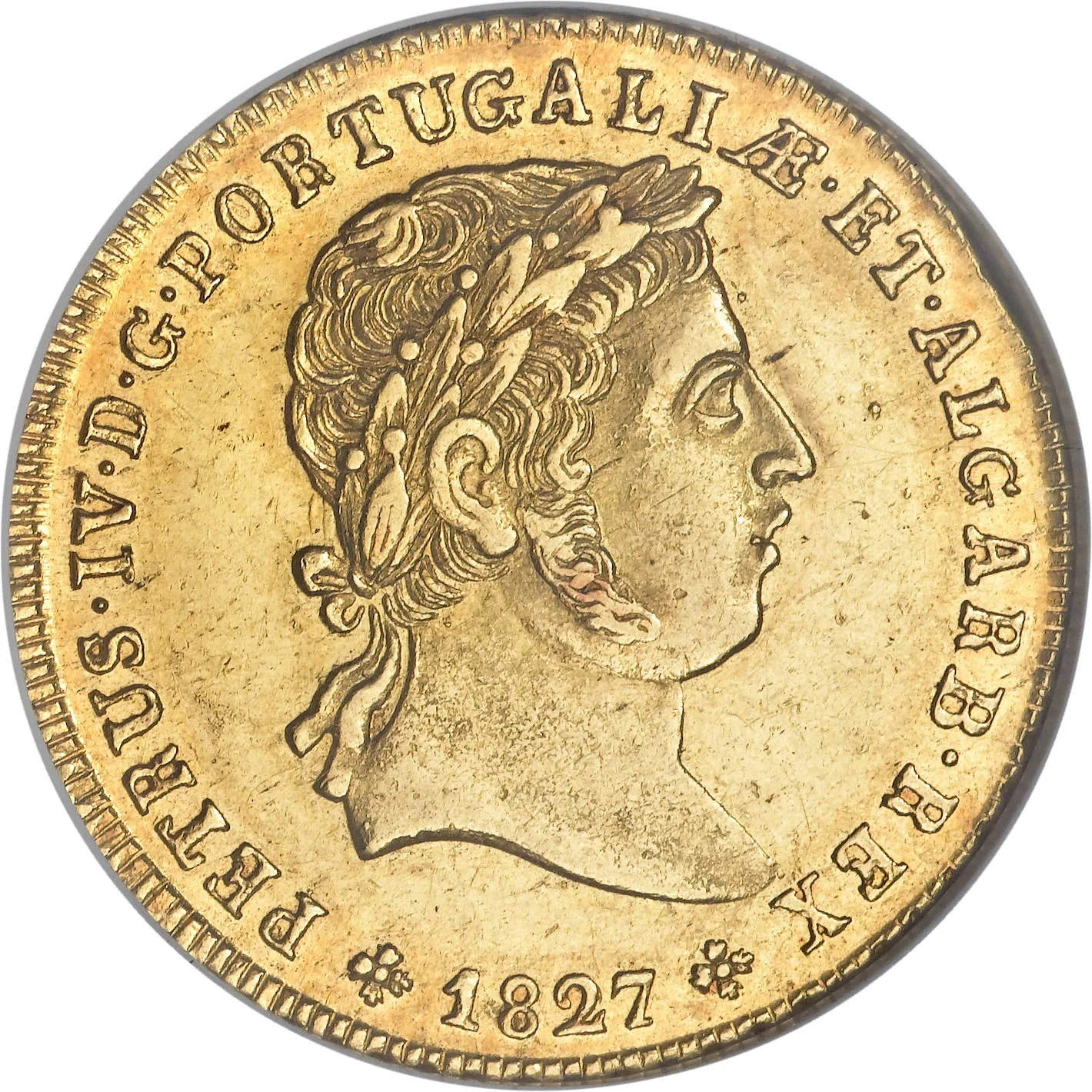
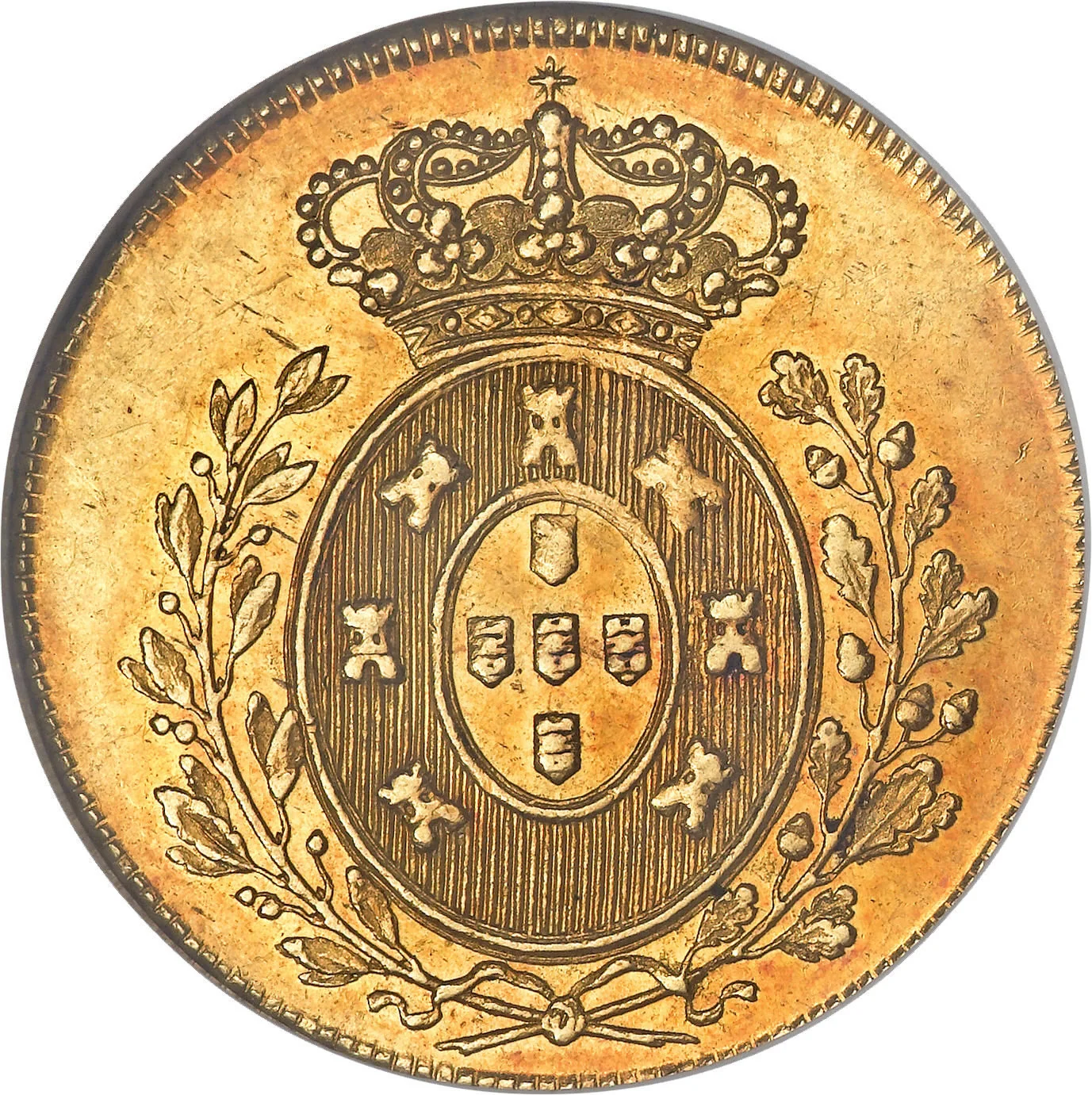
½ Peça – Portugal
Standard circulation coins
Series: Bust
Portugal
Context

Material
References
KM: #Click to copy to clipboard379
Numista: #25679
Value
Bullion value: $1098.09
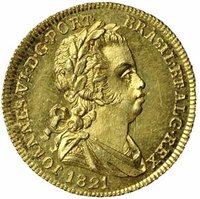
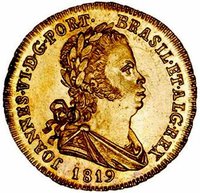
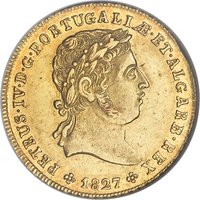
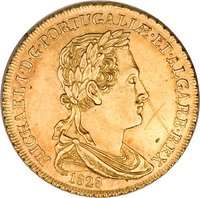
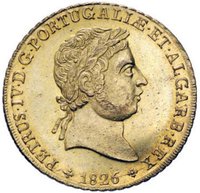
Obverse
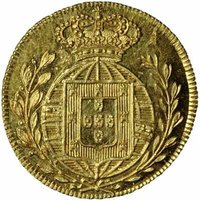
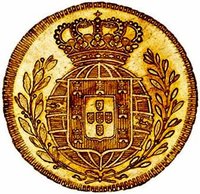
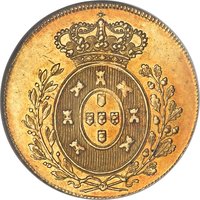
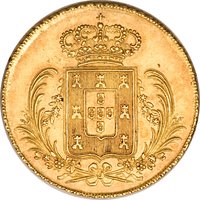
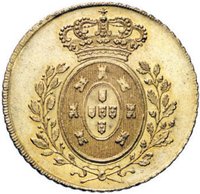
Reverse
Edge
String shape
Mints
| Name | Mark |
|---|---|
| Imprensa Nacional - Casa da Moeda | — |
Mintings
| Year | Mint Mark | Mintage | Quality | Collection |
|---|---|---|---|---|
| 1827 | — | 1,713 |
Historical background
In 1827, Portugal's currency situation was deeply unstable, reflecting the nation's profound political and economic turmoil. The country was embroiled in the Liberal Wars (1828-1834), a civil war between constitutional liberals and absolutist monarchists, which had been brewing since the death of King João VI in 1826. This political crisis shattered financial confidence and disrupted trade, leading to severe fiscal deficits. The state treasury was empty, and the government, struggling to finance itself, resorted to debasing the coinage and borrowing at high interest rates, which fueled inflation and eroded the value of the circulating currency.
The monetary system itself was a complex and archaic patchwork. The official unit was the real (plural: réis), but transactions often involved a confusing array of gold, silver, and copper coins, some dating back centuries, alongside paper notes issued by the Banco de Lisboa (founded 1821). The bank's notes, intended to modernize the economy, were not fully trusted and their value fluctuated wildly based on the fortunes of the liberal faction that controlled Lisbon. Meanwhile, in areas held by the absolutist Miguelites, different currencies and valuations prevailed, effectively creating separate monetary zones within the country.
Consequently, the currency in circulation was heterogeneous, unreliable, and of uncertain value. Foreign coins, particularly British gold sovereigns and Brazilian coins, circulated widely and were often preferred for major transactions due to their stable metallic content. This period represented a low point in Portuguese monetary history, where the state's lack of authority and credit translated directly into a dysfunctional currency system. True stabilization would only begin after the liberal victory in 1834, leading to monetary reforms and the eventual introduction of the real as a decimal currency in the 1850s.
The monetary system itself was a complex and archaic patchwork. The official unit was the real (plural: réis), but transactions often involved a confusing array of gold, silver, and copper coins, some dating back centuries, alongside paper notes issued by the Banco de Lisboa (founded 1821). The bank's notes, intended to modernize the economy, were not fully trusted and their value fluctuated wildly based on the fortunes of the liberal faction that controlled Lisbon. Meanwhile, in areas held by the absolutist Miguelites, different currencies and valuations prevailed, effectively creating separate monetary zones within the country.
Consequently, the currency in circulation was heterogeneous, unreliable, and of uncertain value. Foreign coins, particularly British gold sovereigns and Brazilian coins, circulated widely and were often preferred for major transactions due to their stable metallic content. This period represented a low point in Portuguese monetary history, where the state's lack of authority and credit translated directly into a dysfunctional currency system. True stabilization would only begin after the liberal victory in 1834, leading to monetary reforms and the eventual introduction of the real as a decimal currency in the 1850s.
Series: Bust
✨ Legendary