

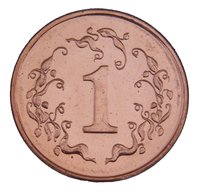
Obverse
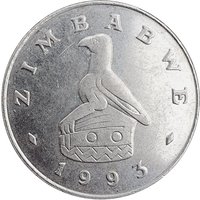
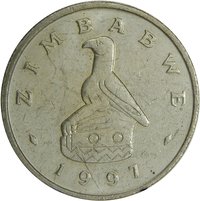
Description:
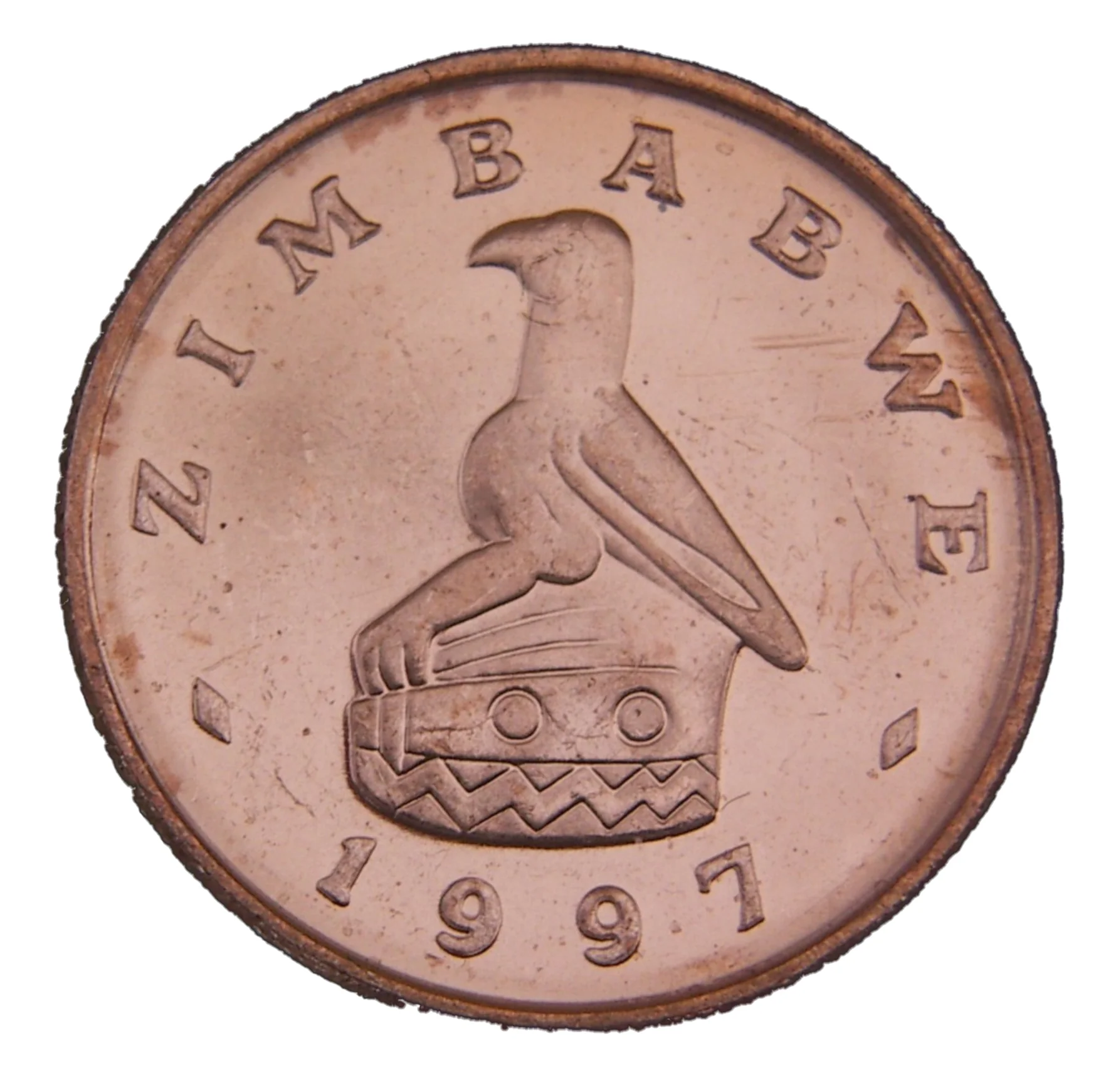
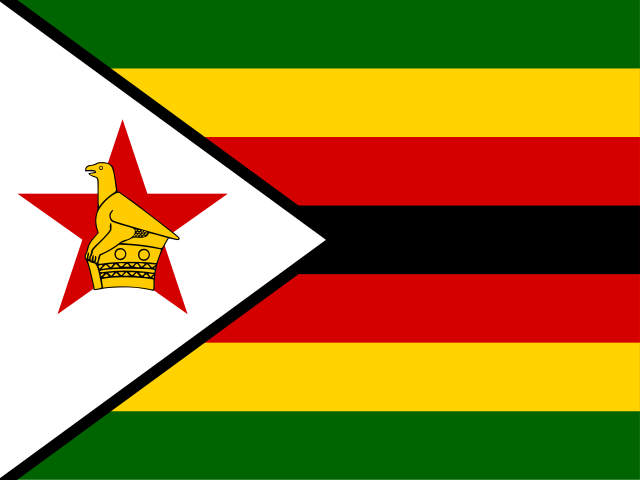
The stone Great Zimbabwe Bird, the country's national emblem.
Inscription:
ZIMBABWE
1997
1997
Script: Latin
Engraver: Barry Stanton
Reverse
Description:
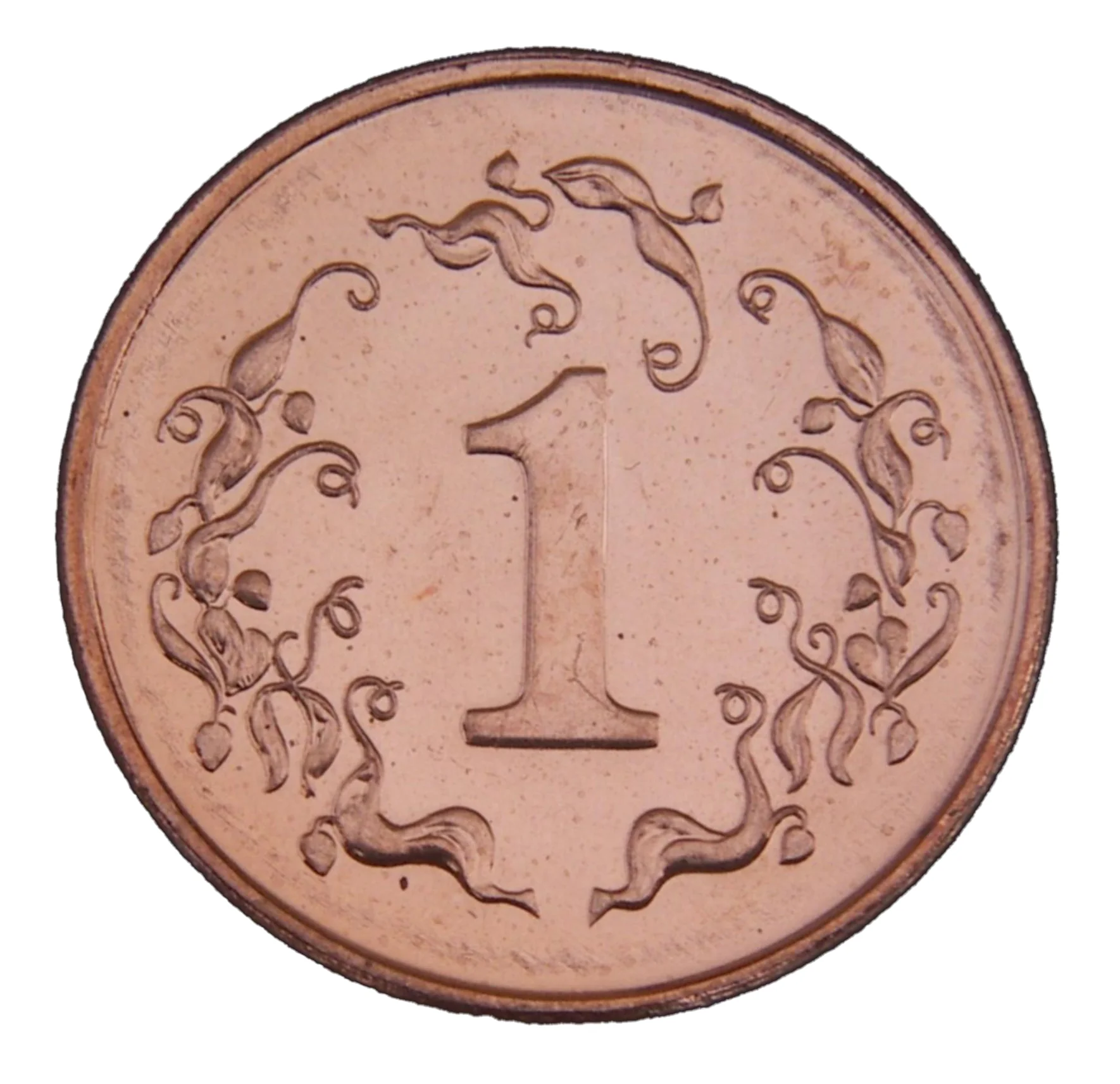
A "1" wreathed in Flame Lily leaves.
Inscription:
1
Script: Latin
Engraver: Jeff Huntly
Edge
Reeded
Mints
| Name | Mark |
|---|---|
| Royal Mint | — |
Mintings
| Year | Mint Mark | Mintage | Quality | Collection |
|---|---|---|---|---|
| 1989 | — | — | ||
| 1990 | — | — | ||
| 1991 | — | — | ||
| 1994 | — | — | ||
| 1995 | — | — | ||
| 1997 | — | 5,500 | Proof | |
| 1997 | — | — | ||
| 1999 | — | — |
Historical background
By 1989, Zimbabwe's currency situation appeared stable but was underpinned by growing economic vulnerabilities inherited from the first decade of independence. The Zimbabwean dollar (ZWD), introduced in 1980 to replace the Rhodesian dollar, was initially strong, valued even above the US dollar. This early strength was supported by a robust agricultural sector and significant foreign investment. The government maintained a fixed exchange rate and strict exchange controls, which created a semblance of stability for the formal economy and allowed for the servicing of a modest foreign debt.
However, this stability was increasingly artificial. The economy was strained by the costs of post-independence social programs, a large public sector wage bill, and the beginning of a costly involvement in the Congo War. While not yet in hyperinflation, inflationary pressures were building due to budget deficits that were often financed by the central bank. Furthermore, a growing parallel foreign exchange market, where the ZWD traded at a significant discount to the official rate, signaled a lack of confidence and the presence of underlying imbalances. This black market for hard currency highlighted the gap between the government's managed valuation and the currency's true market worth.
Consequently, 1989 represents a calm before the storm in Zimbabwe's monetary history. The structural problems of fiscal indiscipline, declining productivity, and an overvalued official exchange rate were already embedded in the system. The strict controls in place were masking these fundamental weaknesses, setting the stage for the severe economic crises and the catastrophic hyperinflation that would define the Zimbabwean dollar in the decades to follow. The year stands as the end of the post-independence monetary honeymoon, with the foundations of future instability firmly laid.
However, this stability was increasingly artificial. The economy was strained by the costs of post-independence social programs, a large public sector wage bill, and the beginning of a costly involvement in the Congo War. While not yet in hyperinflation, inflationary pressures were building due to budget deficits that were often financed by the central bank. Furthermore, a growing parallel foreign exchange market, where the ZWD traded at a significant discount to the official rate, signaled a lack of confidence and the presence of underlying imbalances. This black market for hard currency highlighted the gap between the government's managed valuation and the currency's true market worth.
Consequently, 1989 represents a calm before the storm in Zimbabwe's monetary history. The structural problems of fiscal indiscipline, declining productivity, and an overvalued official exchange rate were already embedded in the system. The strict controls in place were masking these fundamental weaknesses, setting the stage for the severe economic crises and the catastrophic hyperinflation that would define the Zimbabwean dollar in the decades to follow. The year stands as the end of the post-independence monetary honeymoon, with the foundations of future instability firmly laid.

🌱 Very Common