

1 cent – Netherlands
Add to wishlist
Netherlands
Context
Year: 1948
Issuer: Netherlands
Ruler: Wilhelmina
Currency:
(1817—2001)
Demonetized: Yes
Total mintage: 175,000,000
Material
References
KM: #
Numista: #2562
Value
Exchange value: 0.01 NLG
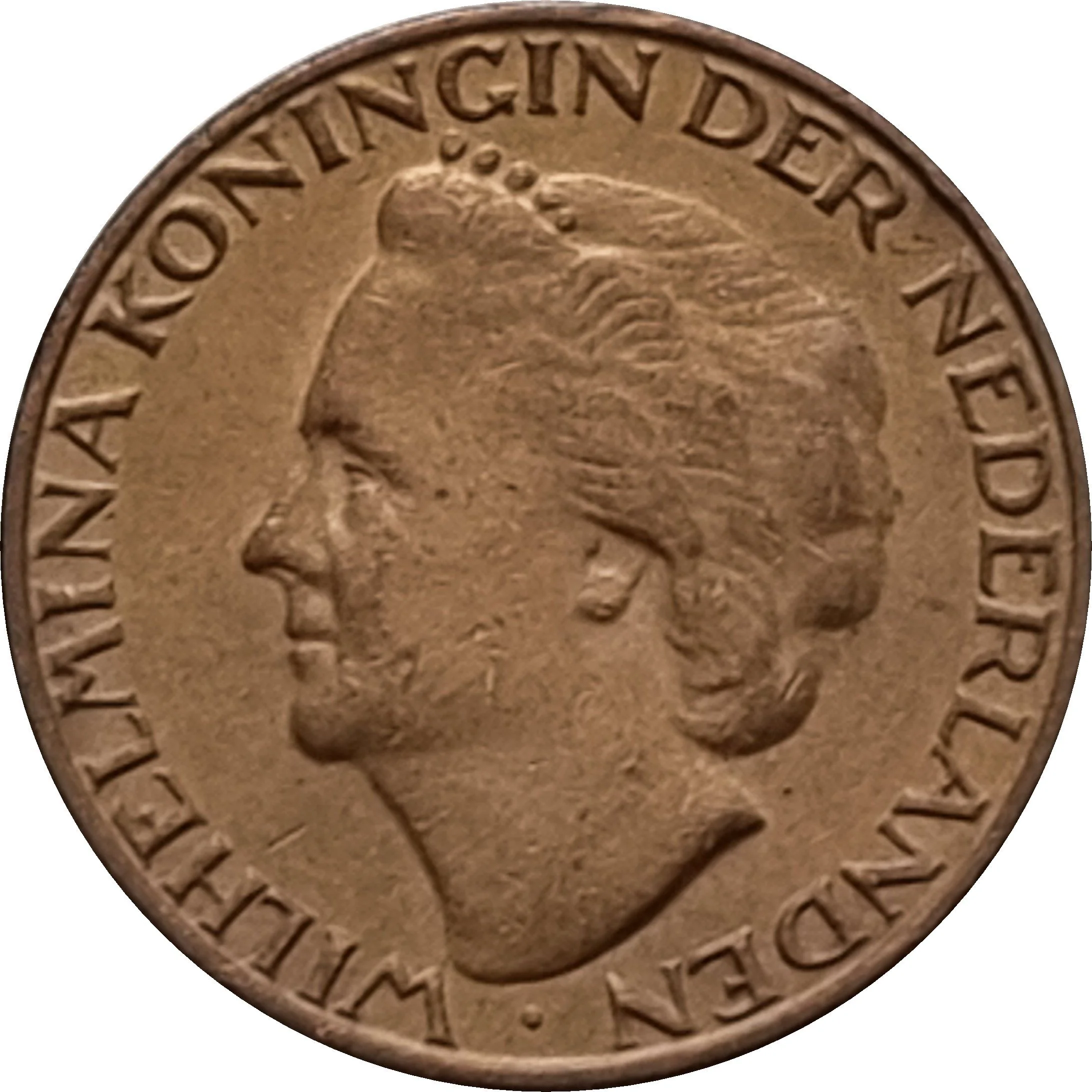
Obverse
Description:
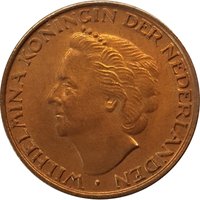
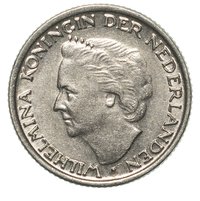
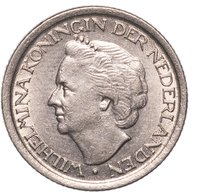
Queen Wilhelmina, left profile.
Inscription:
WILHELMINA KONINGIN DER NEDERLANDEN
Translation:
Wilhelmina Queen of the Netherlands
Script: Latin
Language: Dutch
Engraver: Ludwig Oswald Wenckebach
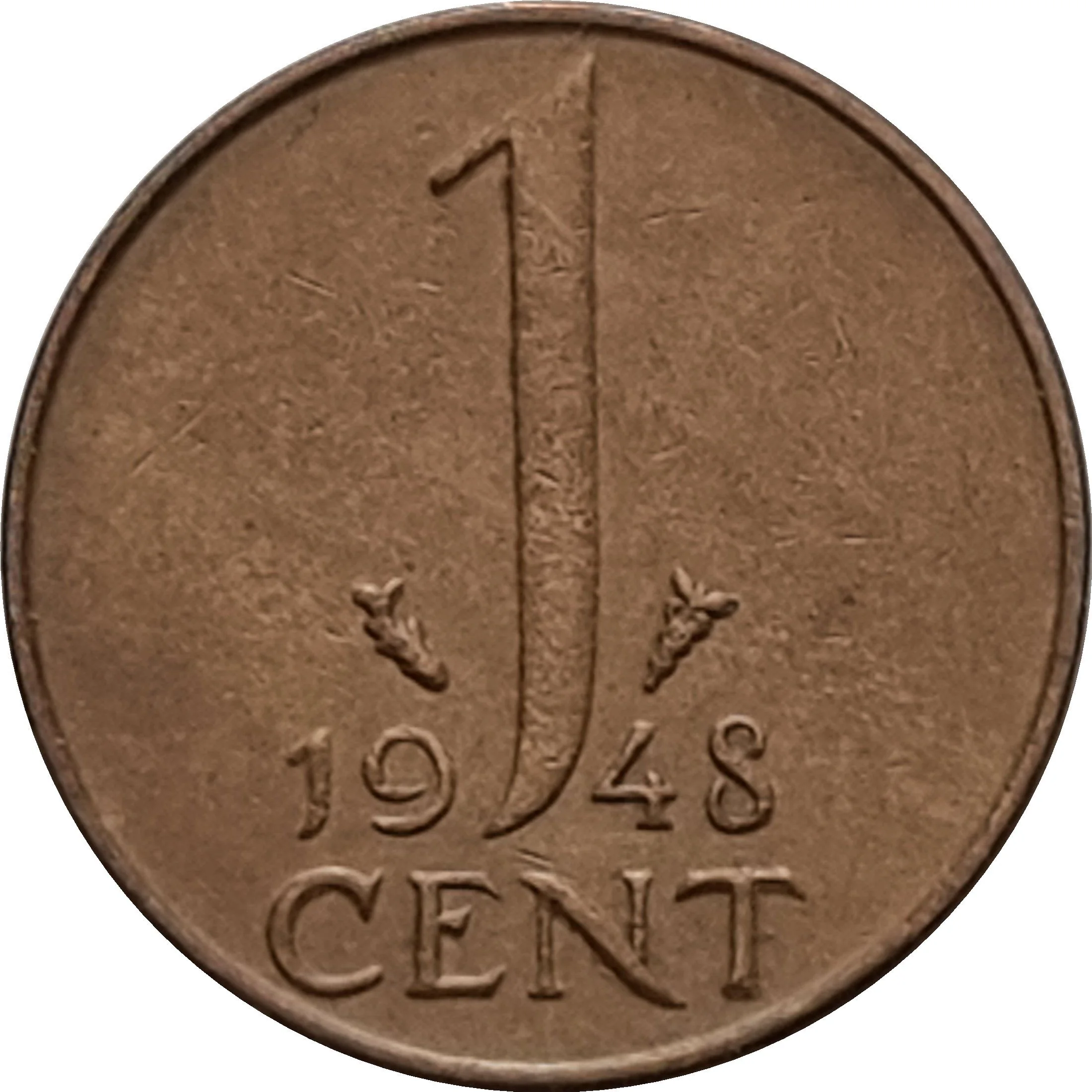
Reverse
Description:
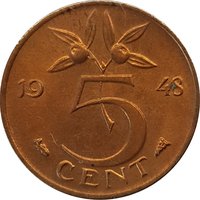
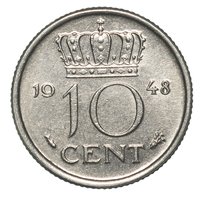
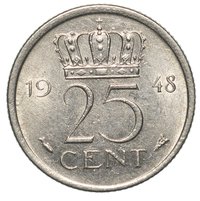
Denomination at top. "1" flanked by privy and mint marks.
Inscription:
1
1948
CENT
1948
CENT
Script: Latin
Engraver: Ludwig Oswald Wenckebach
Edge
Plain
Mints
| Name | Mark |
|---|---|
| Royal Dutch Mint | — |
Mintings
| Year | Mint Mark | Mintage | Quality | Collection |
|---|---|---|---|---|
| 1948 | — | 175,000,000 |
Historical background
Following the devastation of World War II, the Netherlands faced severe economic challenges, including a critically distorted monetary system. The occupying German regime had flooded the country with currency to finance its war effort, leading to a massive surplus of banknotes and rampant inflation. Furthermore, a thriving black market undermined the official economy, and a complex system of price controls and rationing failed to stimulate legitimate production. By 1948, the Dutch guilder had lost much of its legitimacy and function, crippling national recovery efforts.
To break this cycle and pave the way for Marshall Plan aid, the government, under Finance Minister Pieter Lieftinck, enacted a drastic monetary reform on October 1, 1948. Known as the "Lieftinck Operation," it was a "guillotine" measure: all existing banknotes were declared invalid and had to be exchanged for new guilders within three days. Strict limits were placed on the amount individuals could convert, effectively wiping out illicit cash hoards and neutralizing the black market's capital overnight. Savings accounts were blocked and gradually released, while a new, stable guilder was introduced.
The immediate effect was harsh but necessary. The money supply was drastically reduced, restoring trust in the currency's value and ending hyperinflation. This painful shock therapy successfully eradicated the black market's monetary base and allowed price controls to be cautiously lifted. By creating a credible currency, the 1948 reform laid the essential financial foundation for the Netherlands' subsequent economic reconstruction and integration into the emerging European cooperative framework.
To break this cycle and pave the way for Marshall Plan aid, the government, under Finance Minister Pieter Lieftinck, enacted a drastic monetary reform on October 1, 1948. Known as the "Lieftinck Operation," it was a "guillotine" measure: all existing banknotes were declared invalid and had to be exchanged for new guilders within three days. Strict limits were placed on the amount individuals could convert, effectively wiping out illicit cash hoards and neutralizing the black market's capital overnight. Savings accounts were blocked and gradually released, while a new, stable guilder was introduced.
The immediate effect was harsh but necessary. The money supply was drastically reduced, restoring trust in the currency's value and ending hyperinflation. This painful shock therapy successfully eradicated the black market's monetary base and allowed price controls to be cautiously lifted. By creating a credible currency, the 1948 reform laid the essential financial foundation for the Netherlands' subsequent economic reconstruction and integration into the emerging European cooperative framework.
🌱 Very Common