

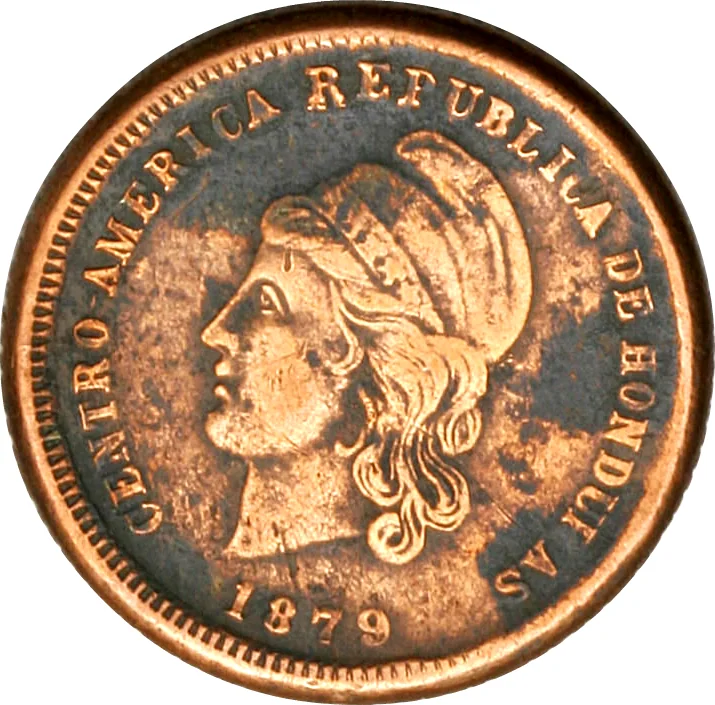
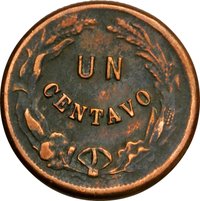
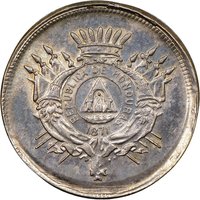
Obverse
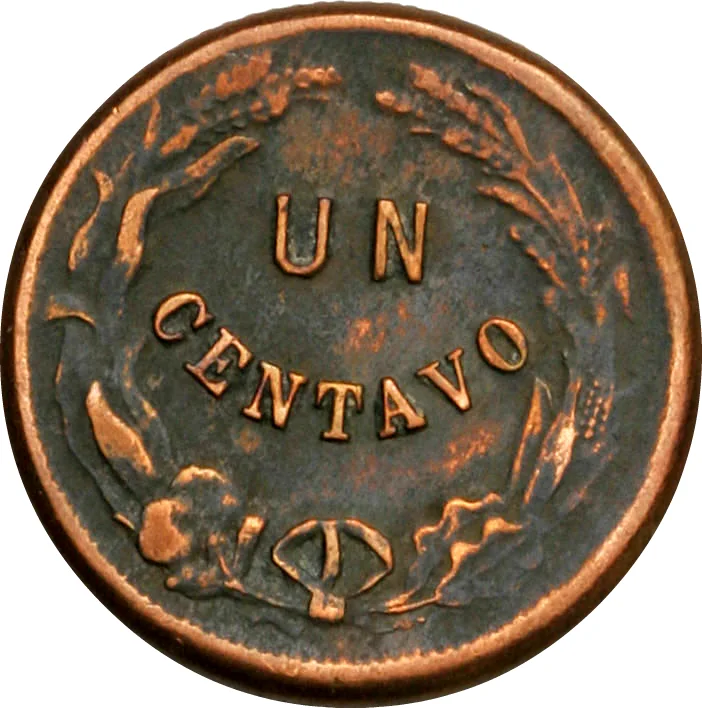
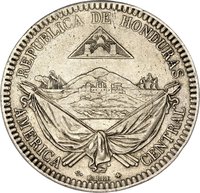
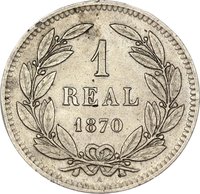
Reverse
Edge
Mints
| Name | Mark |
|---|---|
| Casa Nacional de la Moneda | — |
Mintings
| Year | Mint Mark | Mintage | Quality | Collection |
|---|---|---|---|---|
| 1878 | — | 346,000 | ||
| 1879 | — | — | ||
| 1880 | — | — |
Historical background
In 1878, Honduras was operating within a complex and challenging monetary system typical of a post-colonial Central American republic. The official currency was the Honduran Peso, theoretically on a silver standard, but the reality was one of severe scarcity and disorder. The national treasury was chronically depleted due to political instability, a reliance on volatile agricultural exports (primarily silver and later bananas), and significant foreign debt. This lack of state-issued coinage created a vacuum filled by a chaotic mix of foreign silver, most notably Peruvian, Bolivian, Chilean, and Mexican coins, which circulated at fluctuating values based on their actual silver content and local acceptance.
This monetary anarchy severely hampered commerce and state finances. The government of President Marco Aurelio Soto, who was modernizing the state through his Liberal reforms, recognized that a unified and reliable currency was essential for economic progress and asserting sovereign authority. Efforts to establish a national mint had failed in prior decades, leaving the country dependent on imported specie. The situation was further complicated by the use of "moneda macuquina"—old, crude, and often clipped silver coins from the colonial era—alongside more modern foreign mintings, leading to constant disputes in trade and taxation over the true value of payments.
Consequently, the period around 1878 was a pivotal prelude to significant monetary reform. The government's push for order culminated in the Currency Law of 1879, which officially decimalized the currency, introducing the Honduran Peso divided into 100 centavos, and contracted with foreign mints (initially in London) to produce the nation's first standardized coinage. Thus, the situation in 1878 represents the final years of a fragmented monetary past, with the state actively seeking solutions to impose a uniform national currency as a cornerstone of its modernizing project.
This monetary anarchy severely hampered commerce and state finances. The government of President Marco Aurelio Soto, who was modernizing the state through his Liberal reforms, recognized that a unified and reliable currency was essential for economic progress and asserting sovereign authority. Efforts to establish a national mint had failed in prior decades, leaving the country dependent on imported specie. The situation was further complicated by the use of "moneda macuquina"—old, crude, and often clipped silver coins from the colonial era—alongside more modern foreign mintings, leading to constant disputes in trade and taxation over the true value of payments.
Consequently, the period around 1878 was a pivotal prelude to significant monetary reform. The government's push for order culminated in the Currency Law of 1879, which officially decimalized the currency, introducing the Honduran Peso divided into 100 centavos, and contracted with foreign mints (initially in London) to produce the nation's first standardized coinage. Thus, the situation in 1878 represents the final years of a fragmented monetary past, with the state actively seeking solutions to impose a uniform national currency as a cornerstone of its modernizing project.
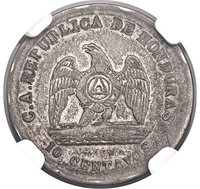
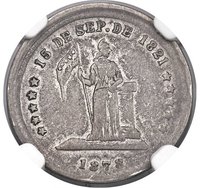
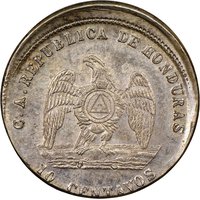
💎 Extremely Rare