

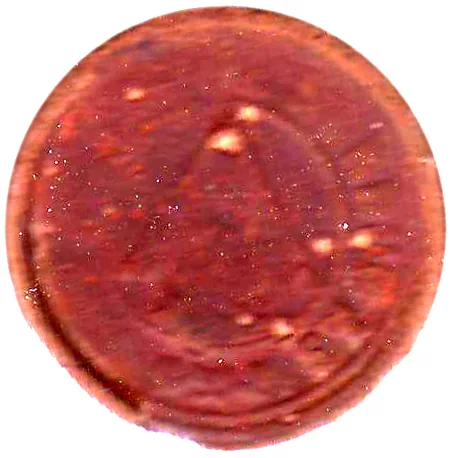
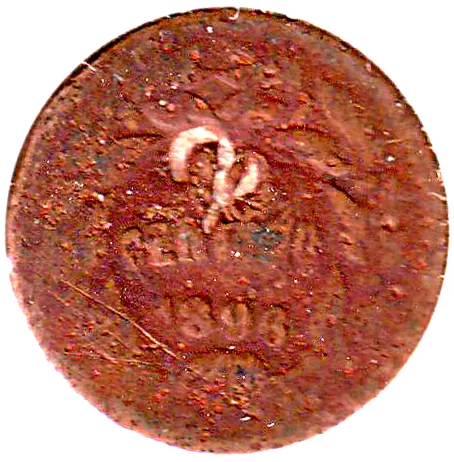
2 centavos – Honduras
Add to wishlist
Honduras
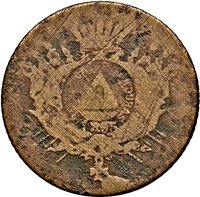
Obverse
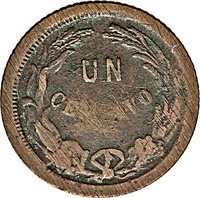
Reverse
Edge
Categories
| Symbols> Coat of Arms |
Mintings
| Year | Mint Mark | Mintage | Quality | Collection |
|---|---|---|---|---|
| 1896 | — | — |
Historical background
In 1896, Honduras was operating under a complex and unstable monetary system, a legacy of its colonial past and 19th-century economic struggles. The official currency was the silver Honduran Peso, theoretically tied to the global silver standard. However, the nation's chronic fiscal deficits, reliance on foreign loans (particularly from British banks for its railway projects), and political instability had severely devalued this currency. Crucially, the most common medium of exchange in daily commerce was not the official peso but the Spanish-American silver dollar, known as the "Peso Fuerte" or "Piece of Eight." These coins, minted in previous centuries, were trusted for their consistent silver content and circulated widely alongside other foreign silver, creating a de facto multi-currency environment.
This period was marked by a global monetary crisis that directly impacted Honduras: the precipitous fall in the value of silver against gold. As a "silver-standard" country, Honduras saw its currency rapidly depreciate against the gold-backed currencies (like the British pound and U.S. gold dollar) used to service its substantial foreign debt. This made repaying loans catastrophically more expensive, exacerbating the nation's fiscal crisis. Furthermore, the declining value of silver coinage encouraged hoarding and exportation of full-weight coins, leaving a circulation of often-clipped and worn currency, which further disrupted domestic trade and undermined public confidence.
Consequently, by 1896, discussions about monetary reform were urgent among Honduran officials and foreign creditors. The primary goal was to stabilize the currency and simplify the system, with a shift to the gold standard seen as the modern solution to attract foreign investment and manage debt. While formal adoption of the gold-based Lempira would not occur until 1931, the economic pressures of the 1890s, particularly the silver crisis, set the necessary preconditions for this eventual reform. Thus, 1896 represents a point of acute strain within a longer transition, where the weaknesses of a fragmented silver-based system were laid bare, pushing the country toward a fundamental restructuring of its monetary foundations.
This period was marked by a global monetary crisis that directly impacted Honduras: the precipitous fall in the value of silver against gold. As a "silver-standard" country, Honduras saw its currency rapidly depreciate against the gold-backed currencies (like the British pound and U.S. gold dollar) used to service its substantial foreign debt. This made repaying loans catastrophically more expensive, exacerbating the nation's fiscal crisis. Furthermore, the declining value of silver coinage encouraged hoarding and exportation of full-weight coins, leaving a circulation of often-clipped and worn currency, which further disrupted domestic trade and undermined public confidence.
Consequently, by 1896, discussions about monetary reform were urgent among Honduran officials and foreign creditors. The primary goal was to stabilize the currency and simplify the system, with a shift to the gold standard seen as the modern solution to attract foreign investment and manage debt. While formal adoption of the gold-based Lempira would not occur until 1931, the economic pressures of the 1890s, particularly the silver crisis, set the necessary preconditions for this eventual reform. Thus, 1896 represents a point of acute strain within a longer transition, where the weaknesses of a fragmented silver-based system were laid bare, pushing the country toward a fundamental restructuring of its monetary foundations.
✨ Legendary