

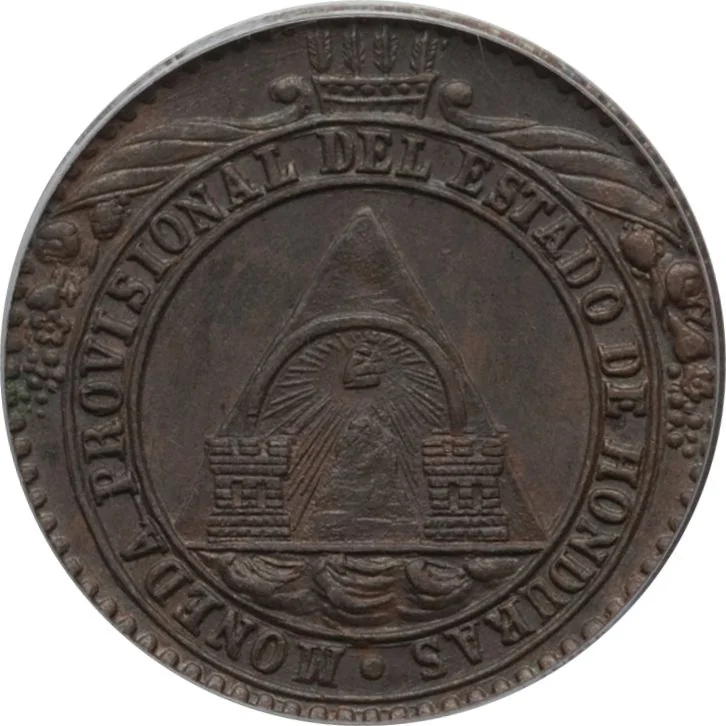
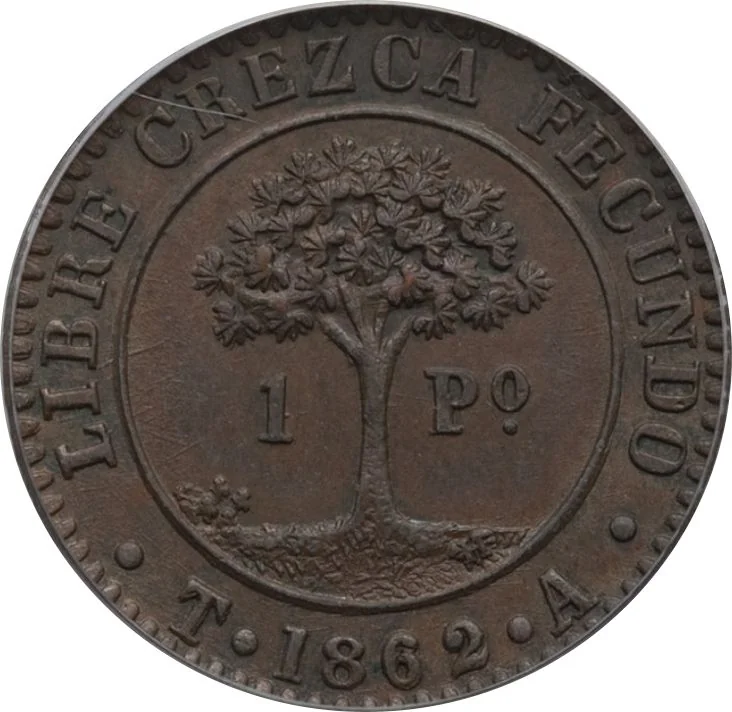
1 Peso – Honduras
Honduras
Context
Material
Diameter: 19.5 mm
Weight: 3.15 g
Thickness: 1.3 mm
Shape: Round
Composition: Copper
Standard: Gold tenth ounce
Magnetic: No
Technique: Milled
Alignment: Medal alignment
flip
References
KM: #Click to copy to clipboard24
Numista: #25476
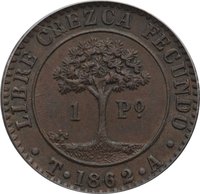
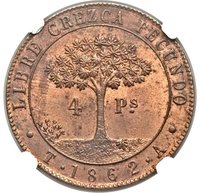
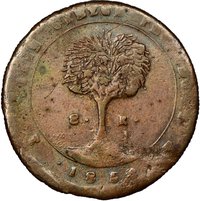
Obverse
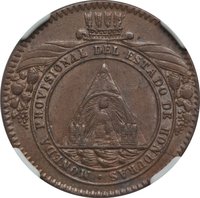
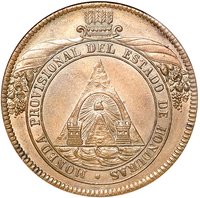
Reverse
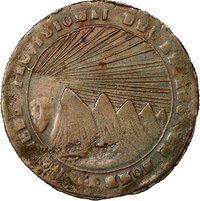
Edge
Categories
| Symbols> Coat of Arms |
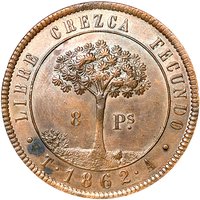
| Plant> Tree |
Mints
| Name | Mark |
|---|---|
| Casa Nacional de la Moneda | T |
Mintings
| Year | Mint Mark | Mintage | Quality | Collection |
|---|---|---|---|---|
| 1862 | T | — |
Historical background
In 1862, Honduras operated within a complex and unstable monetary system, a direct legacy of its post-independence struggles and the failed Central American Federation. The country lacked a unified national currency, leading to a chaotic circulation of diverse coins. Spanish colonial reales, Mexican pesos, and coins from other Central American republics all circulated simultaneously, creating confusion in commerce and hindering economic development. This fragmentation reflected the nation's political weakness and the lack of centralized financial authority, making transactions unreliable and complicating government revenue collection.
The situation was further strained by the chronic shortage of specie (hard coin), a problem common across the isthmus. To address this, the Honduran government, like others in the region, had authorized the use of foreign silver and gold coins by decree. However, the intrinsic value of these varied coins often led to hoarding of the higher-quality pieces, leaving poorer-quality or debased coins in active circulation—a classic example of Gresham's Law. This environment of monetary uncertainty acted as a drag on both domestic trade and efforts to attract foreign investment, which was desperately needed for the struggling coffee and mining sectors.
Against this backdrop, 1862 fell within the long presidency of General José María Medina, a period of relative political stability that allowed for early discussions about monetary reform. While Honduras would not introduce its own decimal currency (the peso) until 1869, the conditions of 1862 highlighted the pressing need for such a change. The chaotic currency system of that year underscored a fundamental challenge of nation-building: establishing sovereign control over the economy through a uniform, trusted medium of exchange, a prerequisite for modern statehood and economic integration.
The situation was further strained by the chronic shortage of specie (hard coin), a problem common across the isthmus. To address this, the Honduran government, like others in the region, had authorized the use of foreign silver and gold coins by decree. However, the intrinsic value of these varied coins often led to hoarding of the higher-quality pieces, leaving poorer-quality or debased coins in active circulation—a classic example of Gresham's Law. This environment of monetary uncertainty acted as a drag on both domestic trade and efforts to attract foreign investment, which was desperately needed for the struggling coffee and mining sectors.
Against this backdrop, 1862 fell within the long presidency of General José María Medina, a period of relative political stability that allowed for early discussions about monetary reform. While Honduras would not introduce its own decimal currency (the peso) until 1869, the conditions of 1862 highlighted the pressing need for such a change. The chaotic currency system of that year underscored a fundamental challenge of nation-building: establishing sovereign control over the economy through a uniform, trusted medium of exchange, a prerequisite for modern statehood and economic integration.
💎 Extremely Rare