

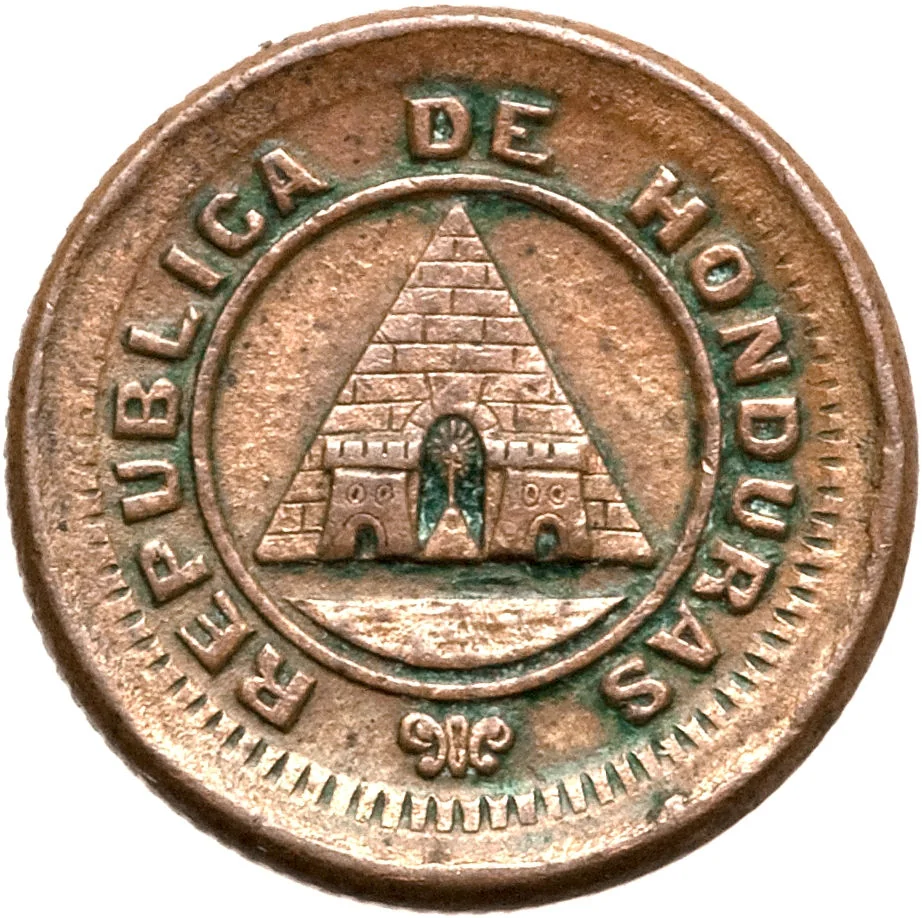
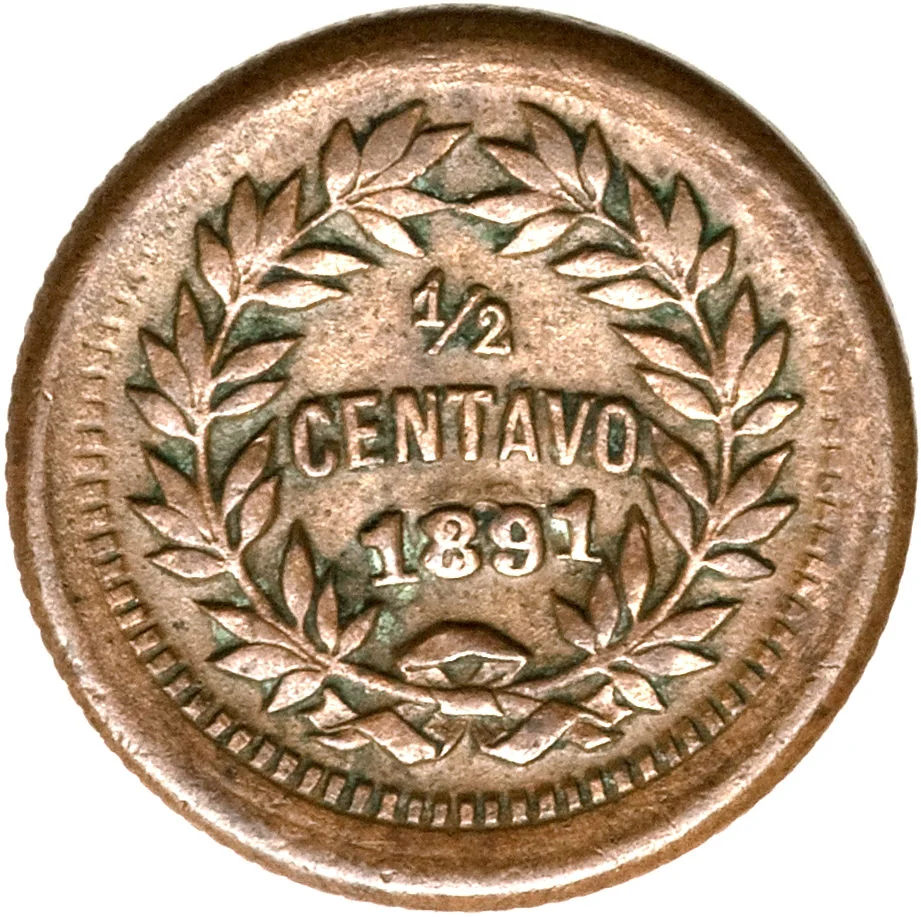
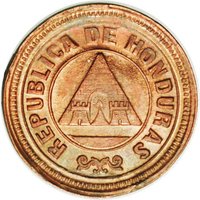
Obverse
Description:
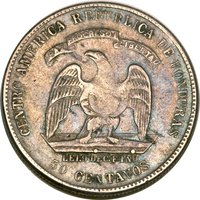
Arms in circle, legend around.
Inscription:
REPUBLICA DE HONDURAS
Translation:
Republic of Honduras
Script: Latin
Language: Spanish
Engraver: Jean-Baptiste Frener
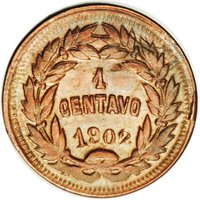
Reverse
Description:
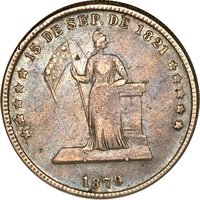
Value and date encircled
Inscription:
1/2
CENTAVO
1891
CENTAVO
1891
Script: Latin
Engraver: Jean-Baptiste Frener
Edge
Categories
| Symbols> Coat of Arms |
| Symbol> Wreath |
Mints
| Name | Mark |
|---|---|
| Casa Nacional de la Moneda | — |
Mintings
| Year | Mint Mark | Mintage | Quality | Collection |
|---|---|---|---|---|
| 1881 | — | 289,758 | ||
| 1883 | — | — | ||
| 1885 | — | 172,000 | ||
| 1886 | — | 97,000 | ||
| 1889 | — | — | ||
| 1891 | — | — |
Historical background
In 1881, Honduras operated within a complex and unstable monetary system, a legacy of its colonial past and turbulent early independence. The official currency was the Honduran Peso, theoretically on a silver standard, but its circulation was scarce and its value inconsistent. The economy was overwhelmingly dominated by foreign silver coins, primarily the Mexican Peso and the Peruvian Sol, which circulated freely and were trusted for daily transactions. This reliance on external coinage highlighted the weakness of domestic institutions and the government's limited capacity to control its own money supply.
The period was marked by significant debasement and inflation. Facing chronic budget deficits, successive governments, including that of President Marco Aurelio Soto (1876-1883), frequently resorted to issuing low-value copper and nickel token coins (fichas or señoreaje) to pay soldiers and civil servants. These tokens, often not backed by sufficient silver reserves, flooded the market and depreciated rapidly, causing public distrust and price instability. This practice created a two-tiered system: international trade and large transactions were conducted in sound foreign silver, while the local populace struggled with depreciating token coinage for everyday purchases.
This chaotic monetary environment was a major impediment to economic development and foreign investment, which the reformist Liberal government of the era sought to attract. The situation in 1881 was a key catalyst for the major monetary reform that would follow in 1888, when Honduras decimalized its currency and introduced the Honduran Lempira (initially the "Peso"), pegging it to the silver U.S. Dollar in an attempt to create a unified, stable, and nationally controlled monetary system. Thus, 1881 represents a late point in the era of monetary confusion, immediately preceding a decisive, though challenging, transition toward modernization.
The period was marked by significant debasement and inflation. Facing chronic budget deficits, successive governments, including that of President Marco Aurelio Soto (1876-1883), frequently resorted to issuing low-value copper and nickel token coins (fichas or señoreaje) to pay soldiers and civil servants. These tokens, often not backed by sufficient silver reserves, flooded the market and depreciated rapidly, causing public distrust and price instability. This practice created a two-tiered system: international trade and large transactions were conducted in sound foreign silver, while the local populace struggled with depreciating token coinage for everyday purchases.
This chaotic monetary environment was a major impediment to economic development and foreign investment, which the reformist Liberal government of the era sought to attract. The situation in 1881 was a key catalyst for the major monetary reform that would follow in 1888, when Honduras decimalized its currency and introduced the Honduran Lempira (initially the "Peso"), pegging it to the silver U.S. Dollar in an attempt to create a unified, stable, and nationally controlled monetary system. Thus, 1881 represents a late point in the era of monetary confusion, immediately preceding a decisive, though challenging, transition toward modernization.
💎 Extremely Rare