

10 cents – South Africa
Add to wishlist
South Africa
Context
Material
References
KM: #
Numista: #254438
Value
Exchange value: 0.10 ZAR
Bullion value: $38.76
Inflation-adjusted value: 0.18 ZAR
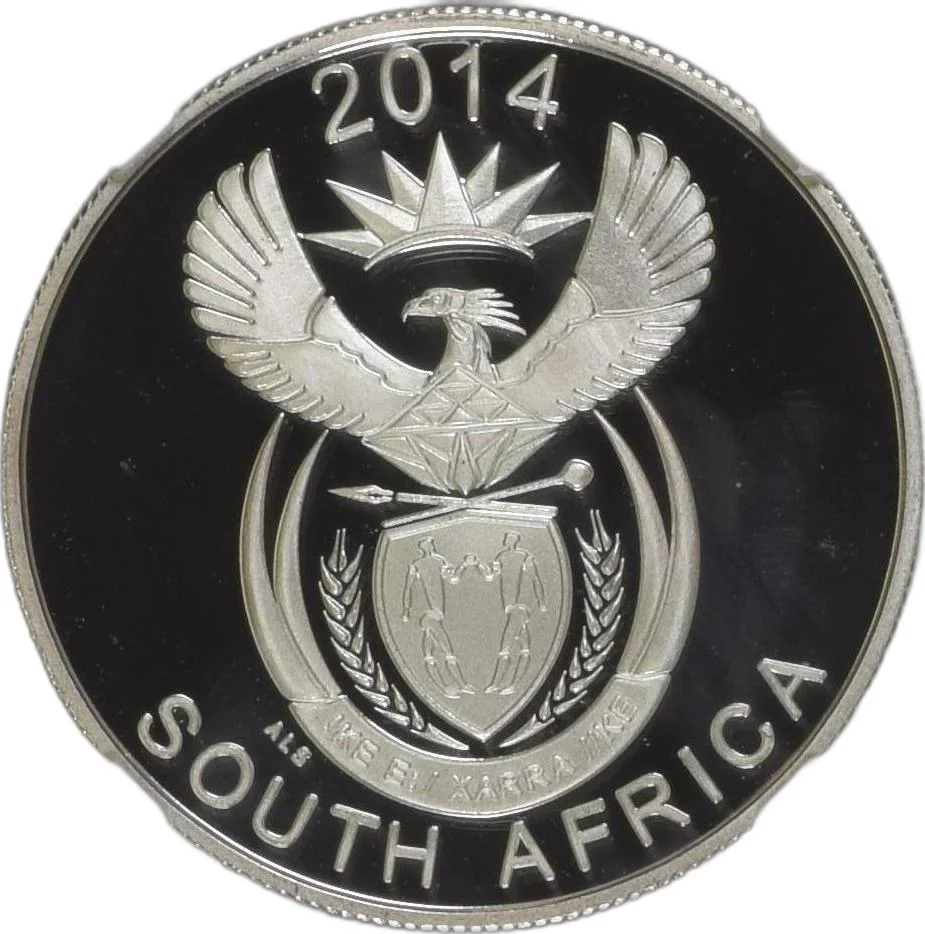
Obverse
Description:
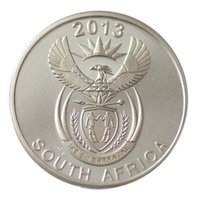
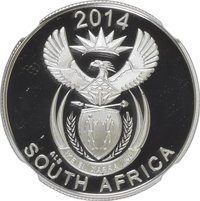
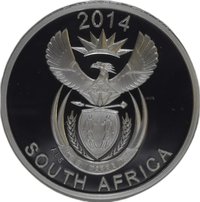
Date above, country name below the Coat of Arms.
Inscription:
2014
!KE E: /XARRA //KE
ALS
SOUTH AFRICA
!KE E: /XARRA //KE
ALS
SOUTH AFRICA
Translation:
2014
!KE E: /XARRA //KE
UNITY IN DIVERSITY
SOUTH AFRICA
!KE E: /XARRA //KE
UNITY IN DIVERSITY
SOUTH AFRICA
Script: Latin
Designer: Arthur Sutherland
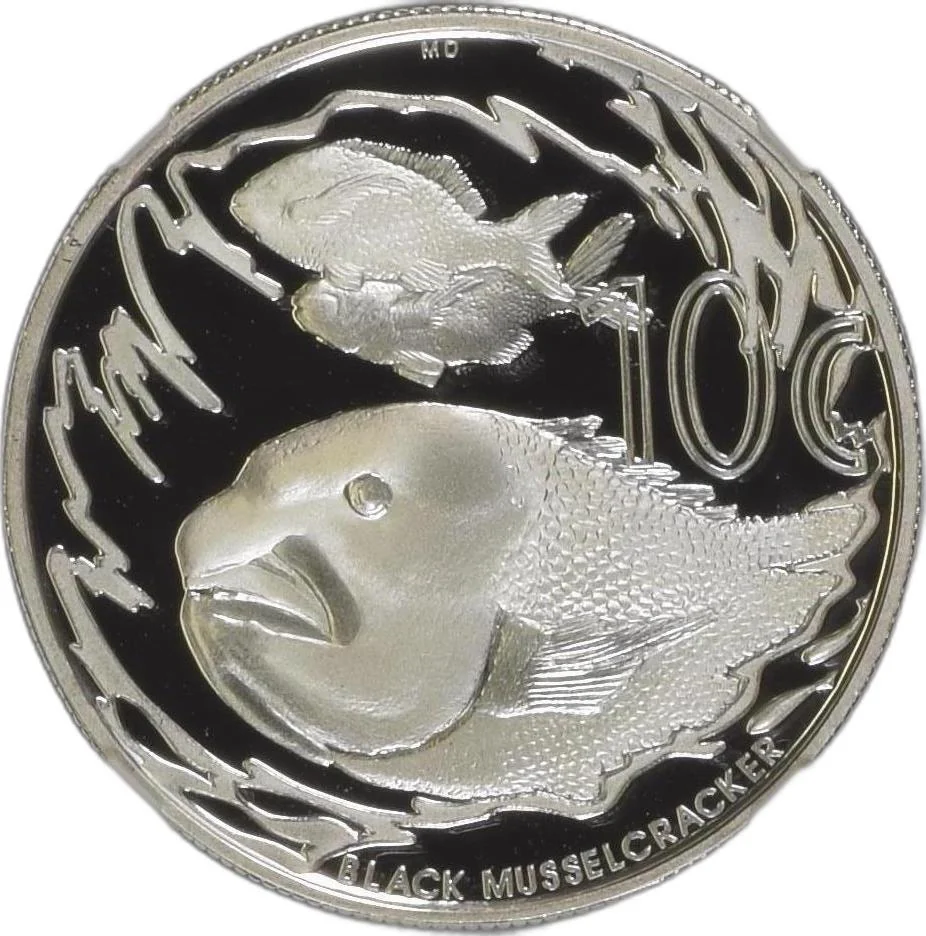
Reverse
Description:
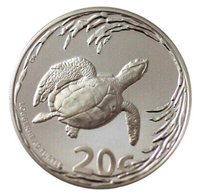
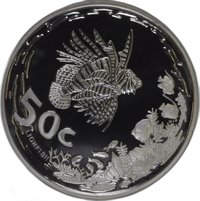
Black Musselcracker facing left, with two more in the background. Designer's initials top, denomination right, legend below. Waves around the edge.
Inscription:
MD
10c
BLACK MUSSELCRACKER
10c
BLACK MUSSELCRACKER
Script: Latin
Designer: Motshabi Daisy Mothobela
Edge
Reeded
Mints
| Name | Mark |
|---|---|
| South African Mint | — |
Mintings
| Year | Mint Mark | Mintage | Quality | Collection |
|---|---|---|---|---|
| 2014 | — | 300 | Proof |
Historical background
In 2014, South Africa's currency, the rand, was under significant pressure, continuing a trend of volatility that reflected the country's complex economic and political landscape. The year began with the rand trading at around ZAR 10.60 to the US dollar, but it faced persistent headwinds. A primary global factor was the "taper tantrum," as the US Federal Reserve began winding down its quantitative easing program, leading to capital outflows from emerging markets like South Africa. This exposed the nation's fundamental vulnerabilities: a stubbornly high current account deficit, reliant on volatile portfolio inflows to finance it, and sluggish economic growth that averaged just 1.5% for the year.
Domestically, the currency was weighed down by a potent mix of industrial unrest and declining investor confidence. A protracted, violent platinum sector strike—the longest and costliest in South African history—crippled a key export industry, damaging GDP and tax revenues. This was compounded by ongoing concerns over policy direction and infrastructure bottlenecks, particularly within the state-owned power utility Eskom, which began implementing rolling blackouts ("load shedding"). These factors fuelled perceptions of rising country risk, undermining the investment case for South African assets.
Despite these challenges, the rand demonstrated resilience and closed the year surprisingly stronger near ZAR 11.50/USD, having weathered spikes above ZAR 11.80. This relative stability was partly due to intermittent periods of global risk-on sentiment and the South African Reserve Bank's (SARB) credible monetary policy, which included incremental interest rate hikes to curb inflation and support the currency. However, the underlying structural issues of low growth, electricity shortages, and labour market tensions left the rand fundamentally vulnerable, setting the stage for the severe pressures it would face in the years immediately following 2014.
Domestically, the currency was weighed down by a potent mix of industrial unrest and declining investor confidence. A protracted, violent platinum sector strike—the longest and costliest in South African history—crippled a key export industry, damaging GDP and tax revenues. This was compounded by ongoing concerns over policy direction and infrastructure bottlenecks, particularly within the state-owned power utility Eskom, which began implementing rolling blackouts ("load shedding"). These factors fuelled perceptions of rising country risk, undermining the investment case for South African assets.
Despite these challenges, the rand demonstrated resilience and closed the year surprisingly stronger near ZAR 11.50/USD, having weathered spikes above ZAR 11.80. This relative stability was partly due to intermittent periods of global risk-on sentiment and the South African Reserve Bank's (SARB) credible monetary policy, which included incremental interest rate hikes to curb inflation and support the currency. However, the underlying structural issues of low growth, electricity shortages, and labour market tensions left the rand fundamentally vulnerable, setting the stage for the severe pressures it would face in the years immediately following 2014.



✨ Legendary