

25 centimes – Luxembourg
Add to wishlist
Luxembourg
Context
Years: 1954–1972
Issuer: Luxembourg
Period:
Ruler: Jean
Currency:
(1854—2001)
Demonetization: 28 February 2002
Total mintage: 30,640,000
Material
References
KM: #
Numista: #254
Value
Exchange value: 0.25 LUF
Obverse
Description:
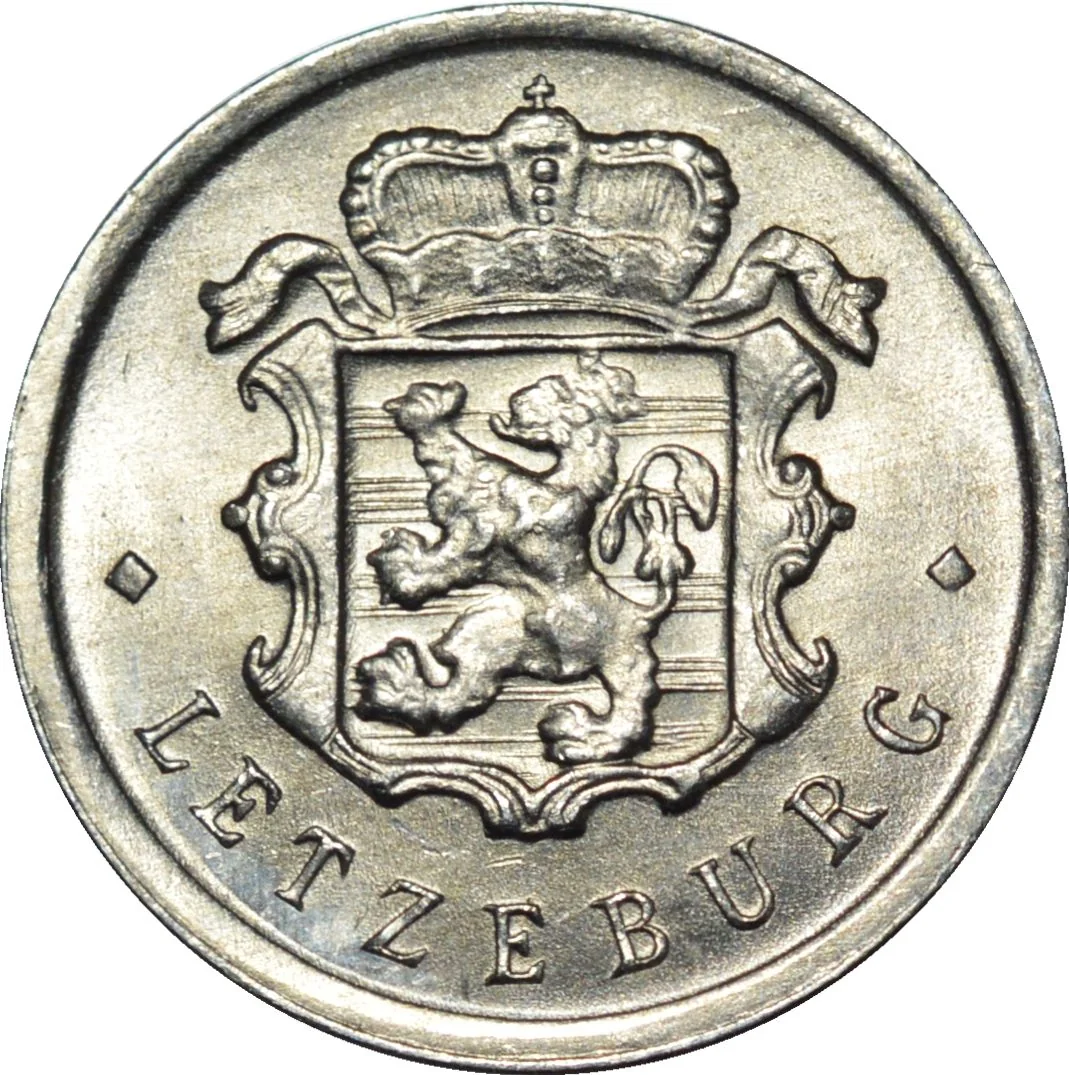
Shield crowned with a forked-tail Luxembourg lion, left-facing on ten stripes, country name in Luxembourgish between rhombs below.
Inscription:
• LETZEBURG •
Translation:
Luxembourg
Script: Latin
Language: Luxembourgish
Engravers: Nina Victorine Lefèvre-Kestler, Julien Lefèvre
Reverse
Description:
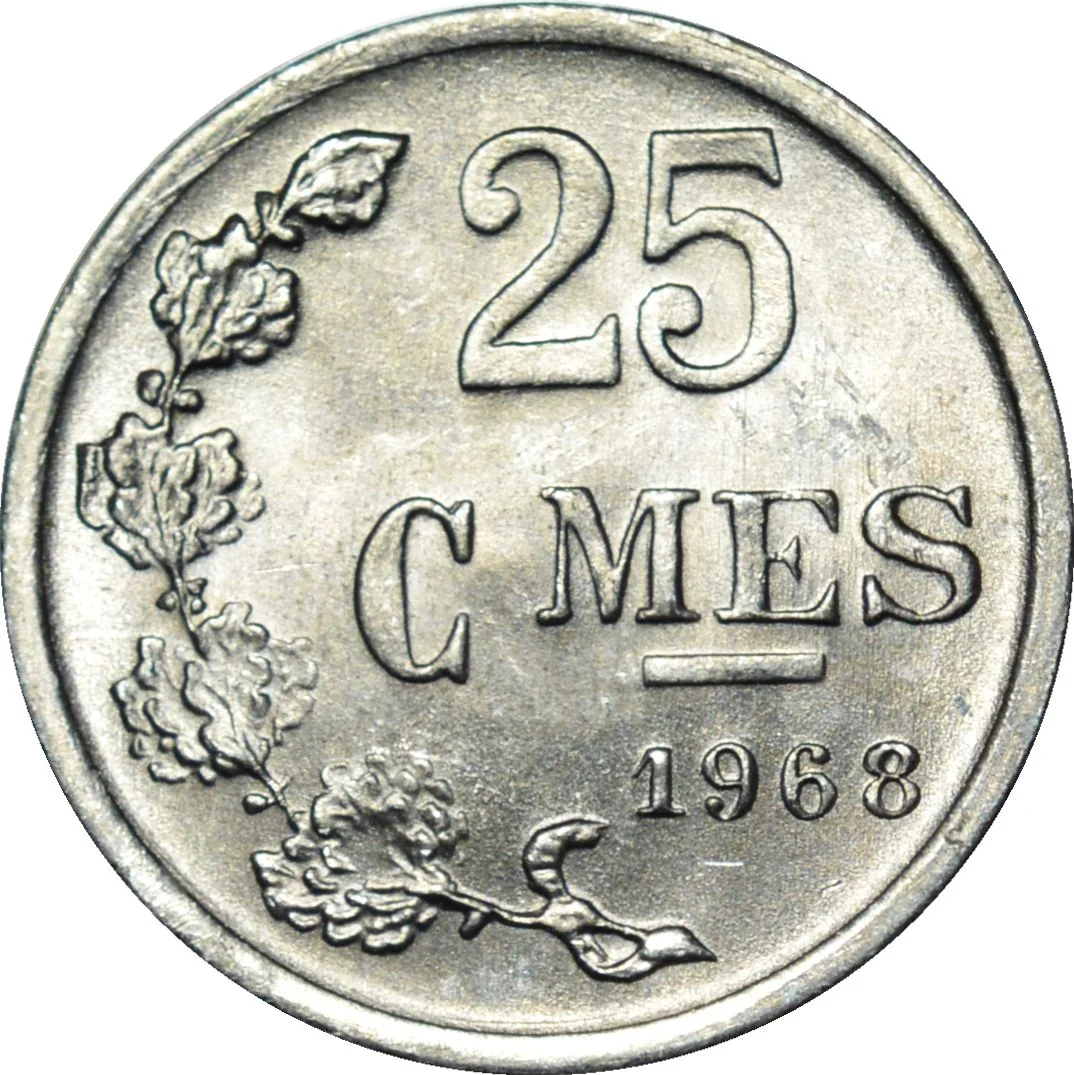
Face value and mint year
in three lines,
left of an oak branch.
in three lines,
left of an oak branch.
Inscription:
25
CMES
1972
CMES
1972
Translation:
Twenty-Five Years
College of Mechanical and Electrical Specialties
1972
College of Mechanical and Electrical Specialties
1972
Script: Latin
Engravers: Nina Victorine Lefèvre-Kestler, Julien Lefèvre
Edge
Plain
Mints
| Name | Mark |
|---|---|
| Royal Mint of Belgium | — |
Mintings
| Year | Mint Mark | Mintage | Quality | Collection |
|---|---|---|---|---|
| 1954 | — | 7,000,000 | ||
| 1957 | — | 3,020,000 | ||
| 1960 | — | 3,020,000 | ||
| 1963 | — | 4,000,000 | ||
| 1965 | — | 2,000,000 | ||
| 1967 | — | 3,000,000 | ||
| 1968 | — | 600,000 | ||
| 1970 | — | 4,000,000 | ||
| 1972 | — | 4,000,000 |
🌱 Very Common