

1 franc – Luxembourg
Add to wishlist
Luxembourg
Context
Years: 1986–1987
Issuer: Luxembourg
Period:
Ruler: Jean
Currency:
(1854—2001)
Demonetization: 1 September 1991
Total mintage: 3,000,000
Material
References
KM: #
Numista: #252
Value
Exchange value: 1 LUF
Inflation-adjusted value: 2.31 LUF
Obverse
Description:
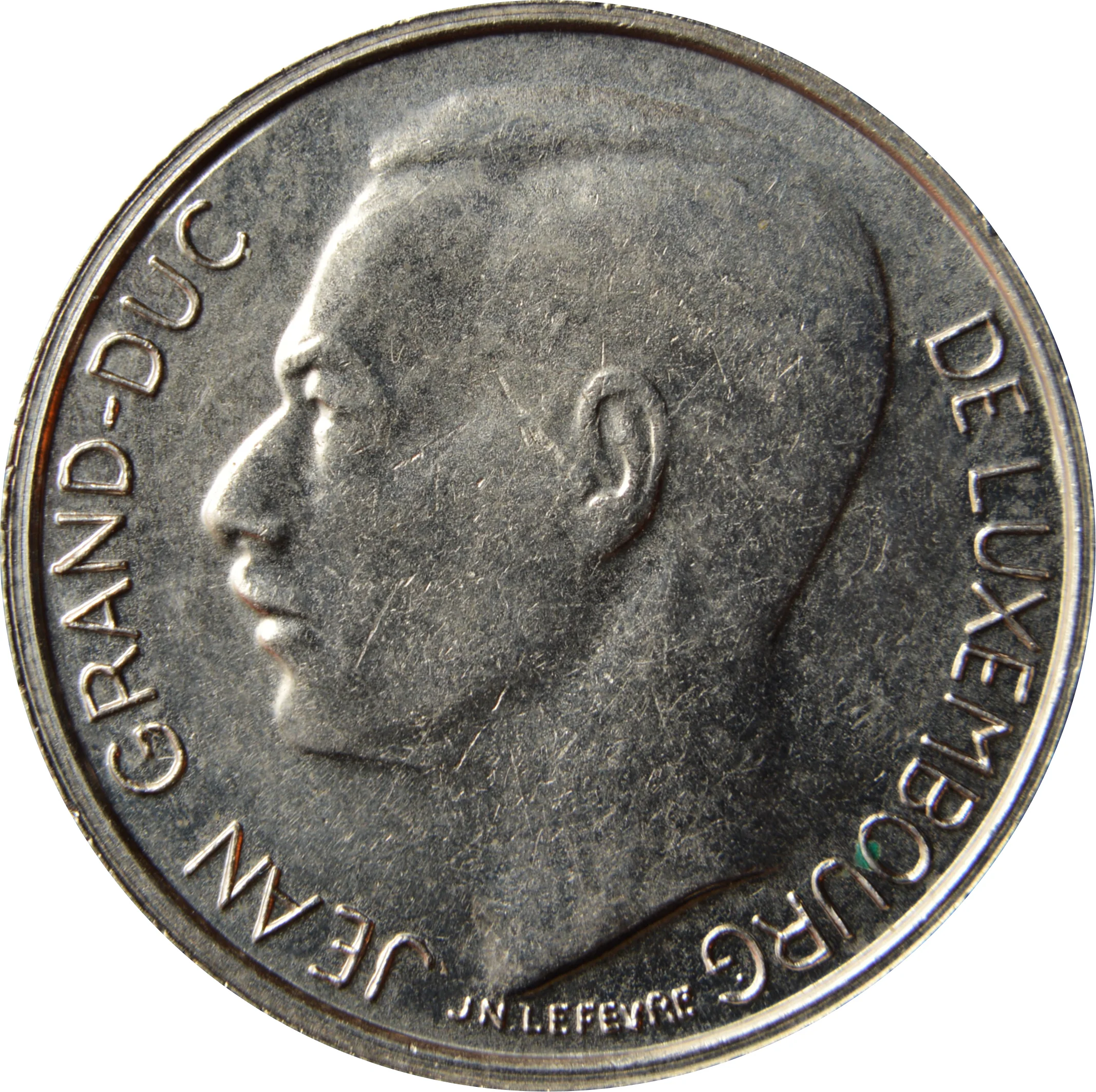
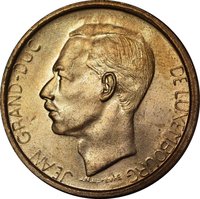
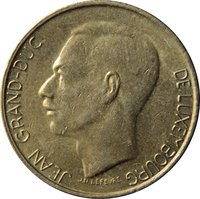
Portrait left of Grand Duke Jean of Luxembourg (1921–2019), encircled by the legend and engravers' signatures.
Inscription:
JEAN GRAND-DUC DE LUXEMBOURG J.N. LEFEVRE
Translation:
JEAN GRAND DUKE OF LUXEMBOURG J.N. LEFEVRE
Script: Latin
Language: French
Engravers: Julien Lefèvre, Nina Victorine Lefèvre-Kestler
Reverse
Description:
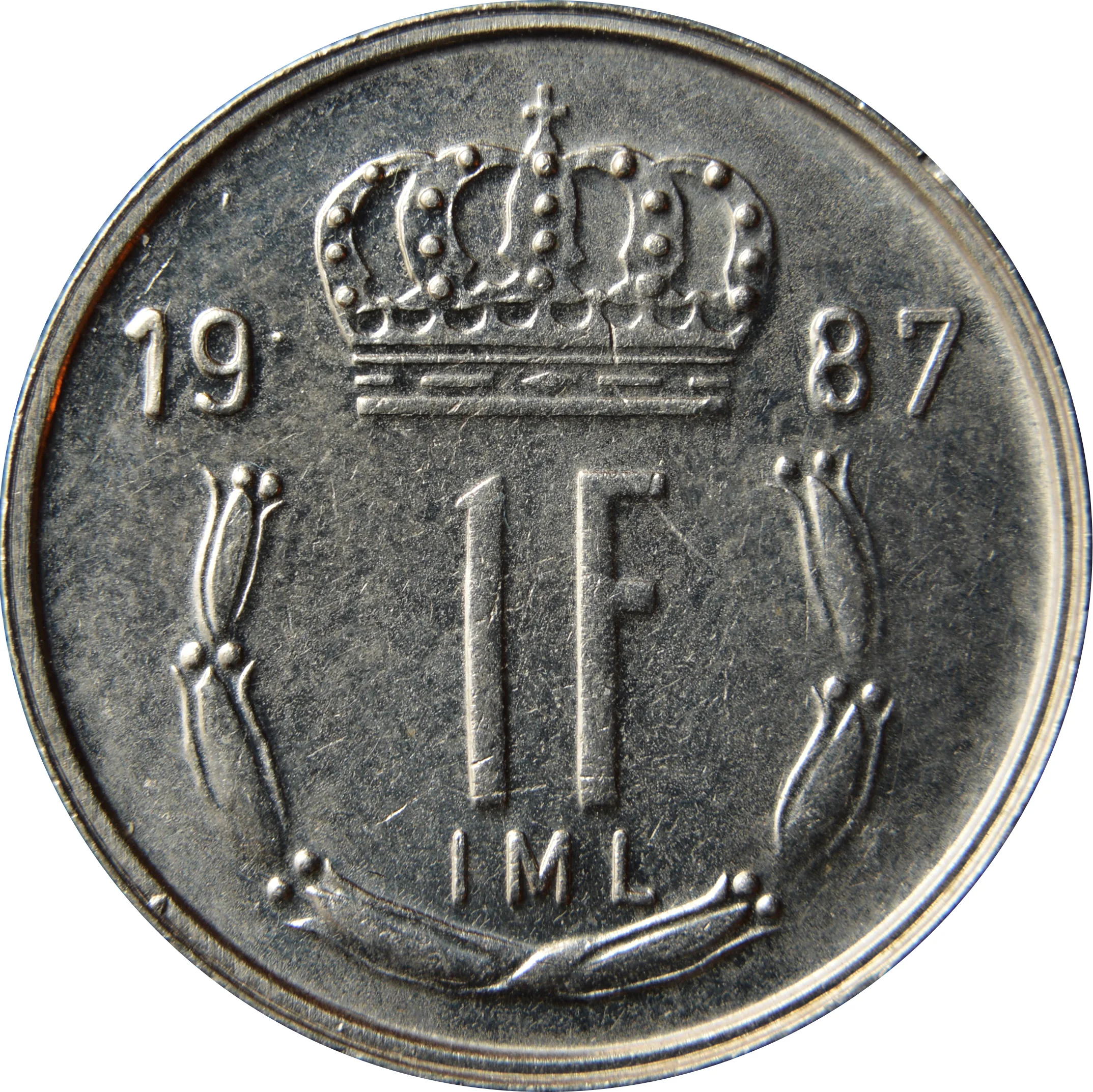
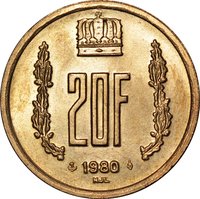
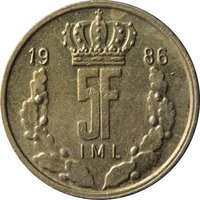
Face value centered under a royal crown, flanked by the year's mint figures and a stylized laurel wreath. The initials IML appear below.
Inscription:
1987
1F
IML
1F
IML
Script: Latin
Engravers: Julien Lefèvre, Nina Victorine Lefèvre-Kestler
Edge
Reeded
Mints
| Name | Mark |
|---|---|
| Royal Mint of Belgium | — |
Mintings
| Year | Mint Mark | Mintage | Quality | Collection |
|---|---|---|---|---|
| 1986 | — | — | ||
| 1987 | — | 3,000,000 |
🌱 Very Common