Logo Title
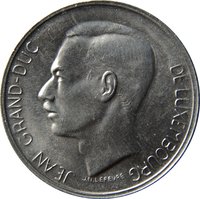
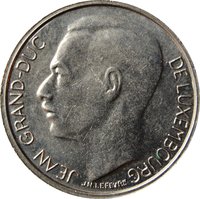
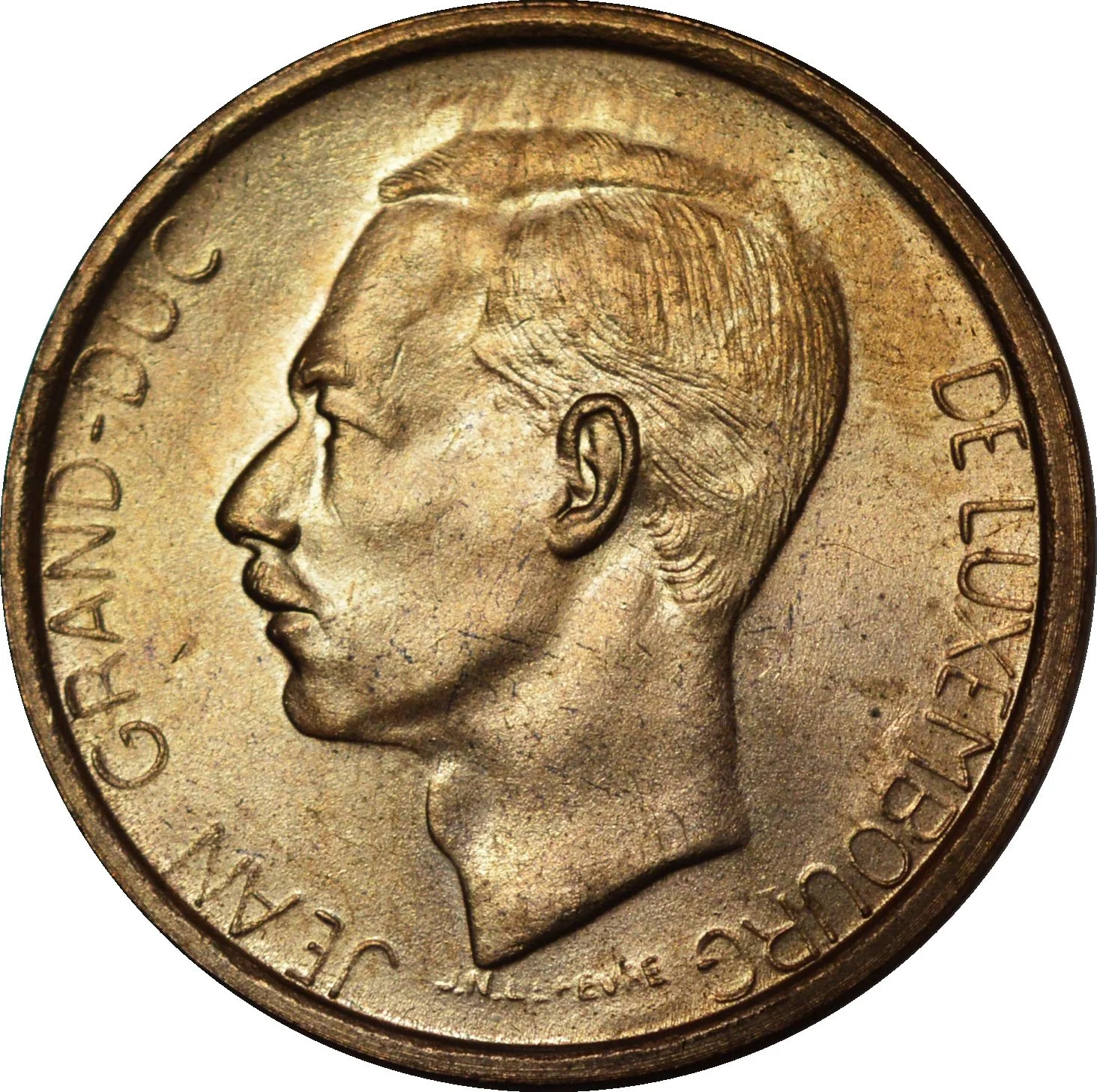
obverse
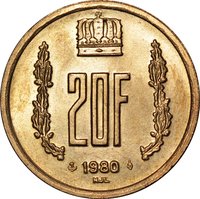
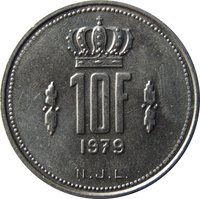
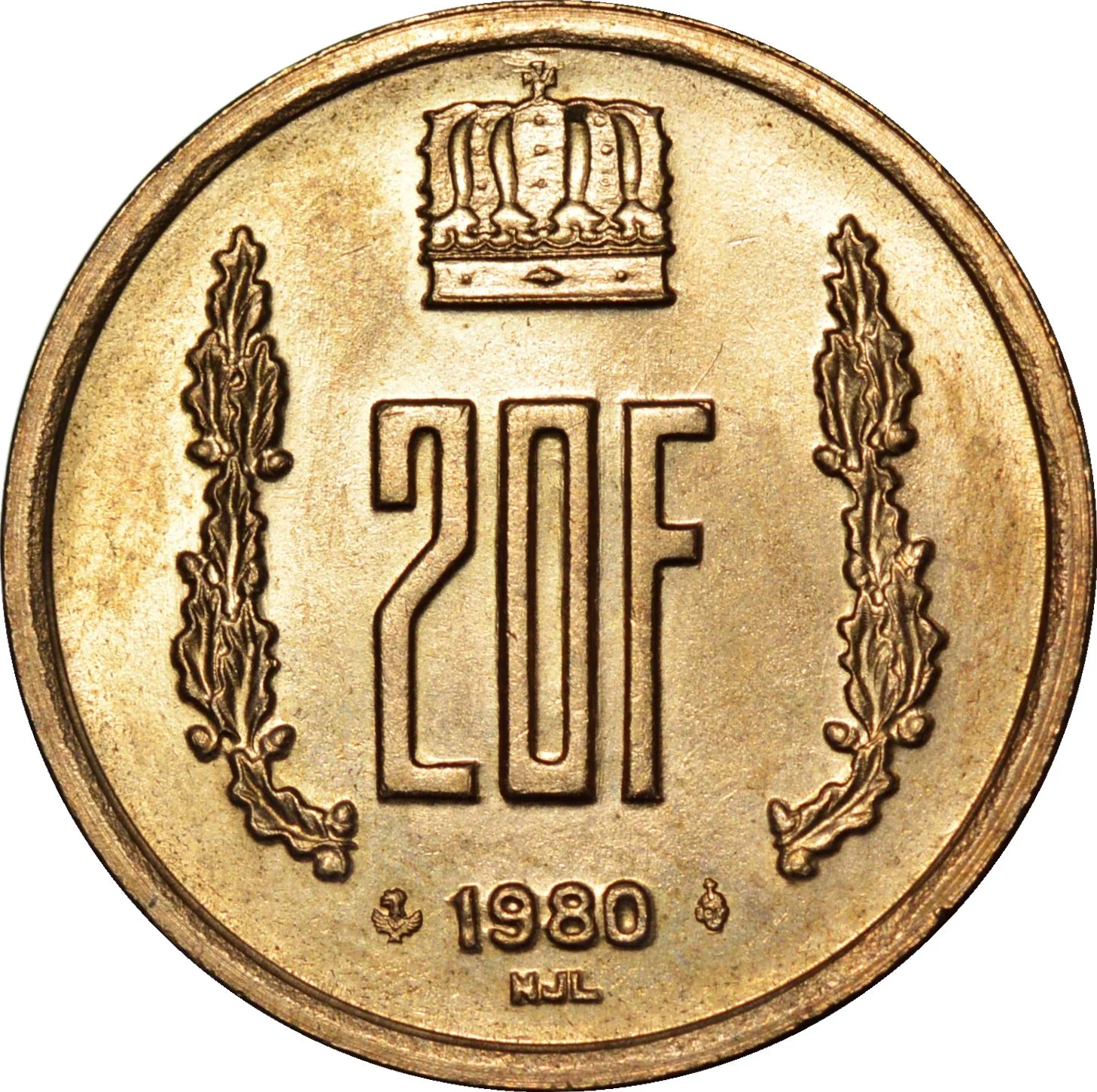
reverse
Reverse smy77 CC BY-NC-SA

20 Francs – Grand Duchy of Luxembourg

Luxembourg
Context
Years: 1980–1983
Country: Luxembourg Country flag
Ruler: Jean
Currency:
(1854—2001)
Demonetization: 28 February 2002
Total mintage: 11,000,000
Material
Diameter: 25.65 mm
Weight: 8.5 g
Thickness: 2.33 mm
Shape: Round
Technique: Milled
Alignment: Coin alignment
Obverse
OBVERSE ↑
flip
Reverse
REVERSE ↓
References
KM: #Click to copy to clipboard58
Numista: #246
Value
Exchange value: 20 LUF
Inflation-adjusted value: 69.90 LUF

Obverse

Description:
Portrait left of Grand Duke Jean of Luxembourg (1921–), flanked by his name and the engraver's signature.
Inscription:
JEAN GRAND-DUC DE LUXEMBOURG

J.N. LEFEVRE
Translation:
John, Grand Duke of Luxembourg

J.N. Lefevre
Script: Latin
Language: French

Reverse

Description:
Face value under a crown, framed by oak branches. Date at bottom with mint and privy marks; engravers' initials below.
Inscription:
20F

1980

NJL
Script: Latin

Edge

Smooth adorned with a hollowed guilloche

Categories

Person> Monarch
Symbol> Crown

Mints

NameMark
Royal Mint of Belgium

Mintings

YearMint MarkMintageQualityCollection
19803,000,000
19813,000,000
19823,000,000
19832,000,000

Historical background

In 1980, the Grand Duchy of Luxembourg was a full and active participant in the European Monetary System (EMS), which had been launched in March 1979. This system aimed to create a zone of monetary stability in Europe by reducing exchange rate volatility. Luxembourg's currency, the Luxembourg franc, was firmly pegged to the Belgian franc at a 1:1 parity through the Belgium-Luxembourg Economic Union (BLEU), an arrangement dating back to 1921. Consequently, the Luxembourg franc did not float independently but moved in lockstep with the Belgian franc within the EMS's Exchange Rate Mechanism (ERM), which allowed for limited fluctuations against other European currencies like the German Deutsche Mark.

Domestically, this arrangement provided significant economic stability for Luxembourg's small, open, and highly trade-dependent economy. The fixed link to the Belgian franc, and by extension the broader EMS framework, facilitated seamless cross-border transactions with its largest trading partner, Belgium, and helped control inflation. The Luxembourg franc itself existed primarily as banknotes and accounting units; Belgian franc banknotes circulated freely within the Grand Duchy, though Luxembourg issued its own distinct franc coins for everyday use.

Looking forward from the 1980 perspective, Luxembourg's currency situation was one of embedded integration, setting a clear trajectory toward deeper European monetary union. The stability of the EMS and the BLEU peg were seen as foundational steps. While the Luxembourg franc remained a national symbol, its practical operation was already deeply intertwined with European partners, laying the groundwork for Luxembourg's later enthusiastic adoption of the single European currency, the euro, decades later.
🌱 Very Common