

8 Skilling – Norway
Norway
Context
Year: 1817
Issuer: Norway 
Ruler: Charles II
Currency:
(1816—1875)
Demonetized: Yes
Total mintage: 240,600
Material
References
KM: #Click to copy to clipboard285
Numista: #25138
Value
Bullion value: $4.78
Obverse
Description:
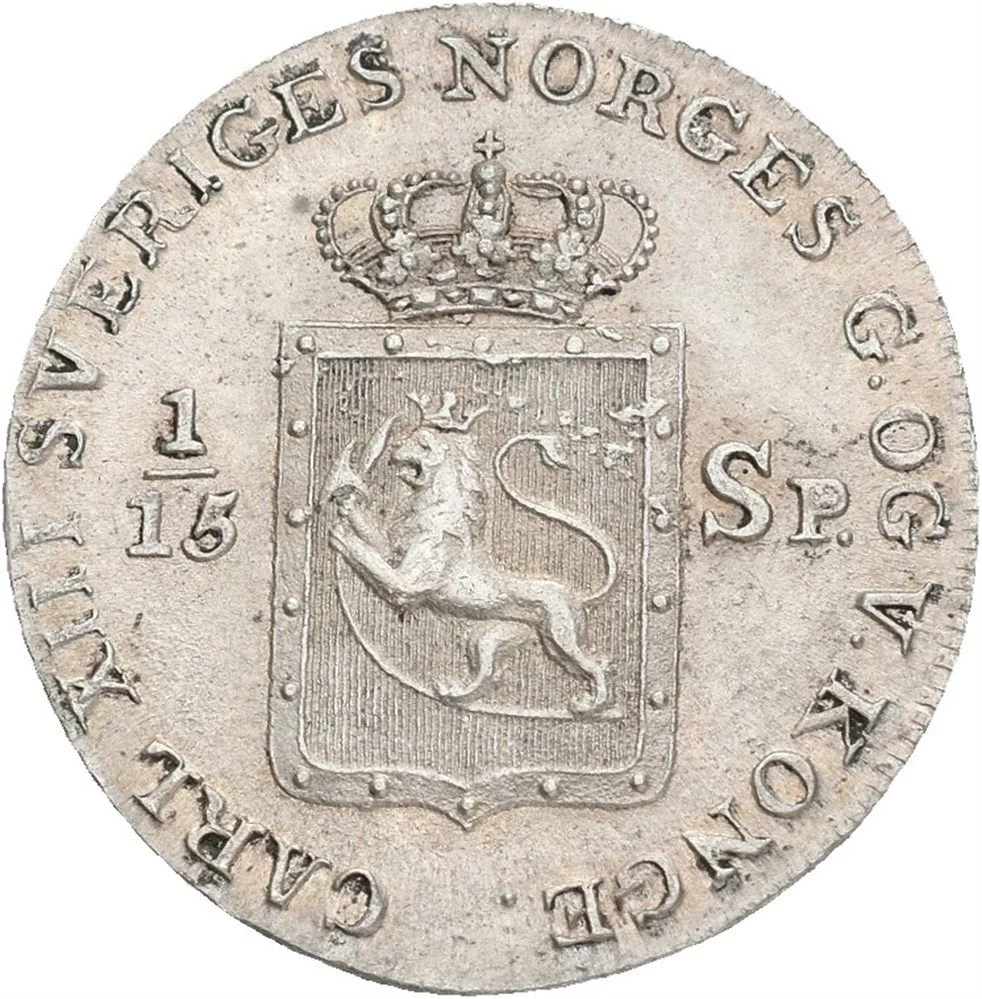
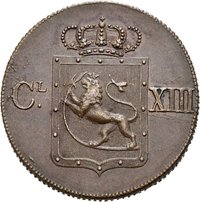
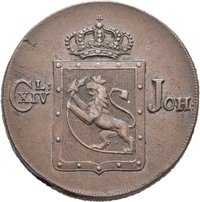
Crowned rectangular shield with beaded border, containing a crowned Norwegian lion facing left and holding a halberd on a vertically lined field. Inscription surrounds the shield, with value separated by it. Toothed rim.
Inscription:
CARL XIII SVERIGES NORGES G. OG V. KONGE.
1/15 | SP.
1/15 | SP.
Translation:
Carl XIII, Sweden's and Norway's G[race] and V[ictory] King.
1/15 | SP[ecimen].
1/15 | SP[ecimen].
Script: Latin
Reverse
Description:
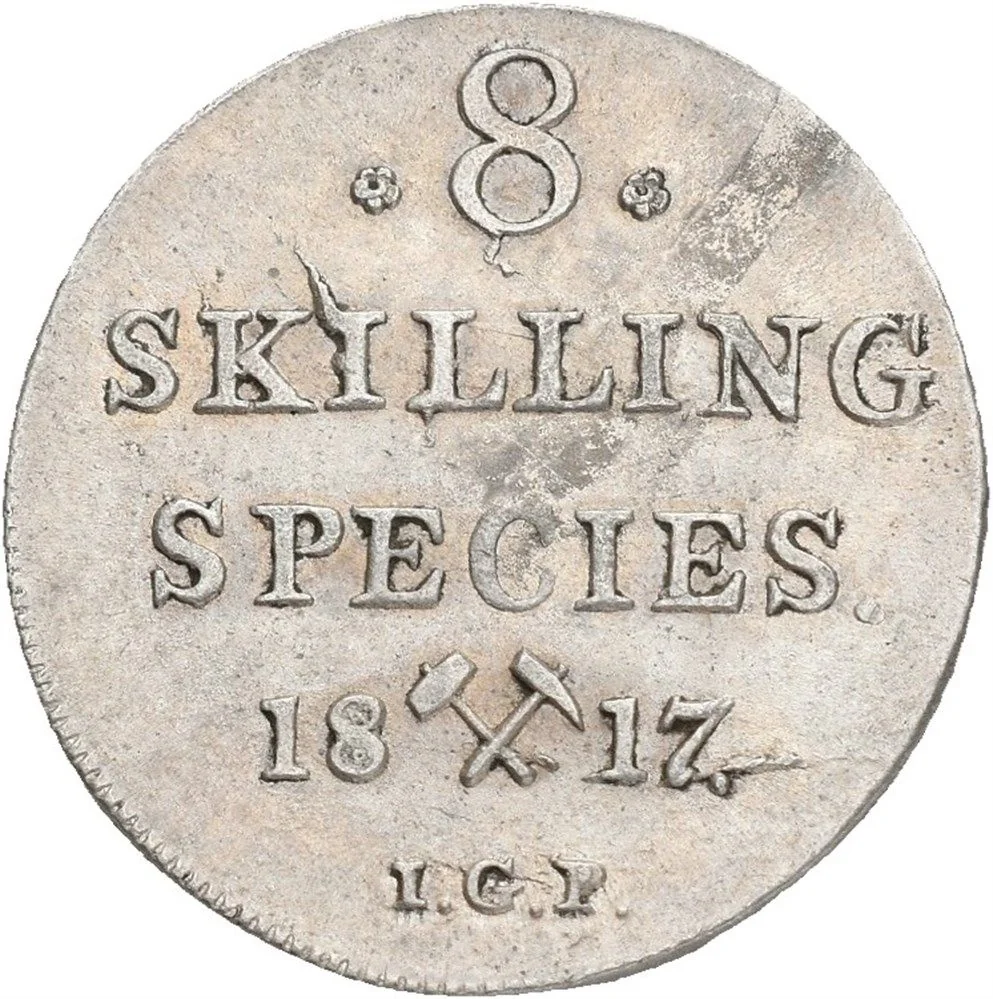
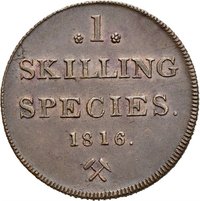
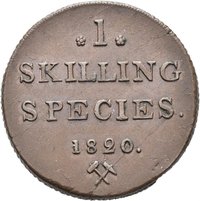
Value and date on four lines.
Date divided by mintmark.
Mintmaster's initials below.
Toothed rim.
Date divided by mintmark.
Mintmaster's initials below.
Toothed rim.
Inscription:
⁕ 8 ⁕
SKILLING
SPECIES.
18 ⚒ 17.
I.G.P.
SKILLING
SPECIES.
18 ⚒ 17.
I.G.P.
Script: Latin
Edge
Mints
| Name | Mark |
|---|---|
| Norwegian Mint | — |
Mintings
| Year | Mint Mark | Mintage | Quality | Collection |
|---|---|---|---|---|
| 1817 | — | 240,600 |
Historical background
Following the Napoleonic Wars, Norway entered a period of profound economic crisis in 1817. The newly independent nation, forced into a union with Sweden in 1814, inherited a severe debt from the war years and a currency system in complete disarray. The previous Danish-Norwegian rigsdaler had been heavily devalued due to the wartime suspension of the silver standard and the excessive printing of paper money (kronesedler) to finance the conflict. This resulted in rampant inflation, a severe loss of public confidence in the paper currency, and a chaotic monetary environment where the value of money differed wildly across regions.
In direct response to this crisis, the Norwegian Parliament (Stortinget) took decisive action in 1816 by passing two landmark acts: one to establish Norges Bank (the central bank of Norway) and another to introduce a new monetary unit, the speciedaler. The core mandate was to restore stability by replacing the discredited paper money with a credible currency backed by silver. Norges Bank, which began operations in 1817, was given a monopoly on note issuance and was tasked with managing the complex conversion from the old inflationary notes to the new speciedaler at a fixed, but punishing, rate.
Thus, the currency situation in 1817 was one of tense transition and austerity. The conversion rate was set at one new speciedaler for ten old riksdaler, a drastic devaluation that aimed for long-term stability but caused significant short-term hardship for many debtors and citizens. While the establishment of Norges Bank and the silver-backed speciedaler laid the definitive foundation for Norway's modern, stable monetary system, the year itself was marked by the painful implementation of these measures, as the country absorbed the financial shocks of its post-war reckoning.
In direct response to this crisis, the Norwegian Parliament (Stortinget) took decisive action in 1816 by passing two landmark acts: one to establish Norges Bank (the central bank of Norway) and another to introduce a new monetary unit, the speciedaler. The core mandate was to restore stability by replacing the discredited paper money with a credible currency backed by silver. Norges Bank, which began operations in 1817, was given a monopoly on note issuance and was tasked with managing the complex conversion from the old inflationary notes to the new speciedaler at a fixed, but punishing, rate.
Thus, the currency situation in 1817 was one of tense transition and austerity. The conversion rate was set at one new speciedaler for ten old riksdaler, a drastic devaluation that aimed for long-term stability but caused significant short-term hardship for many debtors and citizens. While the establishment of Norges Bank and the silver-backed speciedaler laid the definitive foundation for Norway's modern, stable monetary system, the year itself was marked by the painful implementation of these measures, as the country absorbed the financial shocks of its post-war reckoning.
💎 Extremely Rare