

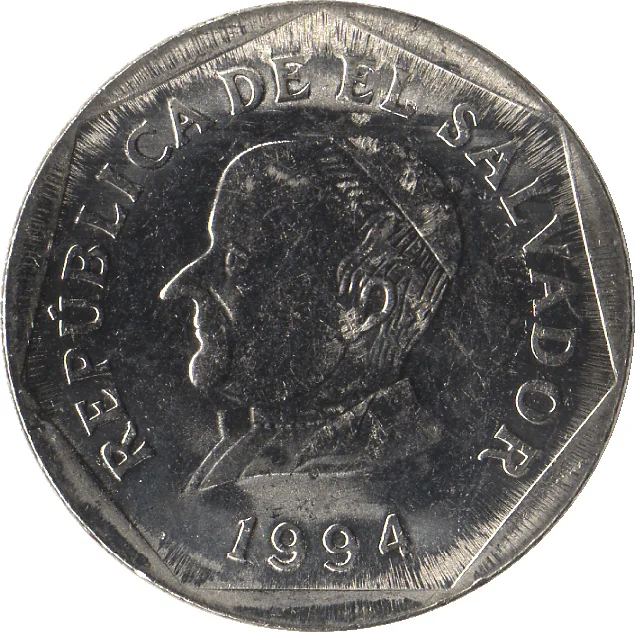
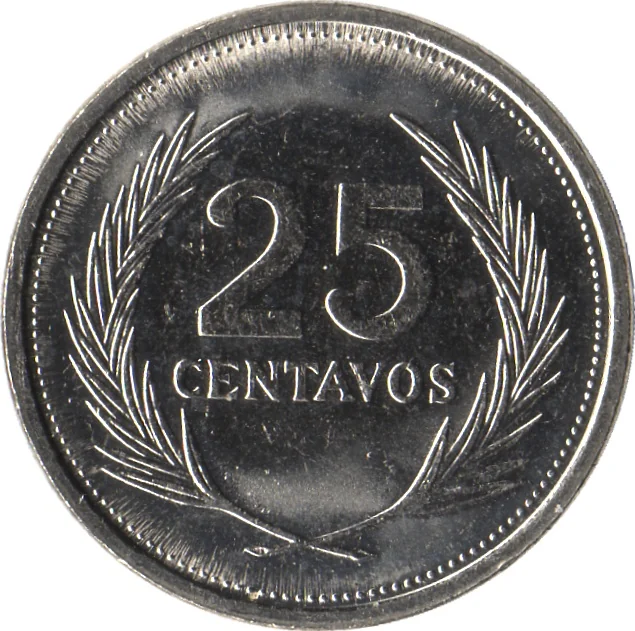
25 centavos – El Salvador
Add to wishlist
El Salvador
Context
Years: 1993–2000
Issuer: El Salvador
Issuing organization: Central Reserve Bank of El Salvador
Period:
(since 1841)
Currency:
(since 1892)
Demonetization: 1 January 2001
Material
References
KM: #
Numista: #2506
Value
Exchange value: 0.25 SVC
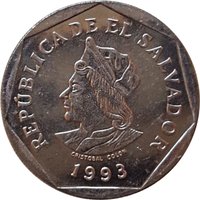
Obverse
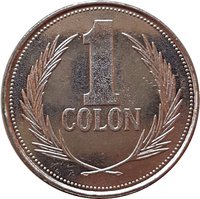
Reverse
Edge
Reeded
Categories
| Person> Politician |
| Symbol> Wreath |
Mints
| Name | Mark |
|---|---|
| Royal Mint | — |
| Sherritt Mint | — |
Mintings
| Year | Mint Mark | Mintage | Quality | Collection |
|---|---|---|---|---|
| 1993 | — | — | ||
| 1994 | — | — | ||
| 1998 | — | — | ||
| 1999 | — | — | ||
| 2000 | — | — | In sets |
Historical background
In 1993, El Salvador's currency situation was defined by a period of significant transition and stability, operating under a formal dual-currency system. The official currency was the Salvadoran colón, which had been historically pegged to the US dollar at a fixed rate of 2.5 colones to one dollar since 1986. This peg, established during the civil war, was a crucial tool for the government to control inflation and provide monetary stability amidst political turmoil. By 1993, this policy had largely succeeded in taming hyperinflation, creating a predictable exchange rate environment for commerce and finance.
However, the US dollar itself circulated widely and informally alongside the colón, used extensively in major commercial transactions, real estate, and banking. This de facto dollarization was a legacy of extensive remittances from Salvadorans living abroad (primarily in the United States) and a lack of public confidence in the colón following periods of economic instability. Consequently, the economy functioned with two parallel currencies, with the dollar often preferred for savings and large purchases due to its perceived strength and stability.
The backdrop to this monetary landscape was the nation's recent emergence from a devastating 12-year civil war, which ended in 1992. The government of President Alfredo Cristiani, focused on postwar reconstruction and economic liberalization, maintained the fixed exchange rate as a cornerstone of macroeconomic policy. This stability was seen as essential for attracting foreign investment and fostering recovery. Thus, the currency situation in 1993 was one of deliberate stasis, with the fixed peg providing a foundation for peace-time economic rebuilding, while the growing shadow of the US dollar foreshadowed the full dollarization that would officially replace the colón nearly a decade later in 2001.
However, the US dollar itself circulated widely and informally alongside the colón, used extensively in major commercial transactions, real estate, and banking. This de facto dollarization was a legacy of extensive remittances from Salvadorans living abroad (primarily in the United States) and a lack of public confidence in the colón following periods of economic instability. Consequently, the economy functioned with two parallel currencies, with the dollar often preferred for savings and large purchases due to its perceived strength and stability.
The backdrop to this monetary landscape was the nation's recent emergence from a devastating 12-year civil war, which ended in 1992. The government of President Alfredo Cristiani, focused on postwar reconstruction and economic liberalization, maintained the fixed exchange rate as a cornerstone of macroeconomic policy. This stability was seen as essential for attracting foreign investment and fostering recovery. Thus, the currency situation in 1993 was one of deliberate stasis, with the fixed peg providing a foundation for peace-time economic rebuilding, while the growing shadow of the US dollar foreshadowed the full dollarization that would officially replace the colón nearly a decade later in 2001.
🌱 Very Common