

100 francs – Gabon
Add to wishlist
Gabon
Obverse
Description:
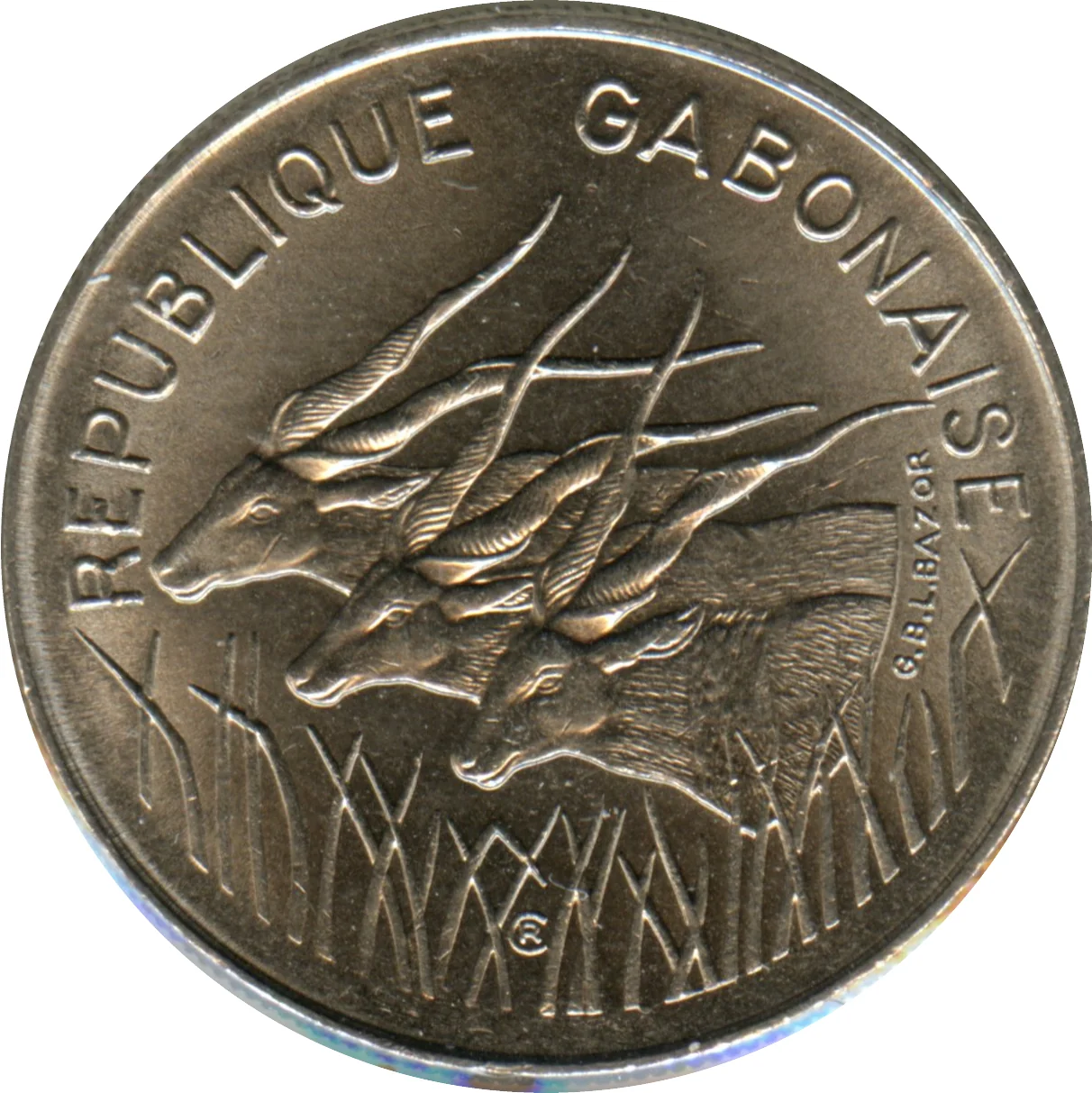
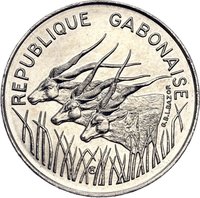
Three large eland departed.
Inscription:
REPUBLIQUE GABONAISE
G.B.L.BAZOR
CR
G.B.L.BAZOR
CR
Translation:
GABONESE REPUBLIC
G.B.L.BAZOR
CR
G.B.L.BAZOR
CR
Script: Latin
Language: French
Engraver: Lucien Georges Bazor
Reverse
Edge
Milled
Mints
| Name | Mark |
|---|---|
| Monnaie de Paris | — |
Mintings
| Year | Mint Mark | Mintage | Quality | Collection |
|---|---|---|---|---|
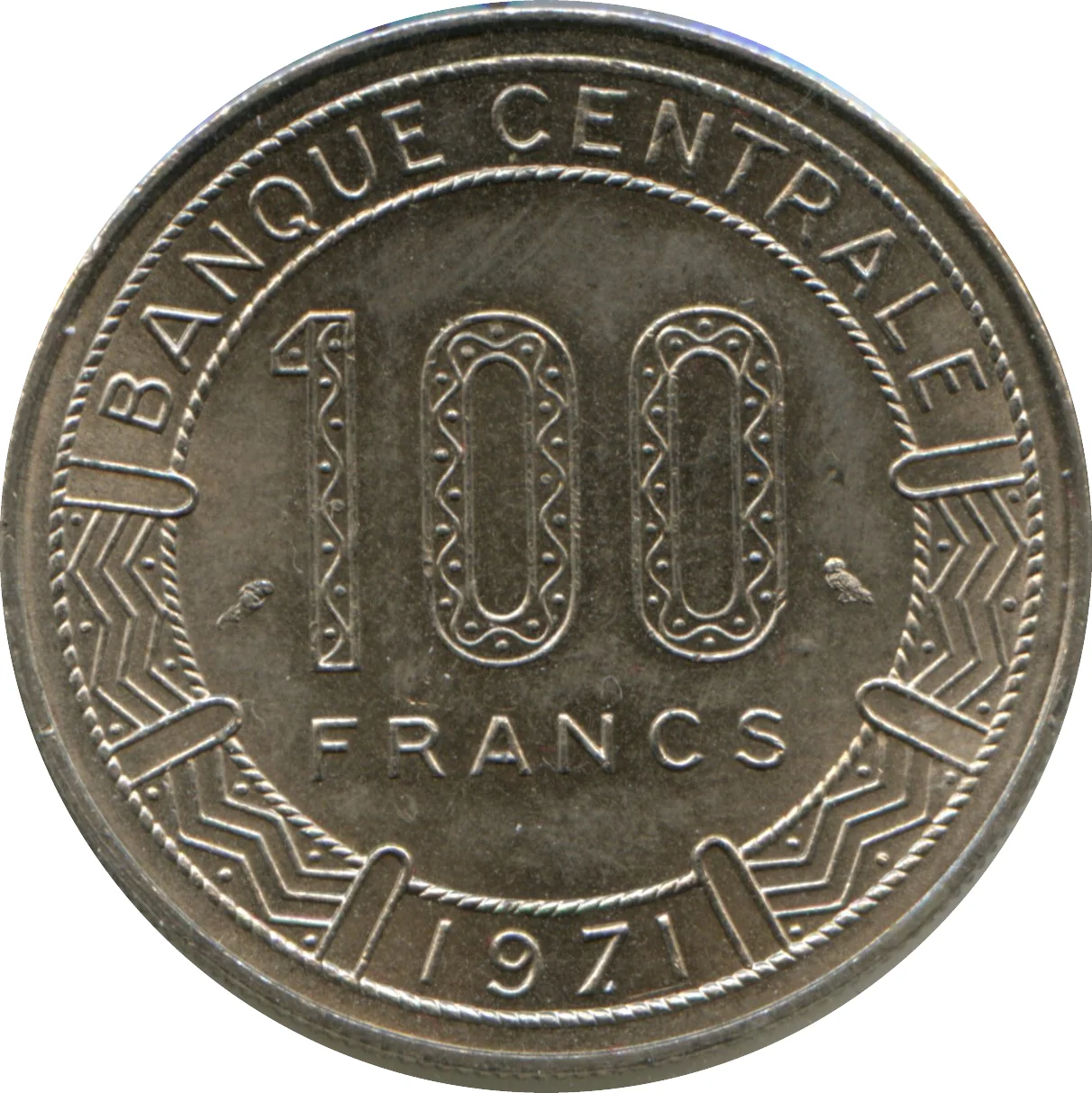
| 1971 | — | 1,300,000 | ||
| 1972 | — | 2,000,000 |
Historical background
In 1971, Gabon’s currency situation was defined by its membership in the Franc Zone (Zone Franc) and its use of the CFA franc, specifically the Communauté Financière Africaine (CFA) franc. This currency was, and remains, pegged to the French franc at a fixed exchange rate, with convertibility guaranteed by the French Treasury. For Gabon in 1971, this arrangement provided significant monetary stability and low inflation, which was particularly advantageous as the country was in the early stages of an oil boom. The fixed peg facilitated predictable trade and investment flows with France, its dominant economic partner.
Economically, this period was one of growing prosperity due to the rapid expansion of offshore oil production, which began in earnest in the late 1960s. The influx of petroleum revenue strengthened Gabon's balance of payments and foreign exchange reserves. Consequently, the country did not face the currency crises or severe devaluations that plagued many non-franc zone developing nations. The CFA franc system effectively outsourced monetary policy to the Banque Centrale des États de l'Afrique Centrale (BEAC), established just two years prior in 1972 to succeed the common central bank for Equatorial Africa, allowing Gabon to focus fiscal policy on infrastructure and development projects funded by oil wealth.
However, this stability came with trade-offs. The fixed peg to the French franc, while ensuring convertibility, meant Gabon had no independent monetary policy to respond to local economic conditions. Furthermore, the CFA franc was often considered overvalued, which could have hindered the competitiveness of non-oil exports, such as timber and manganese. Nevertheless, in 1971, these concerns were largely overshadowed by the overwhelming benefits of oil revenue within a stable monetary framework, positioning Gabon as one of the most economically robust countries in Central Africa.
Economically, this period was one of growing prosperity due to the rapid expansion of offshore oil production, which began in earnest in the late 1960s. The influx of petroleum revenue strengthened Gabon's balance of payments and foreign exchange reserves. Consequently, the country did not face the currency crises or severe devaluations that plagued many non-franc zone developing nations. The CFA franc system effectively outsourced monetary policy to the Banque Centrale des États de l'Afrique Centrale (BEAC), established just two years prior in 1972 to succeed the common central bank for Equatorial Africa, allowing Gabon to focus fiscal policy on infrastructure and development projects funded by oil wealth.
However, this stability came with trade-offs. The fixed peg to the French franc, while ensuring convertibility, meant Gabon had no independent monetary policy to respond to local economic conditions. Furthermore, the CFA franc was often considered overvalued, which could have hindered the competitiveness of non-oil exports, such as timber and manganese. Nevertheless, in 1971, these concerns were largely overshadowed by the overwhelming benefits of oil revenue within a stable monetary framework, positioning Gabon as one of the most economically robust countries in Central Africa.
🌱 Common