

10 Sen – Netherlands East Indies
Indonesia
Context
Years: 1943–1944
Country: Indonesia 
Issuer: Netherlands East Indies
Period:
(1942—1945)
Currency:
(1942—1944)
Demonetized: Yes
Total mintage: 180,000,000
Material
References
Y: #Click to copy to clipboard66
Numista: #24740
Obverse
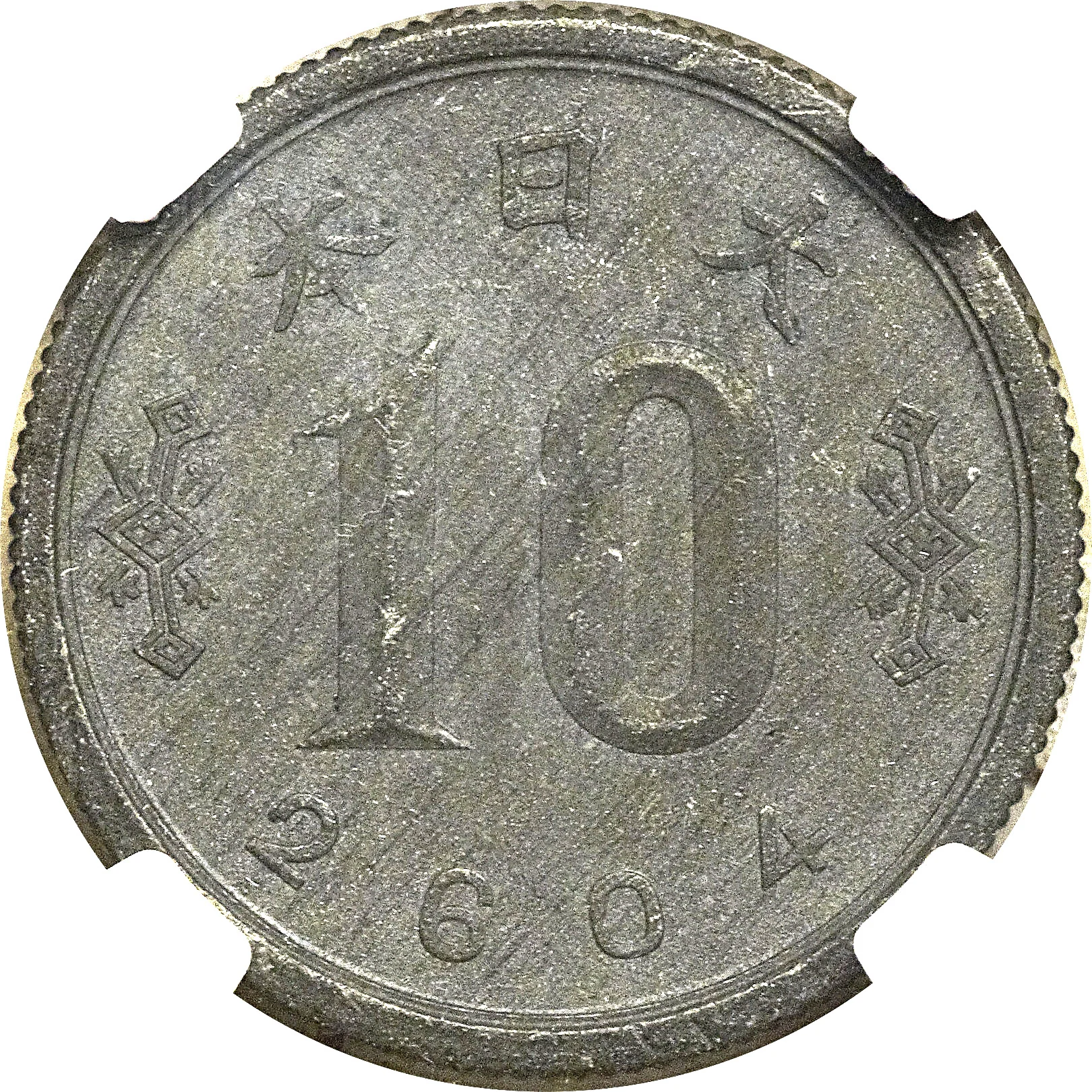
Description:
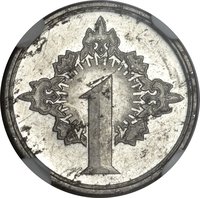
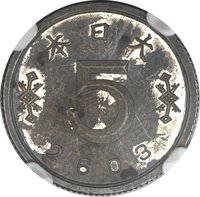
Issuing authority, value, date.
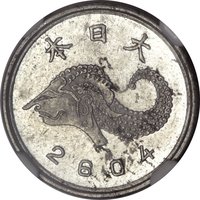
Inscription:
本日大
10
2604
10
2604
Translation:
10 Yen
2604
2604
Language: Japanese
Reverse
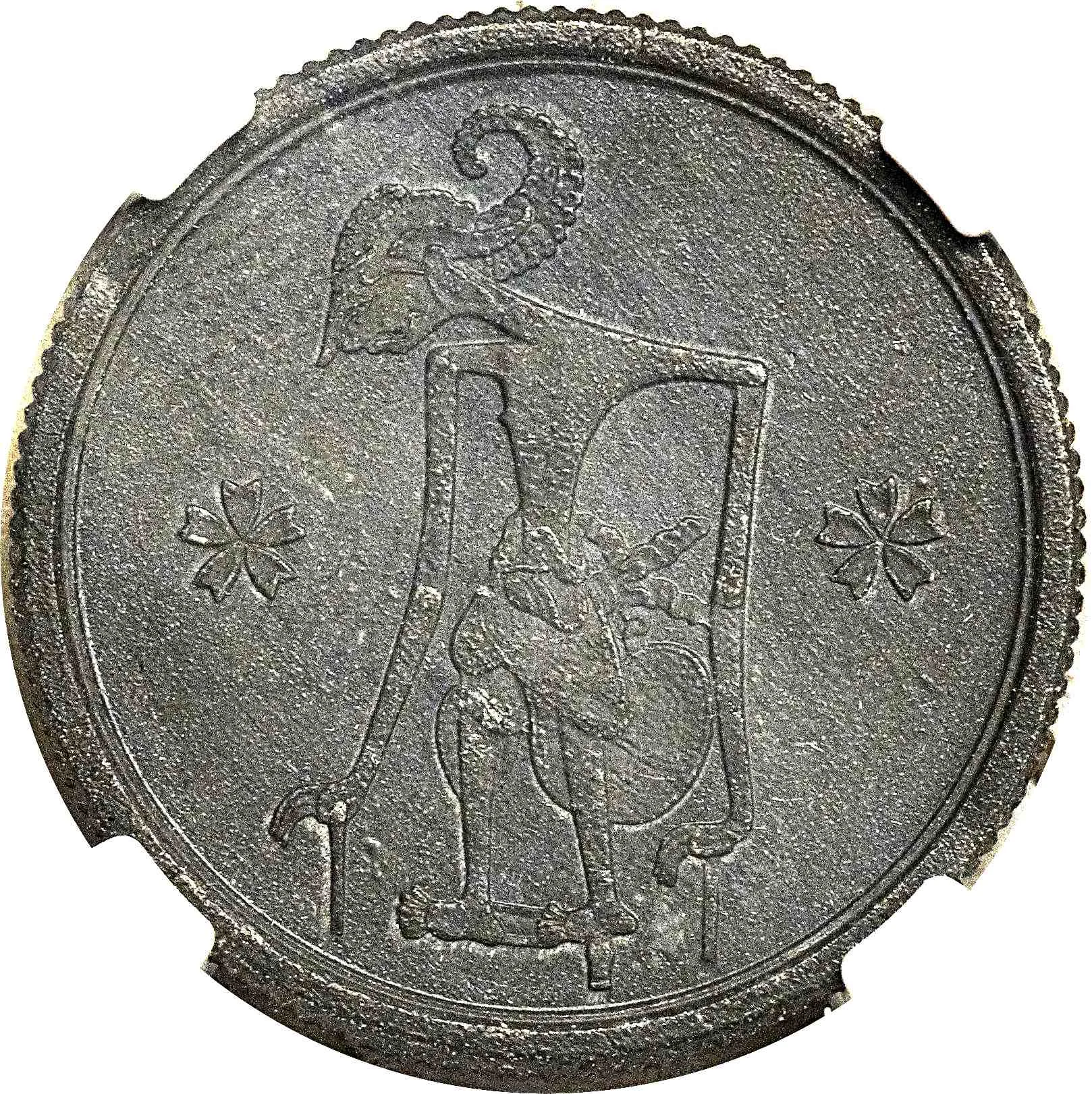
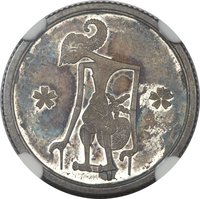
Description:
Wayang puppet between two sakuras.
Edge
Reeded
Mints
| Name | Mark |
|---|---|
| Japan Mint | — |
Mintings
| Year | Mint Mark | Mintage | Quality | Collection |
|---|---|---|---|---|
| 1943 | — | 69,490,000 | ||
| 1944 | — | 110,510,000 |
Historical background
By 1943, the currency situation in the Japanese-occupied Netherlands East Indies (NEI) was one of severe inflation and economic degradation. The Japanese military administration, having outlawed the pre-war Netherlands Indies gulden, had replaced it with two parallel currencies: the "Netherlands Indies gulden" issued by the Japanese-controlled Nanpo Kaihatsu Kinko (Southern Development Bank) and the "gulden" military scrip (gunpyō) issued directly by the Japanese Imperial Army. Both were fiat currencies, declared legal tender by force, and were printed in ever-increasing quantities to fund the occupation and Japan's war effort, with no substantial reserves to back them.
This uncontrolled money printing led to rampant inflation, as the volume of currency in circulation skyrocketed while the availability of goods and services collapsed. The archipelago's economy was ruthlessly reoriented toward supporting Japan's military needs, causing severe shortages of food, clothing, and basic necessities. The official currency rapidly lost its value and public trust, leading to the widespread use of barter trade in rural areas and a thriving black market in the cities, where pre-war Dutch guilders, Japanese occupation guilders, and even other regional currencies traded at wildly different values based on their perceived stability.
The deteriorating currency was a direct reflection of the broader humanitarian crisis. As the money became worthless, wages for forced laborers and salaried workers became meaningless, exacerbating malnutrition and hardship for the civilian population. The Japanese authorities attempted to impose price controls and rationing, but these measures were largely ineffective against the tide of hyperinflation. By 1943, the monetary chaos was deeply entrenched, systematically impoverishing the population and eroding the last vestiges of the colonial economic order.
This uncontrolled money printing led to rampant inflation, as the volume of currency in circulation skyrocketed while the availability of goods and services collapsed. The archipelago's economy was ruthlessly reoriented toward supporting Japan's military needs, causing severe shortages of food, clothing, and basic necessities. The official currency rapidly lost its value and public trust, leading to the widespread use of barter trade in rural areas and a thriving black market in the cities, where pre-war Dutch guilders, Japanese occupation guilders, and even other regional currencies traded at wildly different values based on their perceived stability.
The deteriorating currency was a direct reflection of the broader humanitarian crisis. As the money became worthless, wages for forced laborers and salaried workers became meaningless, exacerbating malnutrition and hardship for the civilian population. The Japanese authorities attempted to impose price controls and rationing, but these measures were largely ineffective against the tide of hyperinflation. By 1943, the monetary chaos was deeply entrenched, systematically impoverishing the population and eroding the last vestiges of the colonial economic order.
💎 Extremely Rare