

5 Francs Guinéens – Guinea
Guinea
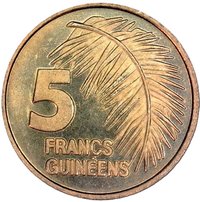
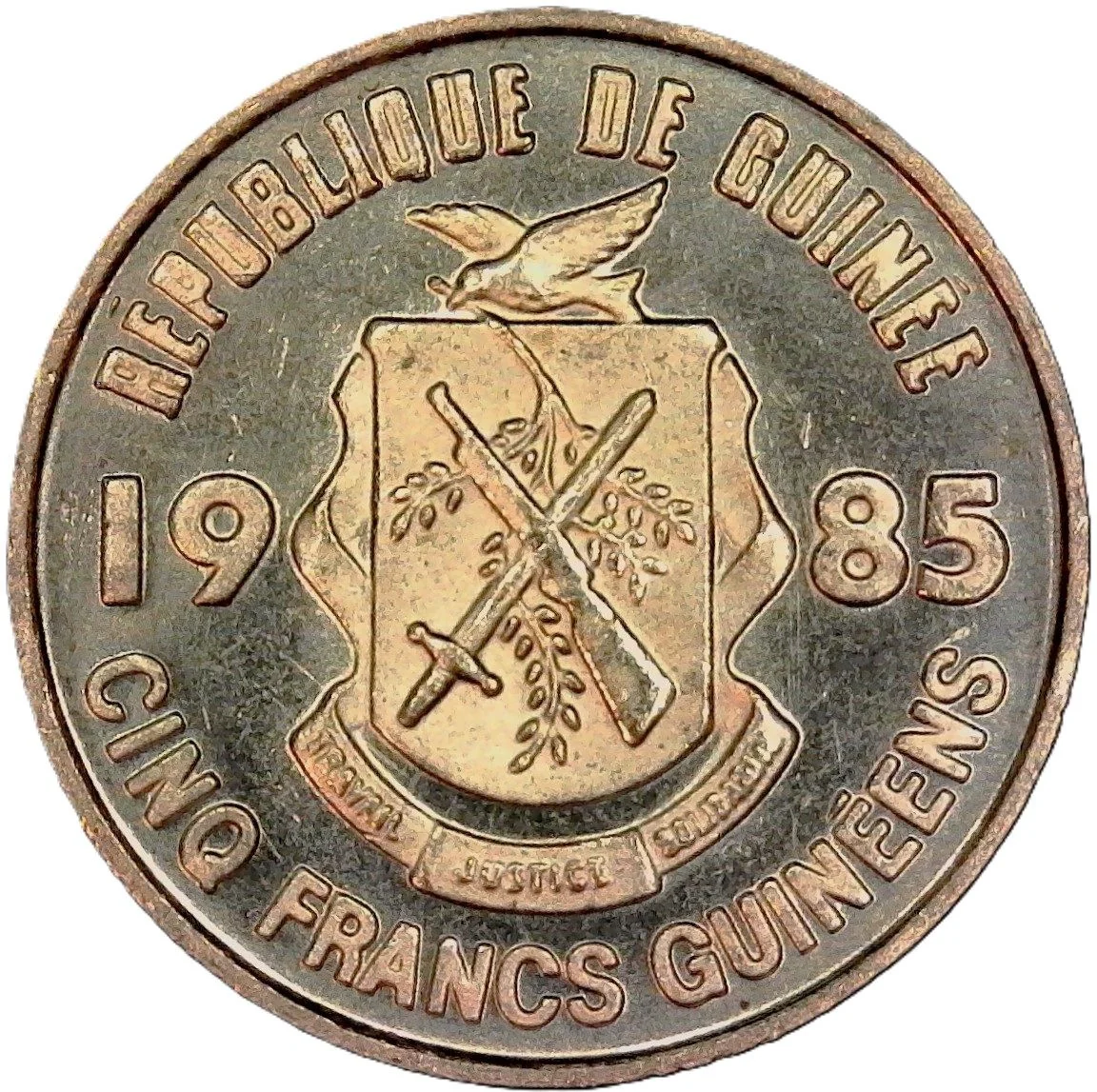
Obverse
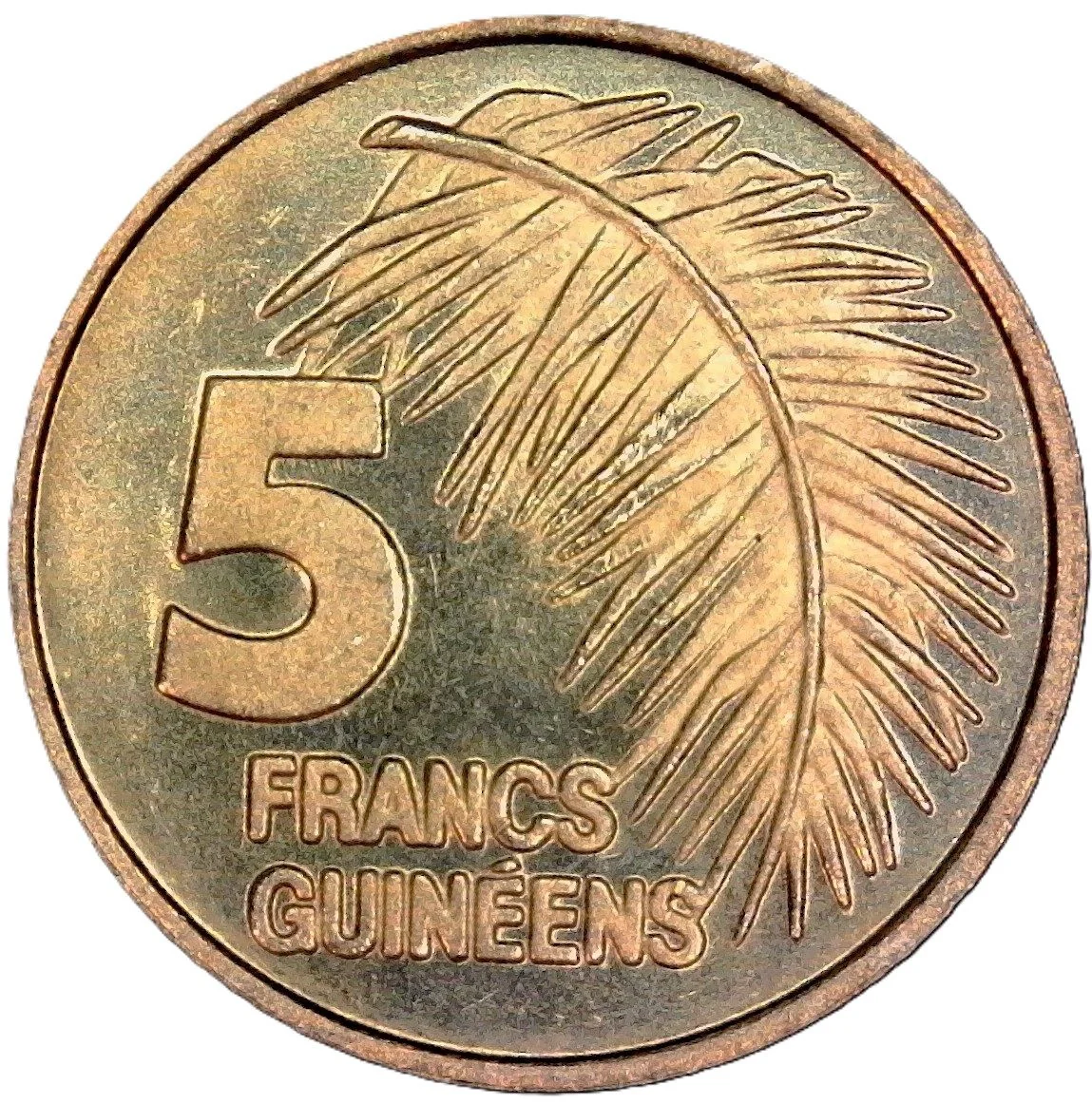
Reverse
Edge
Plain
Categories
| Animal> Bird |
| Symbols> Coat of Arms |
| Object> Cold weapons |
| Object> Firearms |
Mints
| Name | Mark |
|---|---|
| Staatliche Münze Baden-Württemberg | — |
Mintings
| Year | Mint Mark | Mintage | Quality | Collection |
|---|---|---|---|---|
| 1985 | — | — |
Historical background
In 1985, Guinea was under the authoritarian rule of President Ahmed Sékou Touré, who died in office just a year prior. The country's currency, the Guinean syli (GNE), was the product of Touré's radical economic policies, which had isolated Guinea from the international financial system. Established in 1972 to replace the Guinean franc, the syli symbolized economic independence but operated within a strictly controlled, state-socialist framework. By the mid-1980s, the currency was severely dysfunctional, characterized by an official exchange rate set by the government that was vastly overvalued compared to its worth on the burgeoning black market.
The economic reality was one of severe scarcity and distortion. The official economy, reliant on the overvalued syli, struggled with stagnant production, particularly in the vital bauxite and alumina sectors, which were the nation's primary source of foreign exchange. This led to chronic shortages of basic imported goods. Consequently, a vast parallel market for foreign currencies, especially the US dollar and the French franc, flourished. This black market became the de facto mechanism for most real economic transactions, undermining the official banking system and government authority, while fueling corruption and inefficiency.
The situation in 1985 set the stage for imminent and profound monetary reform. The successor government of President Lansana Conté, who took power after Touré's death, recognized the syli as untenable. Therefore, the currency landscape of 1985 represents the final year of a failed monetary experiment. The following year, in 1986, the Conté government would decisively abandon the syli and reintroduce the Guinean franc (GNF) as part of a structural adjustment program aimed at economic liberalization and reintegration with the International Monetary Fund and the World Bank.
The economic reality was one of severe scarcity and distortion. The official economy, reliant on the overvalued syli, struggled with stagnant production, particularly in the vital bauxite and alumina sectors, which were the nation's primary source of foreign exchange. This led to chronic shortages of basic imported goods. Consequently, a vast parallel market for foreign currencies, especially the US dollar and the French franc, flourished. This black market became the de facto mechanism for most real economic transactions, undermining the official banking system and government authority, while fueling corruption and inefficiency.
The situation in 1985 set the stage for imminent and profound monetary reform. The successor government of President Lansana Conté, who took power after Touré's death, recognized the syli as untenable. Therefore, the currency landscape of 1985 represents the final year of a failed monetary experiment. The following year, in 1986, the Conté government would decisively abandon the syli and reintroduce the Guinean franc (GNF) as part of a structural adjustment program aimed at economic liberalization and reintegration with the International Monetary Fund and the World Bank.
Series: 1985 Guinea circulation coins
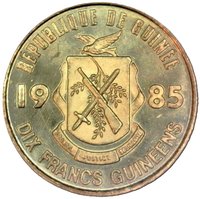
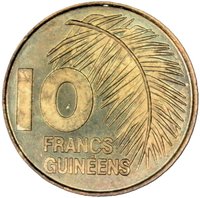
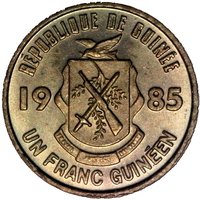
🌱 Common