

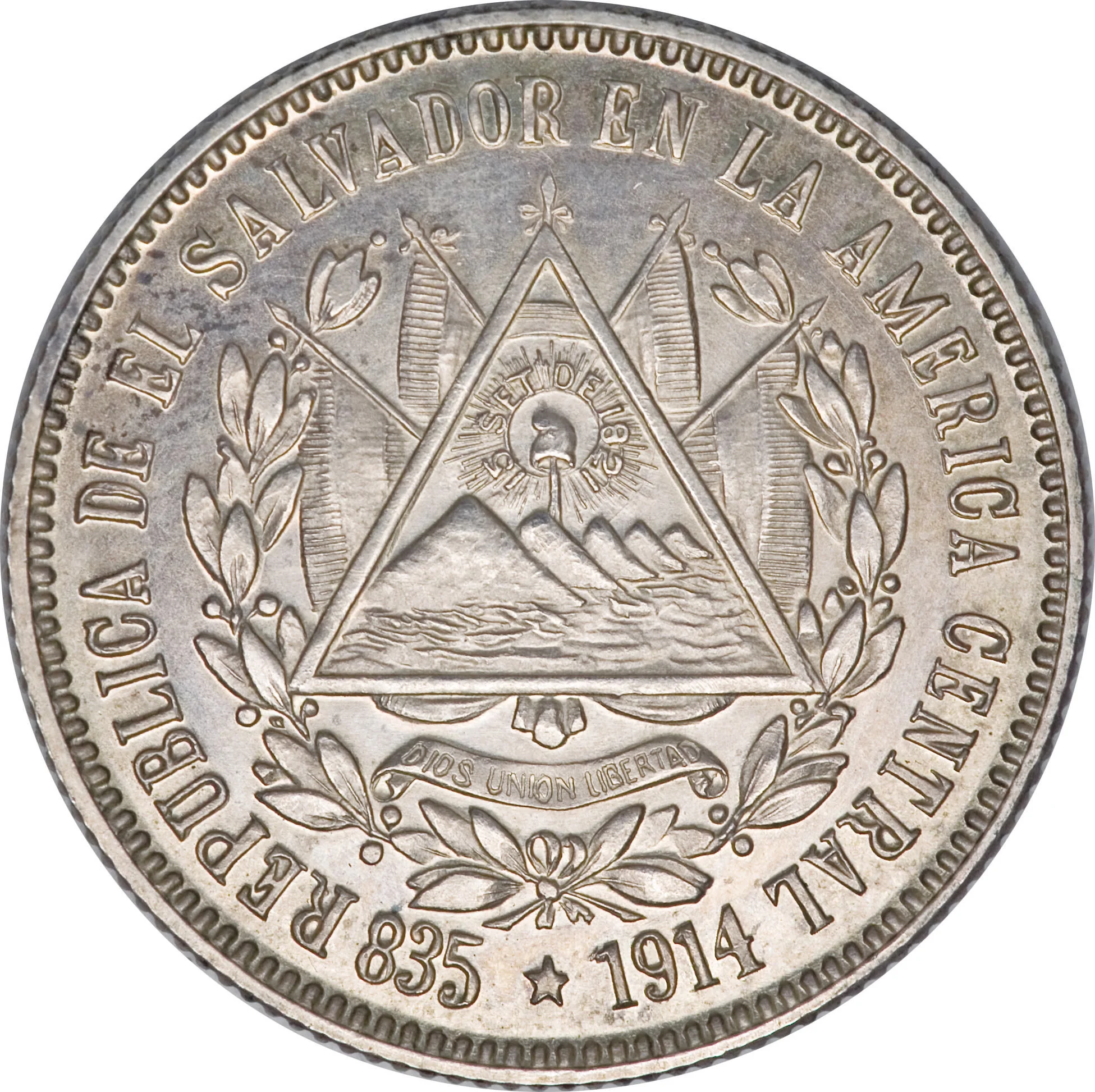
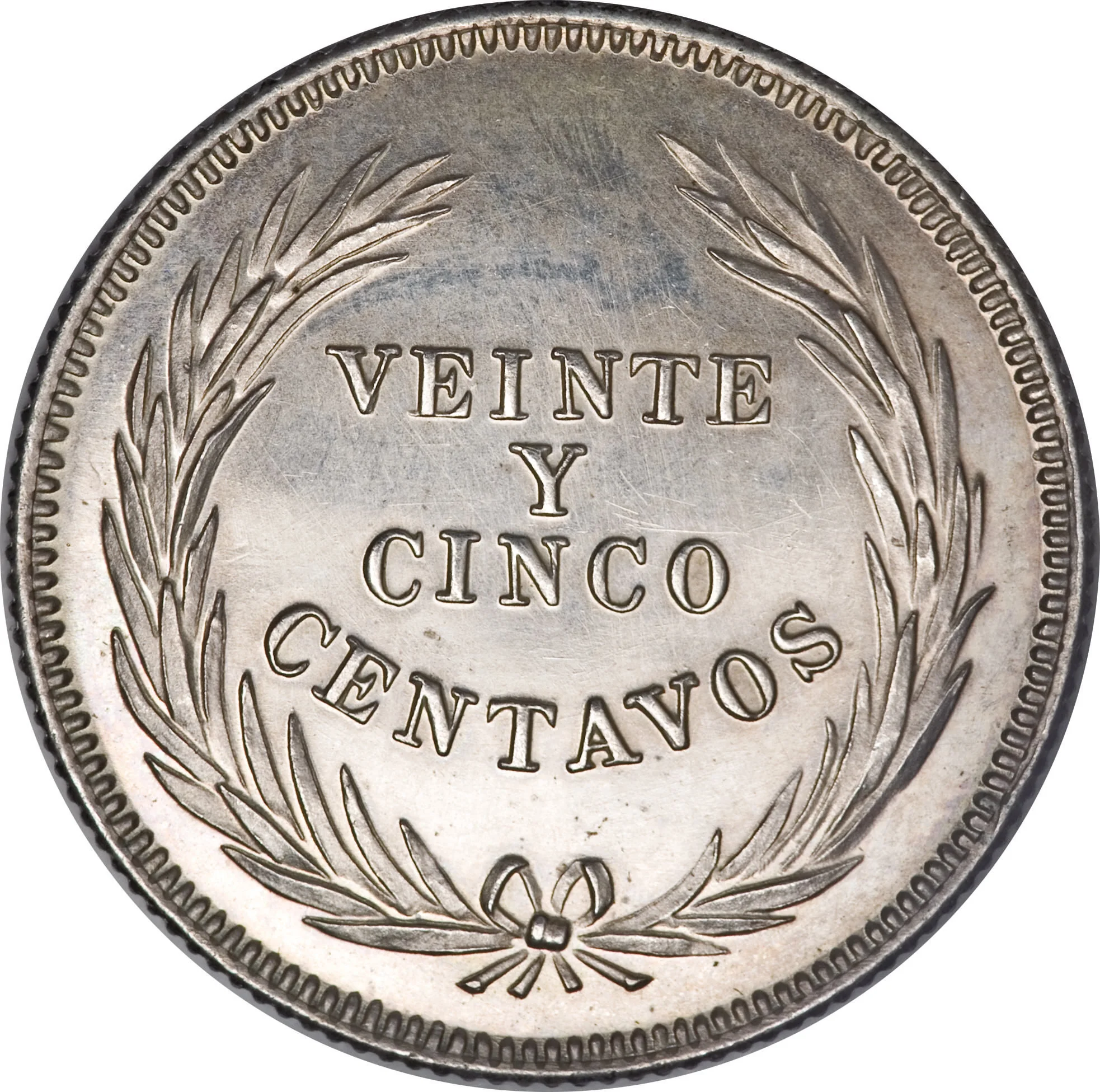
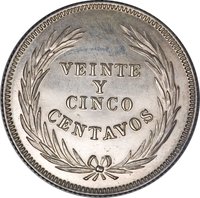
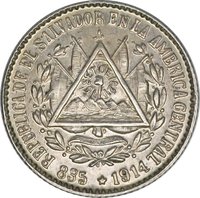
25 Centavos – El Salvador
El Salvador
Context
Year: 1914
Issuer: El Salvador 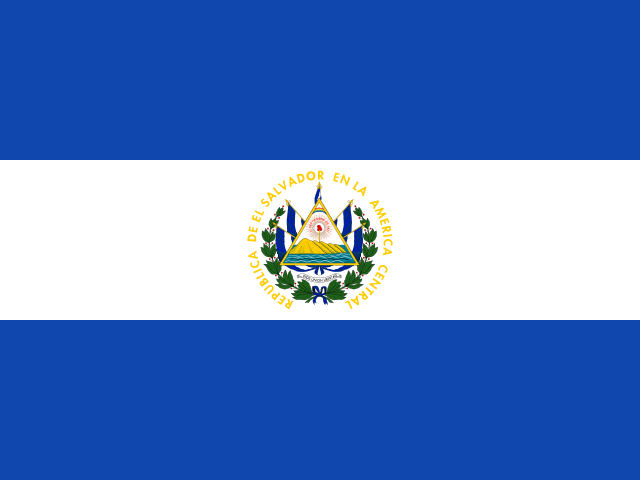
Period:
(since 1841)
Currency:
(since 1892)
Demonetization: 23 December 1941
Total mintage: 1,400,020
Material
References
KM: #Click to copy to clipboard126
Numista: #24719
Value
Exchange value: 0.25 SVC
Bullion value: $15.05
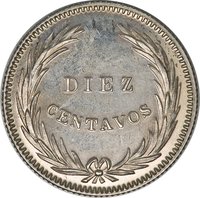
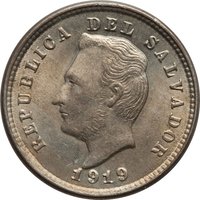
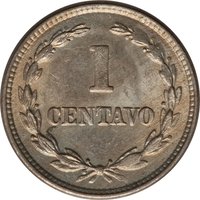
Obverse
Reverse
Edge
Categories
| Symbols> Coat of Arms |
| Symbol> Wreath |
Mints
| Name | Mark |
|---|---|
| United States Mint of Philadelphia | — |
Mintings
| Year | Mint Mark | Mintage | Quality | Collection |
|---|---|---|---|---|
| 1914 | — | 1,400,000 | ||
| 1914 | — | 20 | Proof |
Historical background
In 1914, El Salvador's currency situation was defined by a pivotal transition. The nation was moving away from a fragmented and complex system based on physical silver and gold coins, both domestic and foreign, toward a modern, centralized monetary standard. The official currency was the Salvadoran peso, but in practice, the economy relied heavily on the free circulation of various foreign silver dollars, particularly the U.S. dollar, the Peruvian sol, and the Mexican peso, which created inconsistency in daily transactions.
This period of monetary heterogeneity was coming to an end due to the Colón Law of 1914. This landmark legislation established the Salvadoran colón as the sole national currency, replacing the peso at a rate of 1 colón = 1 peso. Crucially, the law placed the colón on the gold exchange standard, pegging its value to the U.S. dollar at a fixed rate of 2 colónes = 1 U.S. dollar. This move was a deliberate strategy to stabilize the economy, attract foreign investment, and integrate more securely with international trade, particularly with the United States.
Therefore, the year 1914 represents a watershed moment rather than a static snapshot. It was the final year of an old, silver-based system and the birth of a new, gold-backed regime. The successful implementation of this reform, managed by the newly created International Bank of El Salvador (Banco Internacional), set the stage for a period of relative monetary stability that would last until the global economic upheavals of the Great Depression in the 1930s.
This period of monetary heterogeneity was coming to an end due to the Colón Law of 1914. This landmark legislation established the Salvadoran colón as the sole national currency, replacing the peso at a rate of 1 colón = 1 peso. Crucially, the law placed the colón on the gold exchange standard, pegging its value to the U.S. dollar at a fixed rate of 2 colónes = 1 U.S. dollar. This move was a deliberate strategy to stabilize the economy, attract foreign investment, and integrate more securely with international trade, particularly with the United States.
Therefore, the year 1914 represents a watershed moment rather than a static snapshot. It was the final year of an old, silver-based system and the birth of a new, gold-backed regime. The successful implementation of this reform, managed by the newly created International Bank of El Salvador (Banco Internacional), set the stage for a period of relative monetary stability that would last until the global economic upheavals of the Great Depression in the 1930s.
⭐ Rare