

25 Centavos – El Salvador
El Salvador
Context
Year: 1911
Issuer: El Salvador 
Period:
(since 1841)
Currency:
(since 1892)
Demonetization: 23 December 1941
Total mintage: 600,000
Material
References
KM: #Click to copy to clipboard123
Numista: #24716
Value
Exchange value: 0.25 SVC
Bullion value: $15.05
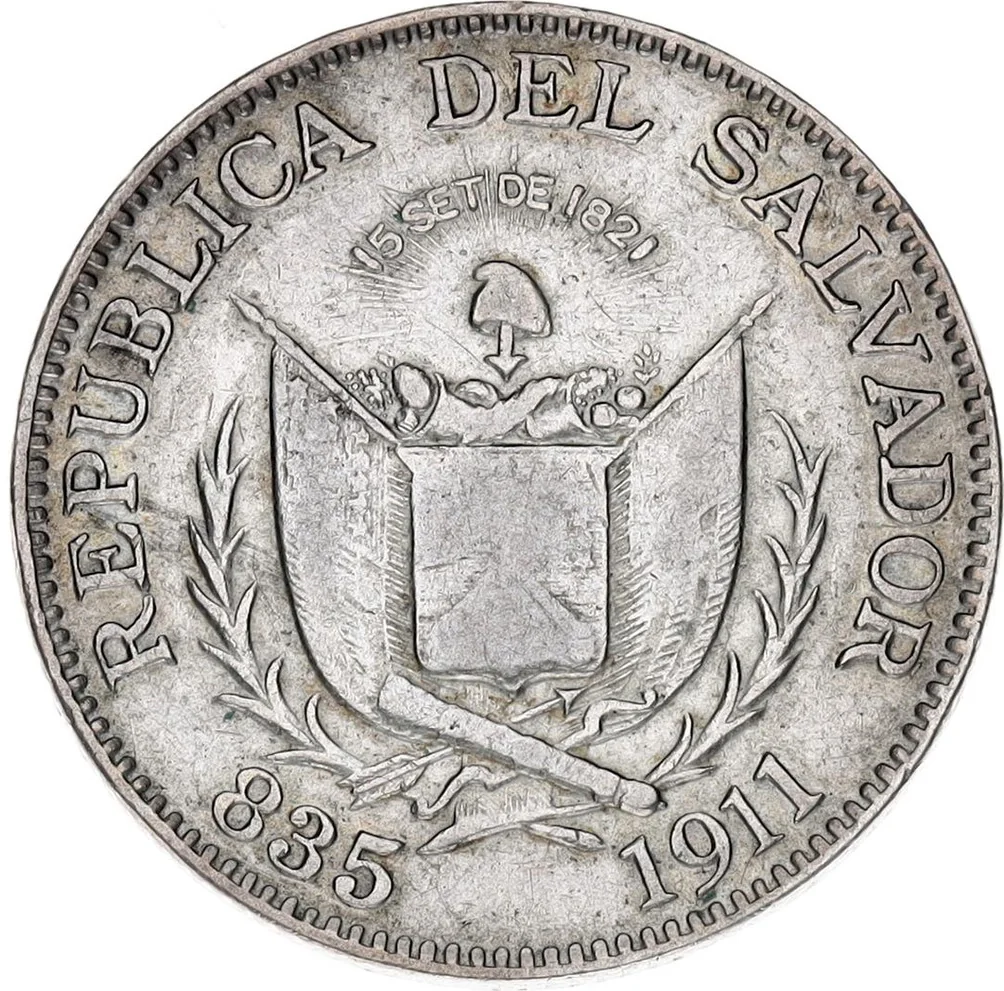
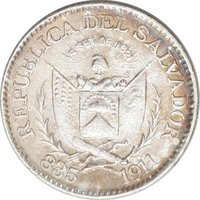
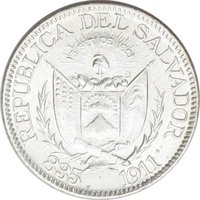
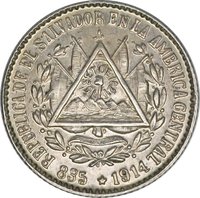
Obverse
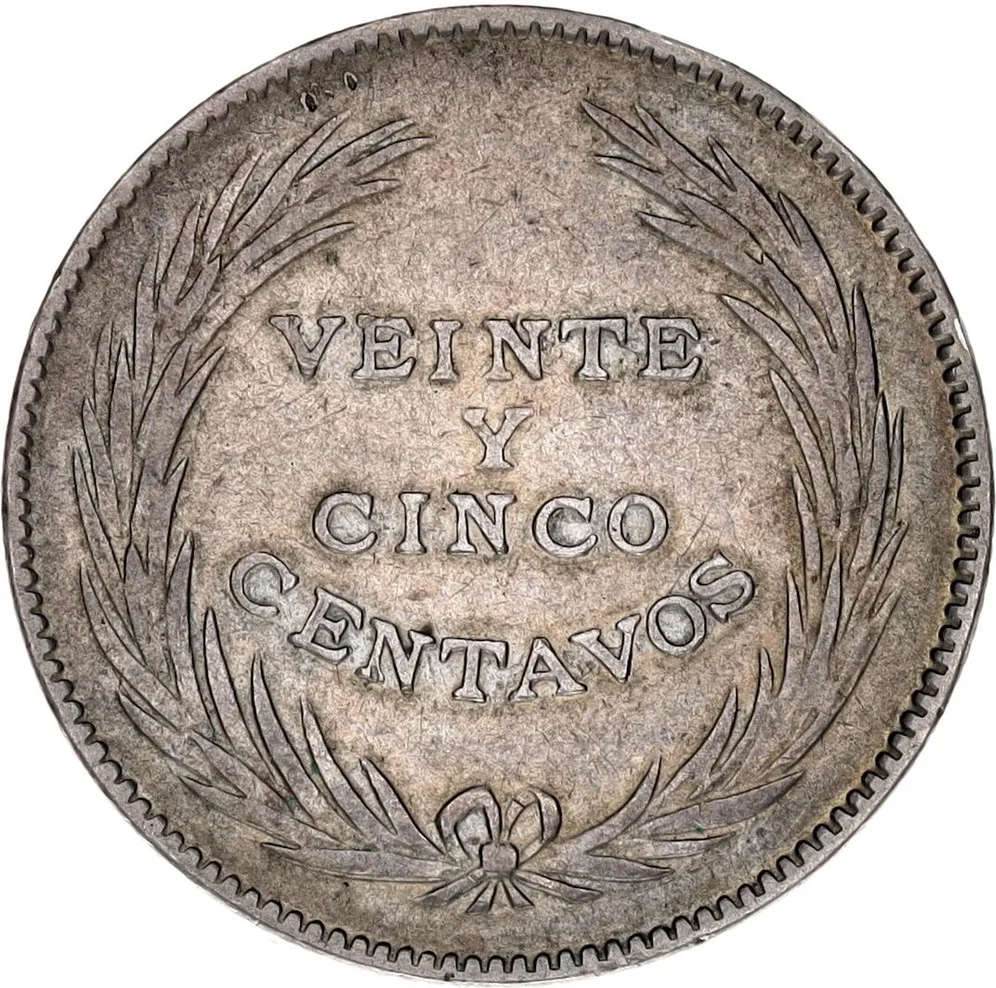
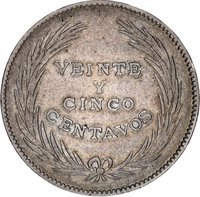
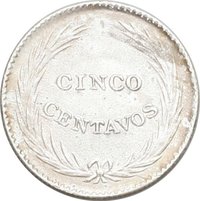
Reverse
Edge
Reeded
Categories
| Symbols> Coat of Arms |
| Symbol> Wreath |
Mints
| Name | Mark |
|---|---|
| Heaton and Sons / The Mint Birmingham | — |
Mintings
| Year | Mint Mark | Mintage | Quality | Collection |
|---|---|---|---|---|
| 1911 | — | 600,000 |
Historical background
In 1911, El Salvador's currency situation was defined by a pivotal transition from a fragmented silver-based system to the adoption of the gold standard, a move driven by the demands of an expanding coffee-export economy. Since independence, the country had used the Salvadoran peso, a silver coin, but its value fluctuated wildly on international markets. Concurrently, a multitude of foreign coins, particularly U.S. gold dollars, British sovereigns, and Peruvian and Chilean silver, circulated freely, creating a complex and unstable monetary environment for finance and foreign trade.
This instability posed a direct threat to the powerful coffee oligarchy, whose wealth depended on predictable exchange rates to sell their beans in pounds sterling and U.S. dollars. To modernize and attract foreign investment, President Manuel Enrique Araujo's government passed the Monetary Law of 1911. This legislation formally established the colón as the new national currency, pegged directly to the U.S. dollar at a fixed rate of 2 colones to 1 dollar, thereby placing El Salvador firmly on the gold exchange standard.
The reform of 1911 was a deliberate effort to impose monetary order, stabilize the economy for elite exporters, and integrate El Salvador into the global financial system dominated by gold-backed currencies. While successful in creating a stable framework for foreign trade and banking, the law also centralized economic power, further entrenching the coffee elite and tying the nation's financial health to external forces and the fixed value of gold, a rigidity that would present challenges in the decades to come.
This instability posed a direct threat to the powerful coffee oligarchy, whose wealth depended on predictable exchange rates to sell their beans in pounds sterling and U.S. dollars. To modernize and attract foreign investment, President Manuel Enrique Araujo's government passed the Monetary Law of 1911. This legislation formally established the colón as the new national currency, pegged directly to the U.S. dollar at a fixed rate of 2 colones to 1 dollar, thereby placing El Salvador firmly on the gold exchange standard.
The reform of 1911 was a deliberate effort to impose monetary order, stabilize the economy for elite exporters, and integrate El Salvador into the global financial system dominated by gold-backed currencies. While successful in creating a stable framework for foreign trade and banking, the law also centralized economic power, further entrenching the coffee elite and tying the nation's financial health to external forces and the fixed value of gold, a rigidity that would present challenges in the decades to come.
💎 Very Rare