

50 Rupees – India
Non-circulating coins
Commemoration: FAO - Women's Year
India
Context

Material
References
KM: #Click to copy to clipboard256
Numista: #24569
Value
Exchange value: 50 INR = $0.55
Bullion value: $50.40
Inflation-adjusted value: 1568.98 INR
Obverse
Description:
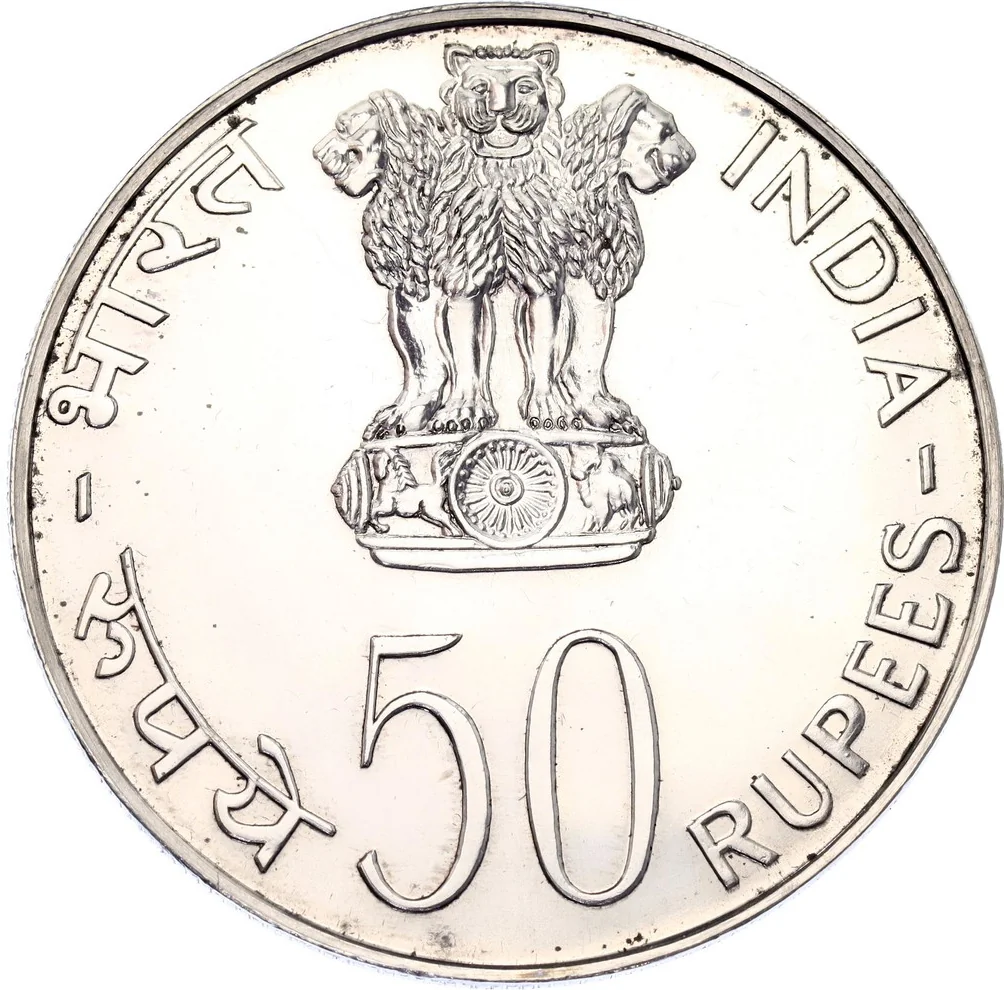
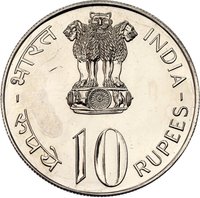
Asoka lion with denomination.
Inscription:
भारत INDIA
रुपये 50 RUPEES
रुपये 50 RUPEES
Translation:
Fifty Rupees
Scripts: Devanagari, Latin
Reverse
Description:
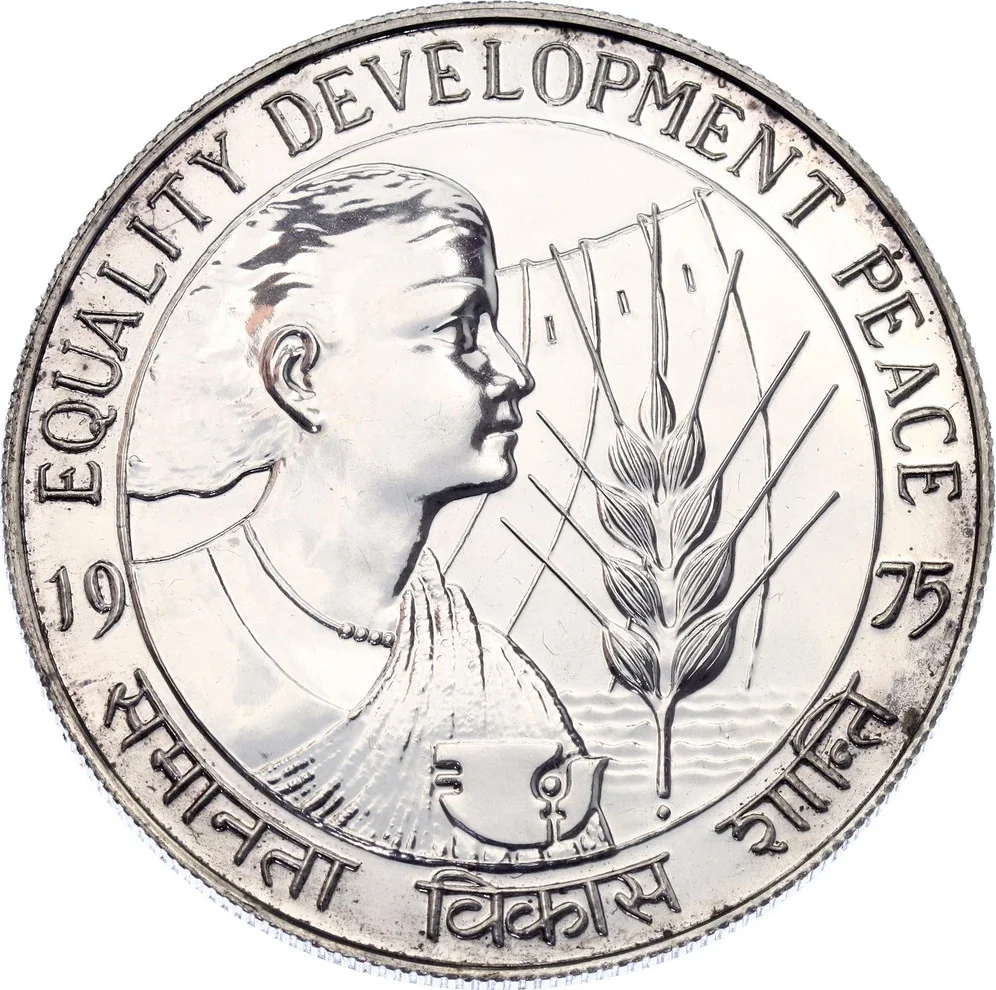
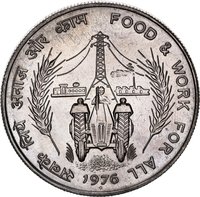
Bust left, grain sprig right.
Inscription:
EQUALITY DEVELOPMENT PEACE
19 75
समानता विकास शांति
19 75
समानता विकास शांति
Translation:
EQUALITY DEVELOPMENT PEACE
19 75
19 75
Scripts: Devanagari, Latin
Edge
Reeded
Categories
| Organization> FAO |
| History> Feminism |
Mints
| Name | Mark |
|---|---|
| Mumbai / Bombay | ♦ |
| Mumbai / Bombay | B |
Historical background
In 1975, India's currency situation was dominated by the enduring challenges of a controlled economy and the lingering effects of the 1971 war. The Indian rupee was pegged to a basket of currencies, but its effective value was managed by the Reserve Bank of India (RBI) with a strong bias towards a fixed exchange rate against the British pound sterling. This period was characterized by stringent foreign exchange regulations under the Foreign Exchange Regulation Act (FERA) of 1973, which heavily restricted the convertibility of the rupee and aimed to conserve scarce foreign reserves. The economy was largely insulated from global financial markets, with the rupee's international value being officially determined rather than market-driven.
The backdrop was one of persistent economic strain. The 1973 oil shock had severely inflated India's import bill, leading to a significant balance of payments deficit and dwindling foreign exchange reserves. High inflation, averaging around 20% in 1974-75, eroded domestic purchasing power. While the immediate political crisis of the Emergency, declared in June 1975, focused on internal governance, its economic policies indirectly impacted the currency situation by further centralizing control. The government's emphasis was on self-reliance and import substitution, which perpetuated a regime of import licensing and exchange controls to manage the external account.
Notably, 1975 did not see a major devaluation event like those in 1966 or 1991. Instead, it represented a period of stable but artificial currency valuation maintained through strict controls. The rupee was under constant pressure, but this pressure was contained by administrative measures rather than market adjustments. This environment of controlled stability, however, masked underlying vulnerabilities—low reserves, a large trade deficit, and an overvalued exchange rate—that would continue to accumulate and eventually precipitate a full-blown crisis in the decades to follow.
The backdrop was one of persistent economic strain. The 1973 oil shock had severely inflated India's import bill, leading to a significant balance of payments deficit and dwindling foreign exchange reserves. High inflation, averaging around 20% in 1974-75, eroded domestic purchasing power. While the immediate political crisis of the Emergency, declared in June 1975, focused on internal governance, its economic policies indirectly impacted the currency situation by further centralizing control. The government's emphasis was on self-reliance and import substitution, which perpetuated a regime of import licensing and exchange controls to manage the external account.
Notably, 1975 did not see a major devaluation event like those in 1966 or 1991. Instead, it represented a period of stable but artificial currency valuation maintained through strict controls. The rupee was under constant pressure, but this pressure was contained by administrative measures rather than market adjustments. This environment of controlled stability, however, masked underlying vulnerabilities—low reserves, a large trade deficit, and an overvalued exchange rate—that would continue to accumulate and eventually precipitate a full-blown crisis in the decades to follow.

🌟 Uncommon