

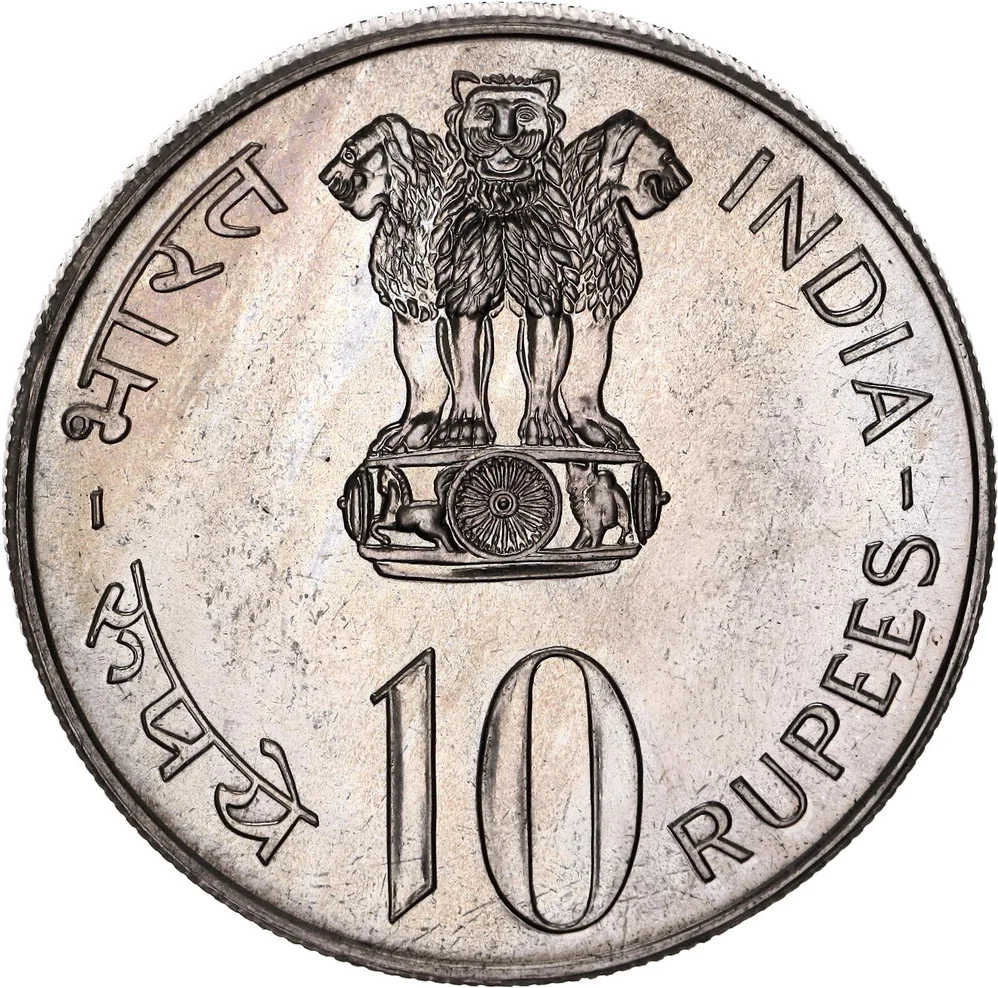
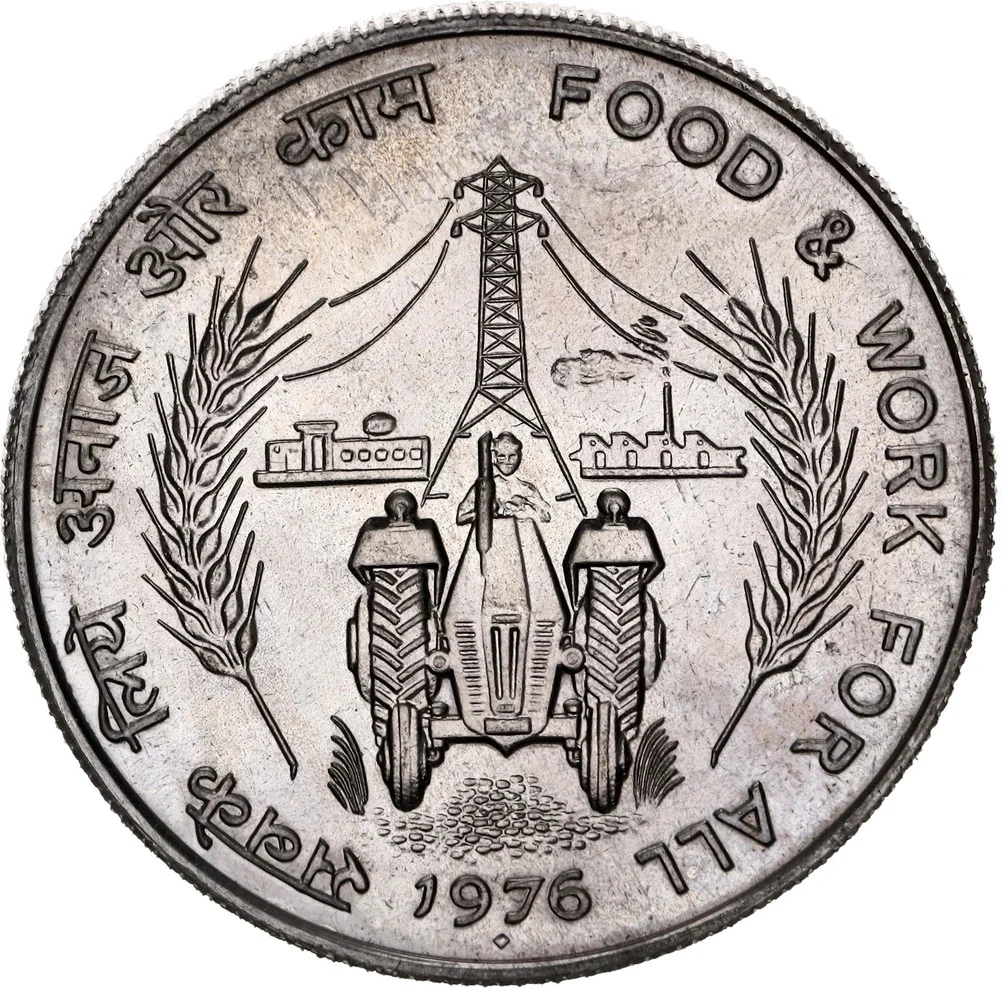
10 Rupees – India
Non-circulating coins
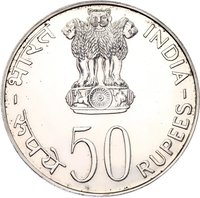
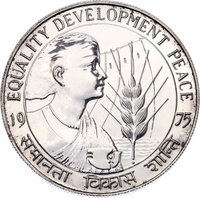
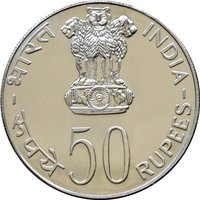
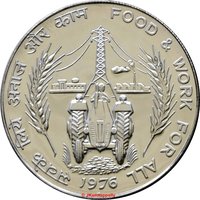
Commemoration: FAO - Food and work for all
India
Context

Material
Diameter: 39 mm
Weight: 24.7 g
Thickness: 3 mm
Shape: Round
Composition: Copper-nickel
Technique: Milled
Alignment: Medal alignment
flip
References
KM: #Click to copy to clipboard191
Numista: #18269
Value
Exchange value: 10 INR = $0.11
Inflation-adjusted value: 296.73 INR
Obverse
Reverse
Edge
Reeded
Categories
| Organization> FAO |
| Transportation> Truck or tractor |
Mints
| Name | Mark |
|---|---|
| Mumbai / Bombay | ♦ |
| Mumbai / Bombay | B |
Historical background
In 1976, India's currency situation was characterized by the continued operation of the Rupee, which was pegged to a basket of currencies (primarily the Pound Sterling and the U.S. Dollar) within the framework of the Bretton Woods system, even after its global collapse in 1971. The official exchange rate was maintained by the Reserve Bank of India (RBI) at a fixed parity, with ₹7.50 roughly equaling 1 US Dollar. This period was one of relative external stability for the rupee, but it masked significant internal economic pressures, including high inflation, a growing fiscal deficit, and a constrained foreign exchange reserve position, largely due to the oil price shocks of 1973.
Domestically, the currency landscape was still shaped by the legacy of the High Denomination Bank Notes (Demonetisation) Act of 1978, which was two years away. However, 1976 fell within the politically charged era of the Emergency (1975-1977). During this time, the government under Prime Minister Indira Gandhi exercised stringent control over the economy, including currency flows. A notable, though often overlooked, monetary event of 1976 was the issuance of a special 1-rupee note bearing the image of the Satyamev Jayate emblem (the Lion Capital) instead of the portrait of Mahatma Gandhi. This was a symbolic departure and reflected the political climate of the period.
Overall, the currency situation in 1976 was in a state of precarious calm. The fixed exchange rate provided an illusion of stability but was increasingly seen as overvalued, hurting export competitiveness. The economy was heavily regulated, with strict foreign exchange controls and import licensing, leading to a thriving black market for currency. This period set the stage for the economic challenges and subsequent gradual liberalization of the following decades, beginning with a significant devaluation of the rupee in the early 1990s.
Domestically, the currency landscape was still shaped by the legacy of the High Denomination Bank Notes (Demonetisation) Act of 1978, which was two years away. However, 1976 fell within the politically charged era of the Emergency (1975-1977). During this time, the government under Prime Minister Indira Gandhi exercised stringent control over the economy, including currency flows. A notable, though often overlooked, monetary event of 1976 was the issuance of a special 1-rupee note bearing the image of the Satyamev Jayate emblem (the Lion Capital) instead of the portrait of Mahatma Gandhi. This was a symbolic departure and reflected the political climate of the period.
Overall, the currency situation in 1976 was in a state of precarious calm. The fixed exchange rate provided an illusion of stability but was increasingly seen as overvalued, hurting export competitiveness. The economy was heavily regulated, with strict foreign exchange controls and import licensing, leading to a thriving black market for currency. This period set the stage for the economic challenges and subsequent gradual liberalization of the following decades, beginning with a significant devaluation of the rupee in the early 1990s.
🌟 Uncommon