

5 kopecks – Russian Empire
Add to wishlist
Russia
Context
Years: 1802–1810
Country: Russia
Issuer: Russian Empire
Ruler: Alexander I
Currency:
(1700—1917)
Demonetized: Yes
Total mintage: 36,600,000
Material
References
Numista: #101969
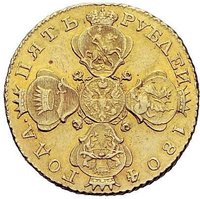
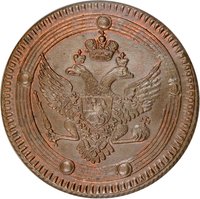
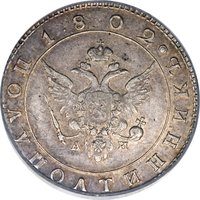
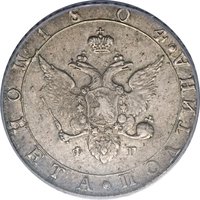
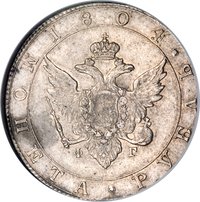
Obverse
Description:
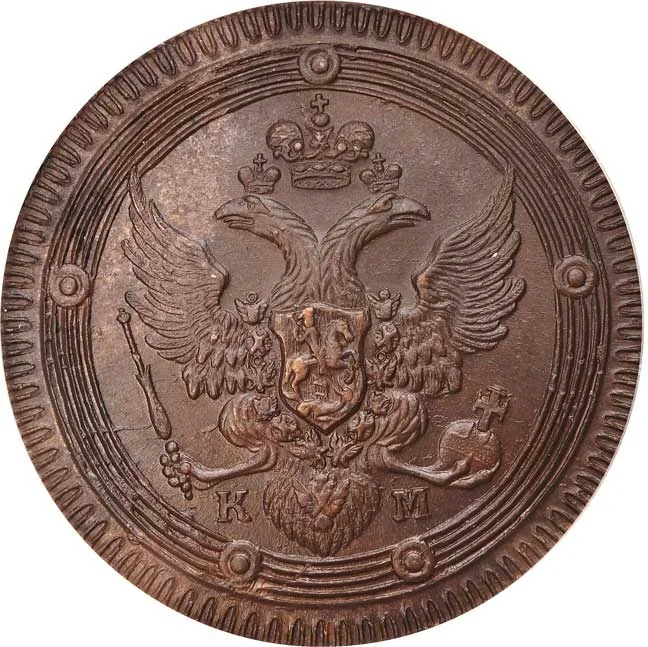
Crowned double-headed eagle above five dots.
Script: Cyrillic
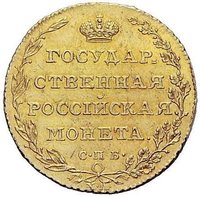
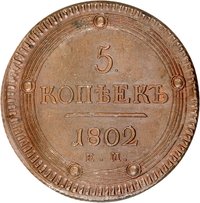
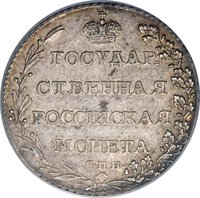
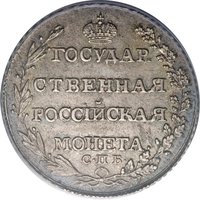
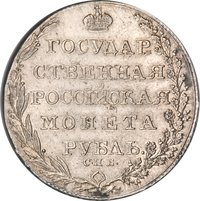
Reverse
Edge
Diagonal reeding
Mintings
| Year | Mint Mark | Mintage | Quality | Collection |
|---|---|---|---|---|
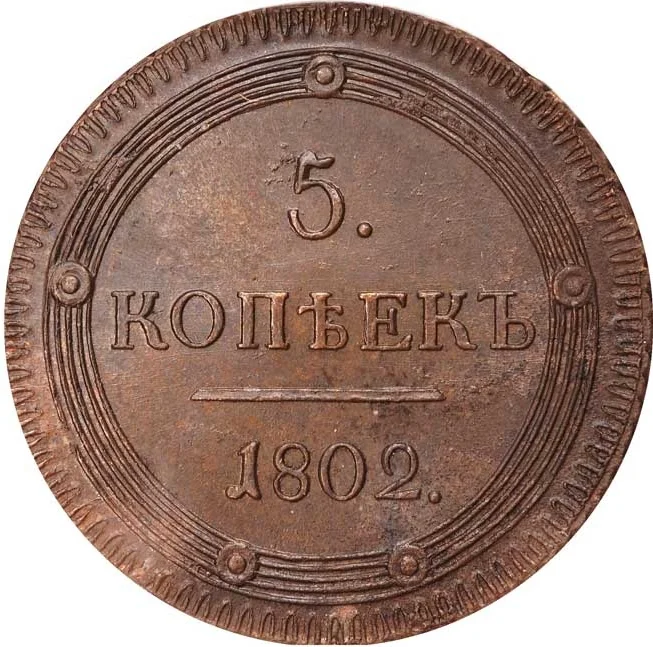
| 1802 | КМ | 4,000,000 | ||
| 1803 | КМ | 3,600,000 | ||
| 1804 | КМ | 4,000,000 | ||
| 1805 | КМ | 5,000,000 | ||
| 1806 | КМ | 5,000,000 | ||
| 1807 | КМ | 5,000,000 | ||
| 1808 | КМ | 5,000,000 | ||
| 1809 | КМ | 5,000,000 | ||
| 1810 | КМ | — |
Historical background
In 1802, the currency system of the Russian Empire was a complex and challenging legacy of the 18th century, primarily based on the silver ruble. However, the state’s financial situation was strained due to persistent budget deficits, largely fueled by military expenditures and the expansive policies of Catherine the Great and Paul I. To cover these shortfalls, the government had increasingly resorted to issuing paper money, known as assignatsii (assignats), since 1769. By the turn of the century, the over-issuance of these notes had led to significant inflation and a growing disparity between the value of the paper assignat ruble and the silver ruble, undermining public confidence in the currency.
The young Tsar Alexander I, who ascended to the throne in 1801, recognized this monetary instability as a critical threat to the empire’s economic modernization and geopolitical strength. In 1802, his newly formed Ministry of Finance, under Count Vasiliev, was actively grappling with the problem. The immediate focus was not on a radical reform but on stabilization and damage control. The government ceased the further issuance of assignats and sought to improve fiscal discipline, aiming to build a reserve fund in silver to eventually restore the value of the paper currency. The key goal was to establish a fixed exchange rate between the assignat and the silver ruble, but this remained an aspiration rather than a reality at the time.
Thus, the monetary landscape in 1802 was one of a precarious dual circulation. Transactions occurred simultaneously in heavy silver coins (and some gold) for major trade and state contracts, and in depreciated paper assignats for everyday use, with their exchange rate fluctuating on the market. This system created inefficiencies, hampered commerce, and reflected the broader struggle of the imperial state to manage its finances. The period marked a cautious, preparatory phase in a long struggle for monetary stability that would culminate in the more comprehensive reform of Finance Minister Yegor Kankrin in 1839-1843.
The young Tsar Alexander I, who ascended to the throne in 1801, recognized this monetary instability as a critical threat to the empire’s economic modernization and geopolitical strength. In 1802, his newly formed Ministry of Finance, under Count Vasiliev, was actively grappling with the problem. The immediate focus was not on a radical reform but on stabilization and damage control. The government ceased the further issuance of assignats and sought to improve fiscal discipline, aiming to build a reserve fund in silver to eventually restore the value of the paper currency. The key goal was to establish a fixed exchange rate between the assignat and the silver ruble, but this remained an aspiration rather than a reality at the time.
Thus, the monetary landscape in 1802 was one of a precarious dual circulation. Transactions occurred simultaneously in heavy silver coins (and some gold) for major trade and state contracts, and in depreciated paper assignats for everyday use, with their exchange rate fluctuating on the market. This system created inefficiencies, hampered commerce, and reflected the broader struggle of the imperial state to manage its finances. The period marked a cautious, preparatory phase in a long struggle for monetary stability that would culminate in the more comprehensive reform of Finance Minister Yegor Kankrin in 1839-1843.
💎 Extremely Rare