

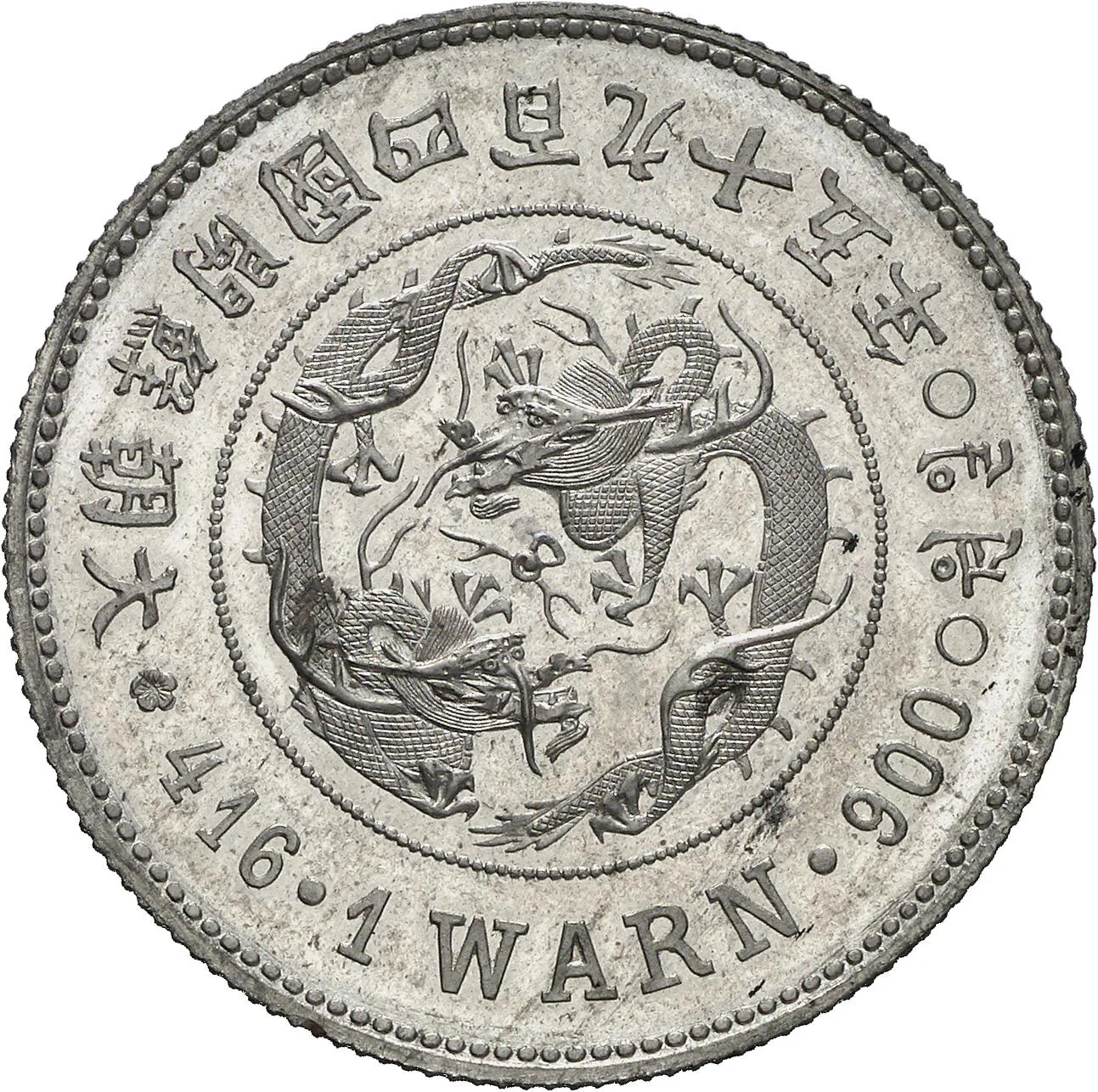
Obverse
Description:
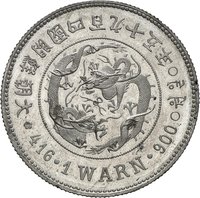
Two dragons. Date top, denomination bottom.
Inscription:
○ 大朝鮮 開國四百九十七年 ○ 일원 ○ 416 • 1 WARN • 900
Translation:
Great Joseon, 497th Year of the Founding;
One Won;
416 • 1 WARN • 900
One Won;
416 • 1 WARN • 900
Engraver: Hermann Held
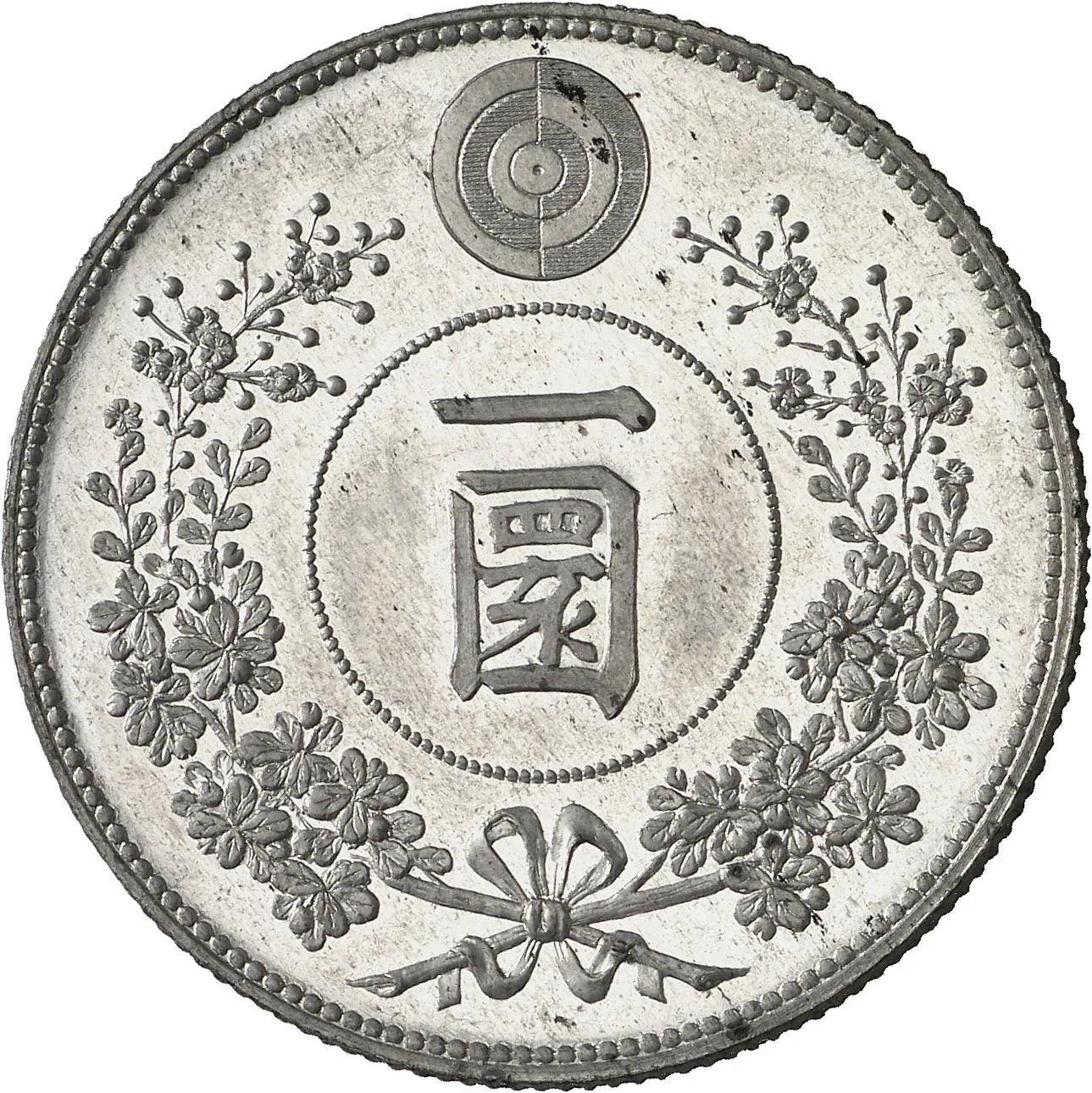
Reverse
Description:
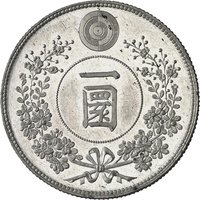
Wreath denomination
Inscription:
一
圜
圜
Translation:
One Coin
Language: Classical Chinese
Engraver: Hermann Held
Edge
Categories
| Mythology> Fantastic animal |
| Symbols> Coat of Arms |
| Symbol> Wreath |
Mints
| Name | Mark |
|---|---|
| Gyeongseong | — |
Mintings
| Year | Mint Mark | Mintage | Quality | Collection |
|---|---|---|---|---|
| 1888 | — | — |
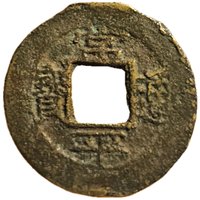
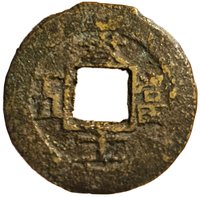
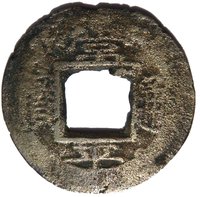
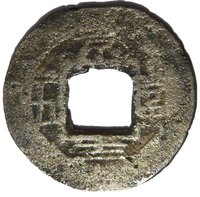
Historical background
In 1888, the currency system of the Joseon Dynasty was in a state of profound crisis and transition, caught between a collapsing traditional order and aggressive foreign economic intrusion. The primary circulating coin, the sangpyeong tongbo brass cash, had been severely debased for decades, leading to rampant inflation and a loss of public trust. Furthermore, a chaotic mix of older coins, privately minted tokens, and commodity money (like rice and cloth) created a bewildering and inefficient monetary environment, stifling domestic commerce and government finance.
This internal weakness was exacerbated by the increasing circulation of foreign currencies, particularly the Mexican silver dollar (and its Japanese-minted counterpart, the yen), which flowed into Joseon through open ports following the unequal treaties of the 1880s. These stable, high-quality silver coins began to dominate foreign trade and even domestic large transactions, creating a dual-currency system that further undermined the state's monetary sovereignty. The Korean court, recognizing the danger, viewed this "currency invasion" as both an economic threat and a symbol of diminishing imperial authority.
Consequently, 1888 fell within a period of active but struggling reform. King Gojong and his advisors, with guidance from Chinese and later Western advisers, were attempting to modernize the system. Efforts included establishing a modern mint (the Seoul Mint) and issuing new, machine-struck silver and copper coins (like the yang) to standardize value and drive out foreign coinage. However, these reforms faced immense challenges: counterfeiting, public hesitation, insufficient bullion reserves, and intense political interference from foreign powers, particularly Japan and China, each seeking monetary influence. Thus, the currency situation of 1888 was defined by this tense struggle to establish a unified national currency against the backdrop of internal decay and external pressure.
This internal weakness was exacerbated by the increasing circulation of foreign currencies, particularly the Mexican silver dollar (and its Japanese-minted counterpart, the yen), which flowed into Joseon through open ports following the unequal treaties of the 1880s. These stable, high-quality silver coins began to dominate foreign trade and even domestic large transactions, creating a dual-currency system that further undermined the state's monetary sovereignty. The Korean court, recognizing the danger, viewed this "currency invasion" as both an economic threat and a symbol of diminishing imperial authority.
Consequently, 1888 fell within a period of active but struggling reform. King Gojong and his advisors, with guidance from Chinese and later Western advisers, were attempting to modernize the system. Efforts included establishing a modern mint (the Seoul Mint) and issuing new, machine-struck silver and copper coins (like the yang) to standardize value and drive out foreign coinage. However, these reforms faced immense challenges: counterfeiting, public hesitation, insufficient bullion reserves, and intense political interference from foreign powers, particularly Japan and China, each seeking monetary influence. Thus, the currency situation of 1888 was defined by this tense struggle to establish a unified national currency against the backdrop of internal decay and external pressure.
✨ Legendary