

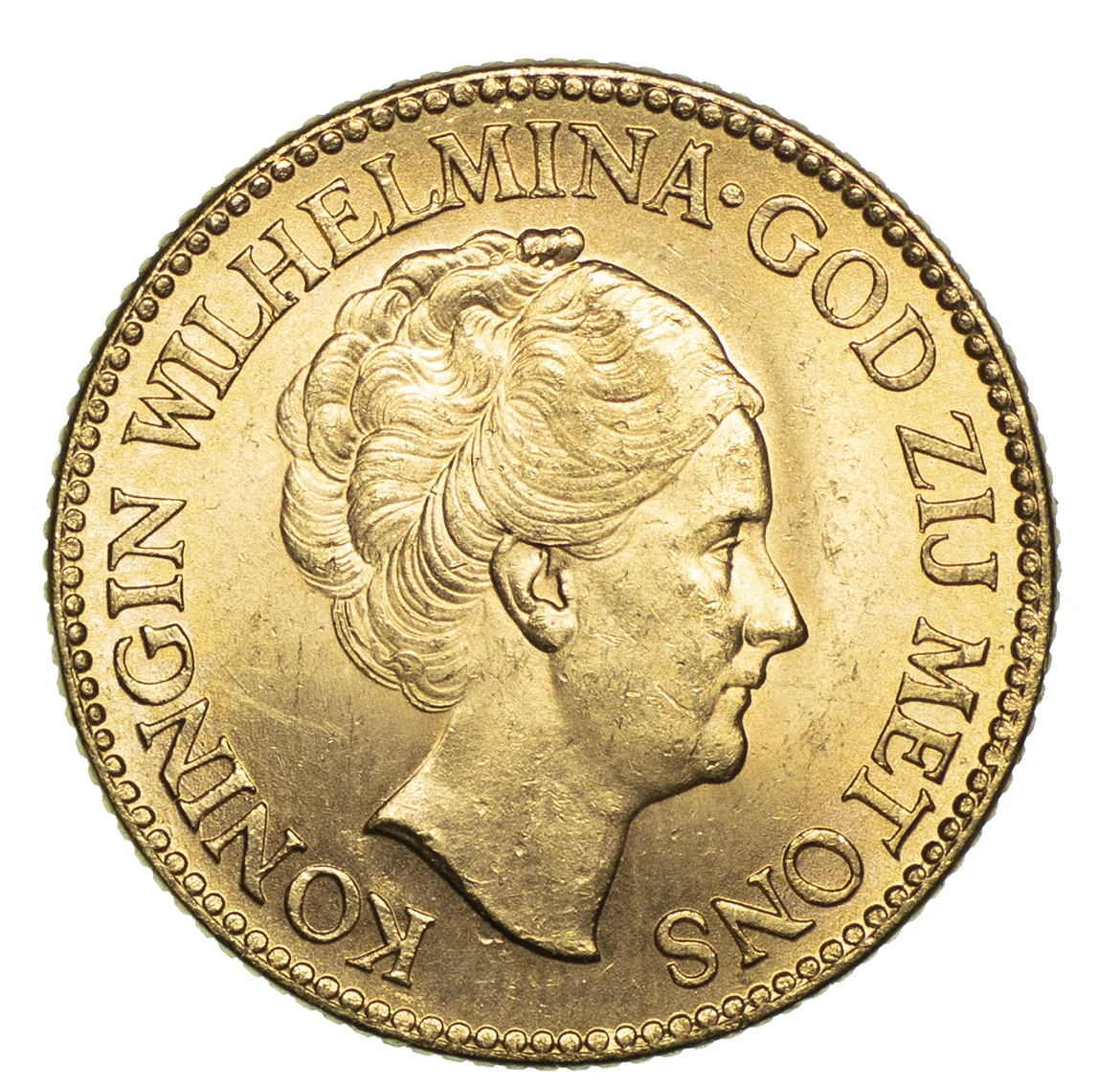
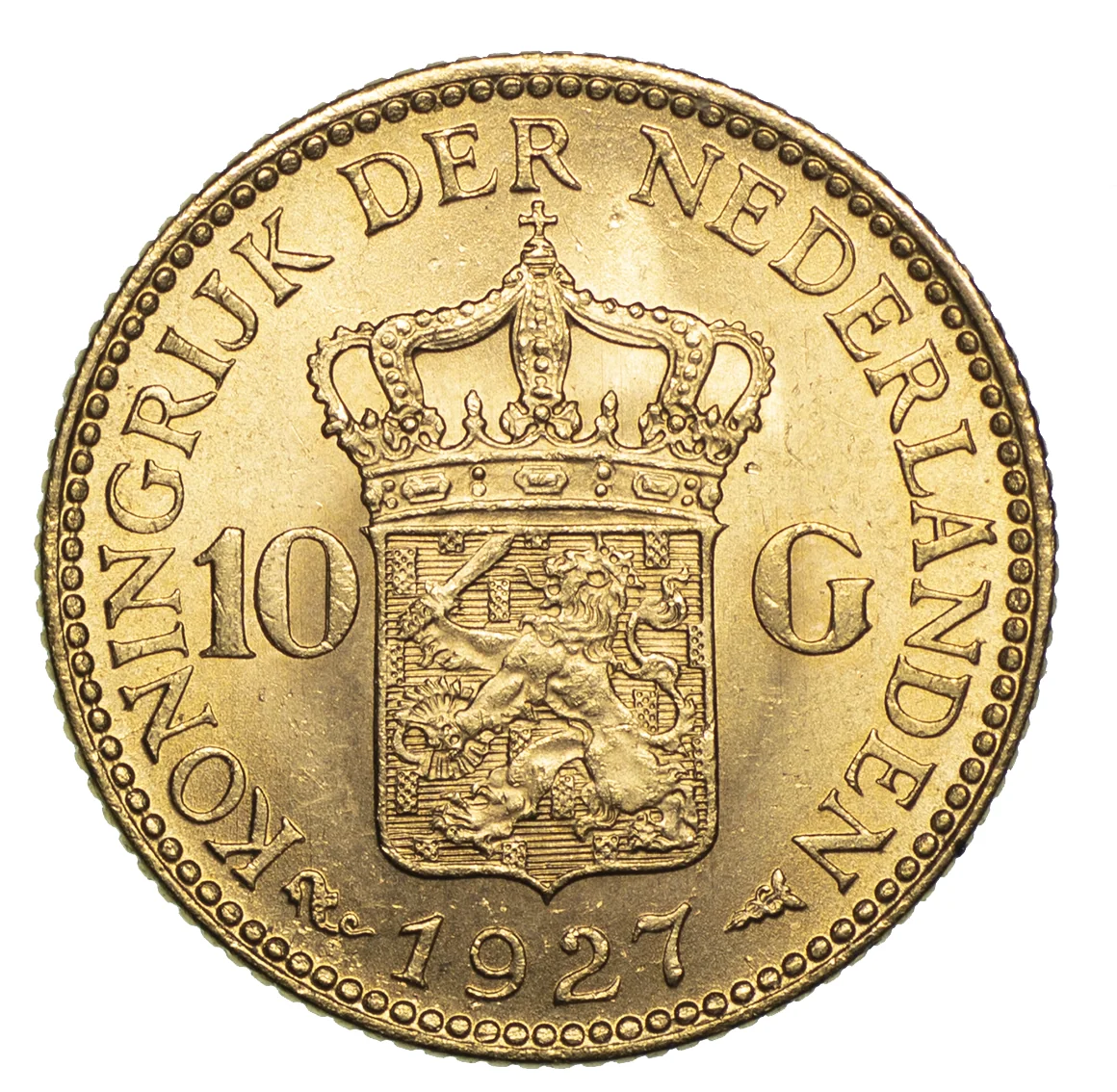
10 gulden – Netherlands
Add to wishlist
Netherlands
Context
Years: 1925–1933
Issuer: Netherlands
Ruler: Wilhelmina
Currency:
(1817—2001)
Demonetized: Yes
Total mintage: 12,286,065
Material
References
KM: #
Numista: #24451
Value
Exchange value: 10 NLG
Bullion value: $928.51
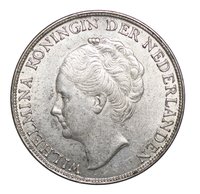
Obverse
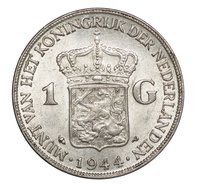
Reverse
Edge
Reeded
Categories
| Symbol> Crown |
| Symbols> Coat of Arms |
Mints
| Name | Mark |
|---|---|
| Royal Dutch Mint | — |
Mintings
| Year | Mint Mark | Mintage | Quality | Collection |
|---|---|---|---|---|
| 1925 | — | 2,000,000 | ||
| 1925 | — | 12 | Proof | |
| 1926 | — | 2,500,000 | ||
| 1926 | — | — | Proof | |
| 1927 | — | 1,000,000 | ||
| 1932 | — | 4,323,952 | ||
| 1933 | — | 2,462,101 |
Historical background
In 1925, the Netherlands was in the final stages of a prolonged and difficult process of monetary stabilization following the economic disruptions of World War I. Unlike many European nations that experienced hyperinflation, the Netherlands had maintained the gold convertibility of its currency until 1914. However, the war forced the country to abandon the gold standard, leading to a period of controlled "paper guilder" inflation and a significant decline in the currency's international value. The immediate post-war years were marked by debate between "stabilizers," who wanted a swift return to gold at the pre-war parity, and "devaluators," who argued for a lower, more realistic parity to avoid deflationary pain.
The decisive moment came under Finance Minister Dirk Jan de Geer. After years of deflationary policy aimed at restoring the guilder's pre-war gold value, the Netherlands officially returned to the gold standard on April 28, 1925, at the historic pre-1914 parity. This move was made shortly after the United Kingdom's own return to gold in April, and was intended to solidify Amsterdam's position as a stable financial center and restore international confidence. The decision was politically symbolic, prioritizing monetary orthodoxy and creditor interests, and was seen as a victory for the Dutch financial establishment and the central bank (De Nederlandsche Bank).
However, this achievement came at a significant economic cost. The high parity made Dutch exports more expensive and imports cheaper, placing sustained pressure on domestic industry and agriculture throughout the late 1920s. This overvalued guilder contributed to higher unemployment and slower growth compared to trading partners, creating underlying economic weaknesses even before the Great Depression. Consequently, while 1925 marked the successful institutional return to monetary orthodoxy, it also locked the country into a deflationary straitjacket that would exacerbate the economic challenges of the coming decade.
The decisive moment came under Finance Minister Dirk Jan de Geer. After years of deflationary policy aimed at restoring the guilder's pre-war gold value, the Netherlands officially returned to the gold standard on April 28, 1925, at the historic pre-1914 parity. This move was made shortly after the United Kingdom's own return to gold in April, and was intended to solidify Amsterdam's position as a stable financial center and restore international confidence. The decision was politically symbolic, prioritizing monetary orthodoxy and creditor interests, and was seen as a victory for the Dutch financial establishment and the central bank (De Nederlandsche Bank).
However, this achievement came at a significant economic cost. The high parity made Dutch exports more expensive and imports cheaper, placing sustained pressure on domestic industry and agriculture throughout the late 1920s. This overvalued guilder contributed to higher unemployment and slower growth compared to trading partners, creating underlying economic weaknesses even before the Great Depression. Consequently, while 1925 marked the successful institutional return to monetary orthodoxy, it also locked the country into a deflationary straitjacket that would exacerbate the economic challenges of the coming decade.
🌱 Fairly Common