

1 silver ducat – Netherlands
Add to wishlist
Netherlands
Context
Years: 1815–1816
Issuer: Netherlands
Ruler: William I
Currency:
(1581—1817)
Demonetized: Yes
Total mintage: 12
Material
References
KM: #
Numista: #24440
Value
Bullion value: $62.19
Obverse
Description:
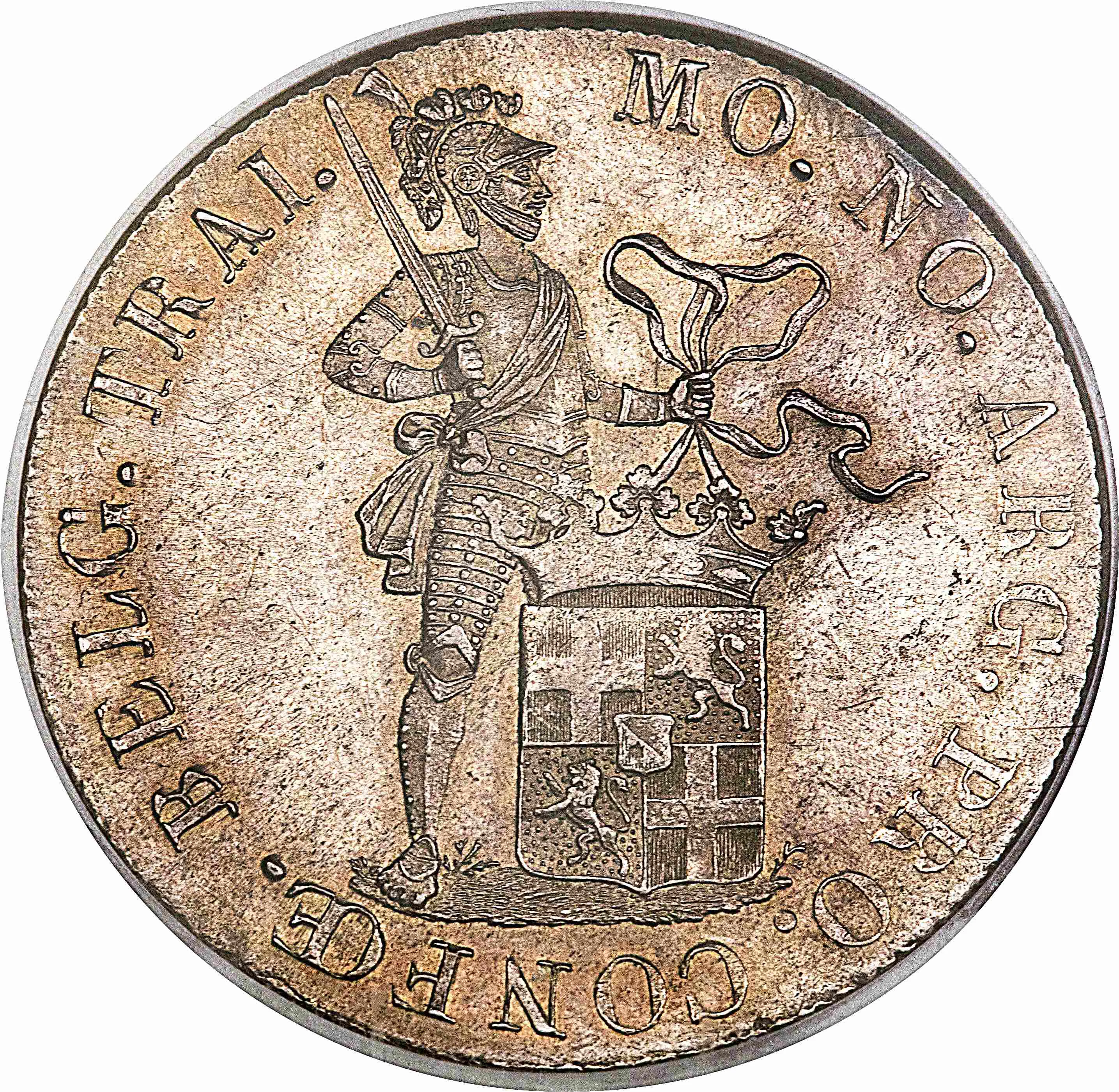
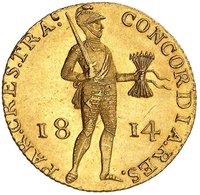
Armored knight holding a sword and a ribbon, standing behind a crowned crest.
Inscription:
MO. NO. ARG. PRO. CONFŒ. BELG. TRAI.
Translation:
MOneta NOva ARGentia PRO CONFOEderatione BELGica TRAIectensis
New Silver Coin for the Belgian Confederation of Utrecht
New Silver Coin for the Belgian Confederation of Utrecht
Script: Latin
Language: Latin
Reverse
Edge
Slanted reeding
Mints
| Name | Mark |
|---|---|
| Royal Dutch Mint | — |
Mintings
| Year | Mint Mark | Mintage | Quality | Collection |
|---|---|---|---|---|
| 1815 | — | 12 | Proof | |
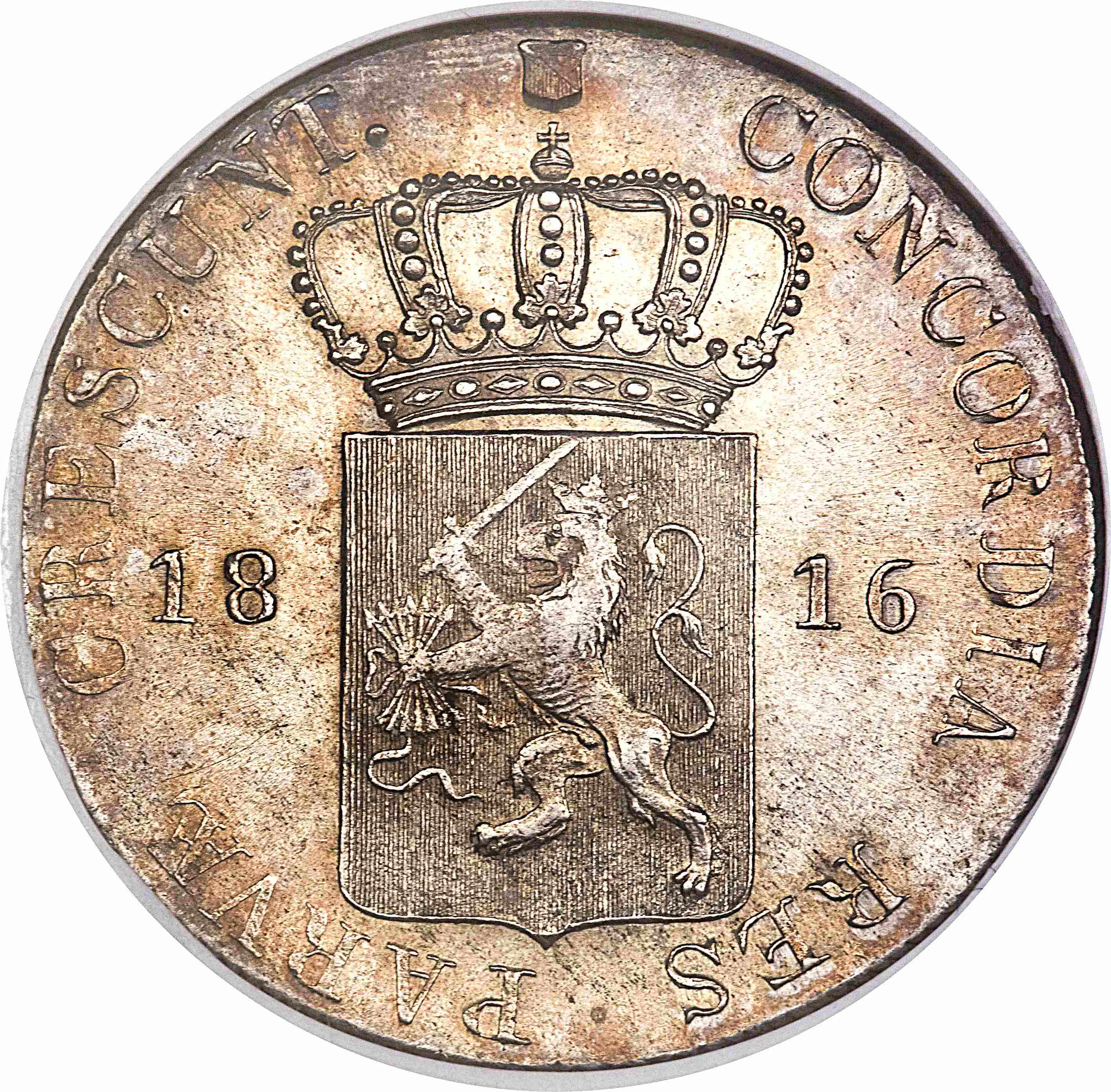
| 1816 | — | — | Proof |
Historical background
Following the Napoleonic Wars and the establishment of the Kingdom of the Netherlands in 1815, the nation faced a complex and fragmented currency situation. The preceding decades had seen the circulation of a bewildering variety of coins, including old Dutch guilders, French francs (from the period of French annexation), and various foreign currencies from trade. This monetary chaos hindered commerce, state finance, and economic recovery, creating an urgent need for standardization and stability as the new kingdom sought to consolidate its sovereignty.
To address this, King William I moved decisively to establish a unified national currency. The Dutch guilder (or gulden) was officially reintroduced by the Muntwet van 1816 (Coinage Act of 1816), which came into effect in 1817. The new system was deliberately decimal, a modernizing influence from the French period, with the guilder divided into 100 cents. Furthermore, the currency was placed on a bimetallic standard, with its value defined by fixed weights of both silver and gold, aiming to integrate the Netherlands into the prevailing international monetary system.
This reform was a cornerstone of William I's policy to stimulate economic revival and centralize state authority. The successful introduction of a stable, uniform currency facilitated trade, taxation, and banking, providing a reliable foundation for the Kingdom's industrial and commercial development in the early 19th century. Thus, the currency situation of 1815 marked a pivotal transition from post-war disarray to a structured monetary regime that would support the Netherlands' modern economy.
To address this, King William I moved decisively to establish a unified national currency. The Dutch guilder (or gulden) was officially reintroduced by the Muntwet van 1816 (Coinage Act of 1816), which came into effect in 1817. The new system was deliberately decimal, a modernizing influence from the French period, with the guilder divided into 100 cents. Furthermore, the currency was placed on a bimetallic standard, with its value defined by fixed weights of both silver and gold, aiming to integrate the Netherlands into the prevailing international monetary system.
This reform was a cornerstone of William I's policy to stimulate economic revival and centralize state authority. The successful introduction of a stable, uniform currency facilitated trade, taxation, and banking, providing a reliable foundation for the Kingdom's industrial and commercial development in the early 19th century. Thus, the currency situation of 1815 marked a pivotal transition from post-war disarray to a structured monetary regime that would support the Netherlands' modern economy.
💎 Extremely Rare