

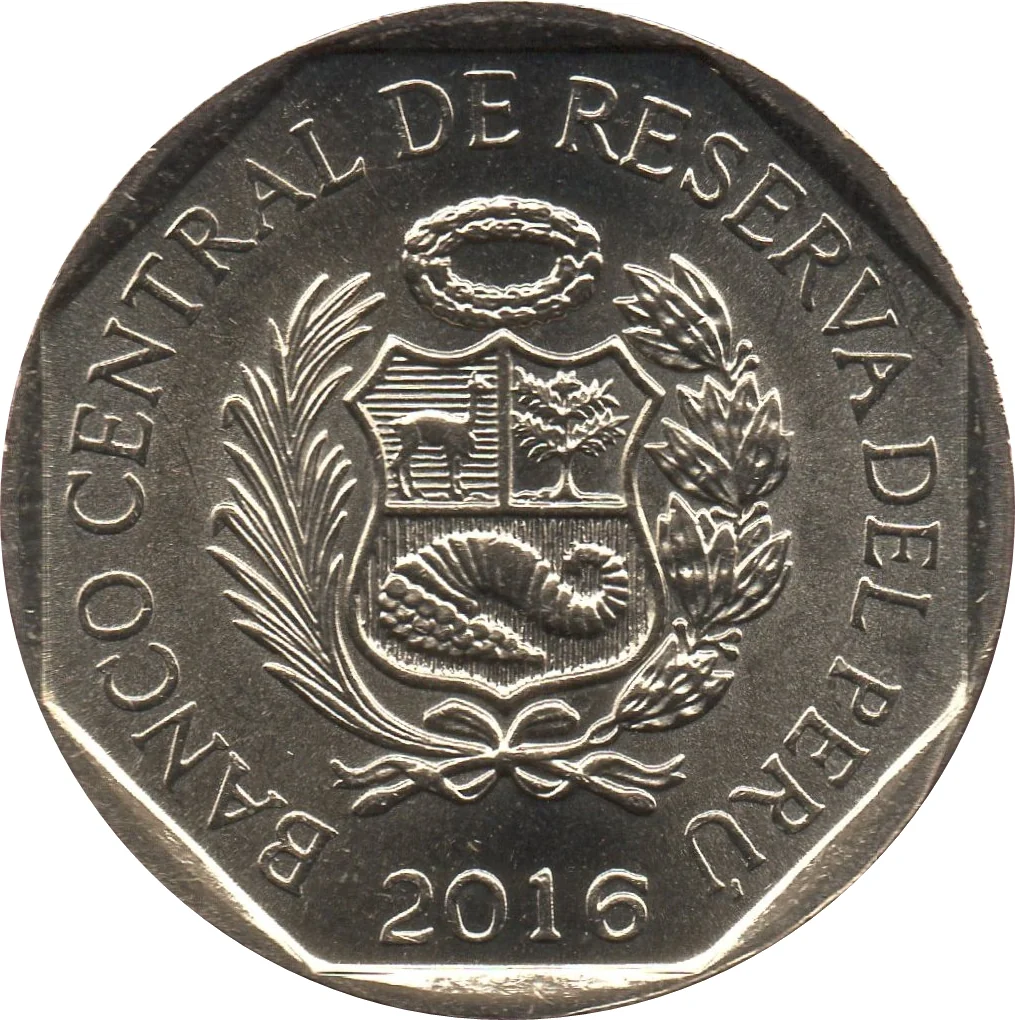
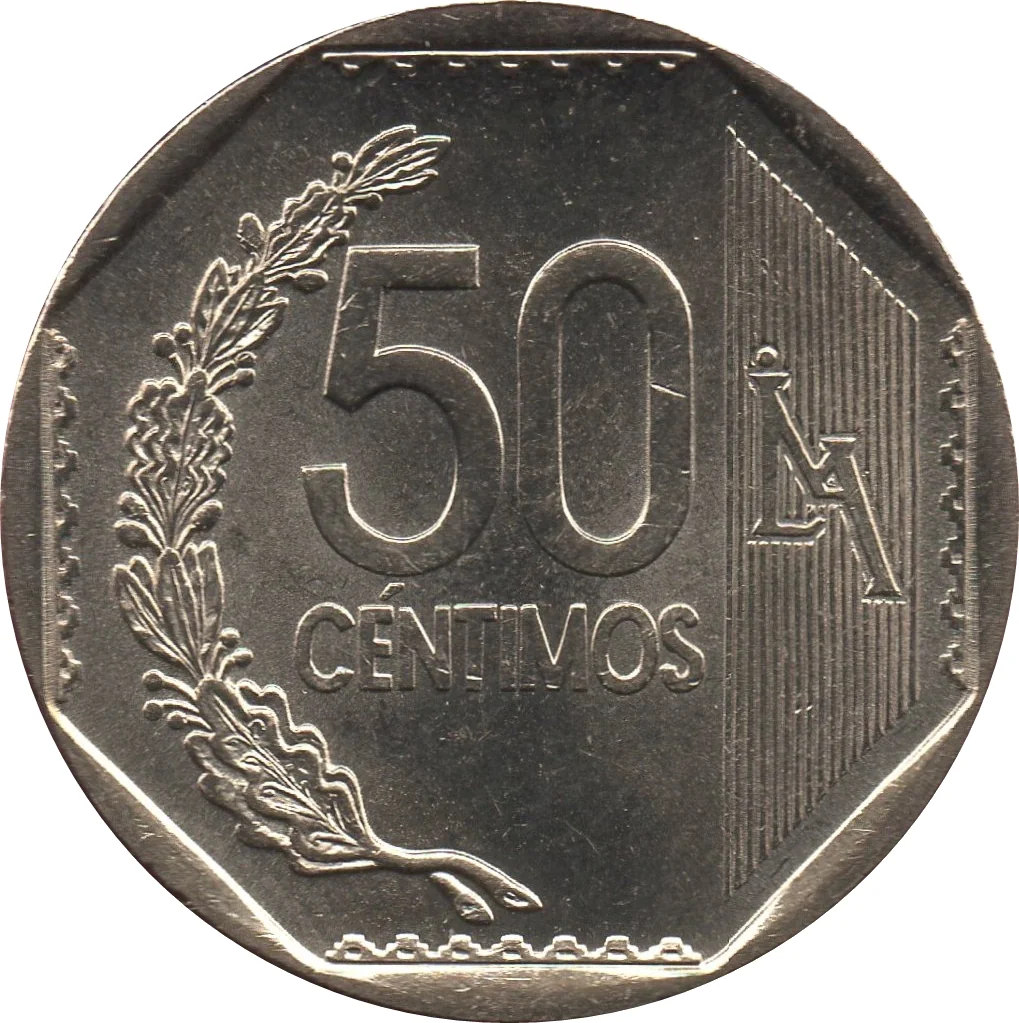
50 centimos – Peru
Add to wishlist
Peru
Context
Years: 2001–2025
Issuer: Peru
Issuing organization: Central Reserve Bank of Peru
Period:
(since 1822)
Total mintage: 585,980,000
Material
Diameter: 22 mm
Weight: 5.52 g
Thickness: 1.65 mm
Shape: Round
Composition: Nickel brass
Magnetic: No
Technique: Milled
Alignment: Coin alignment
flip
References
KM: #
Numista: #2444
Value
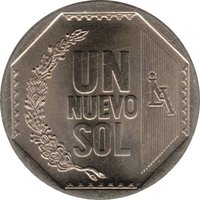
Exchange value: 0.50 PEN
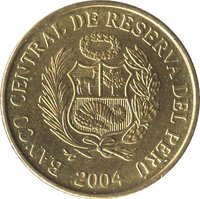
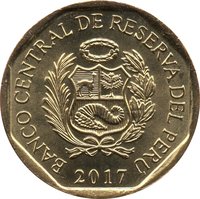
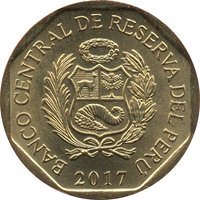
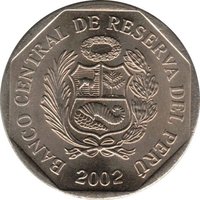
Obverse
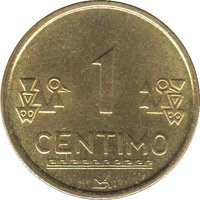
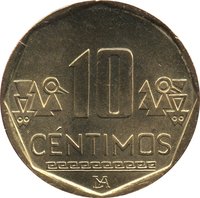
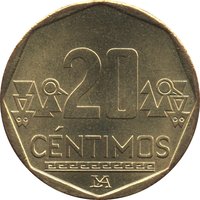
Reverse
Edge
Reeded.
Categories
| Symbols> Coat of Arms |
| Symbol> Cornucopia |
| Symbol> Wreath |
Mints
| Name | Mark |
|---|---|
| Lima | LIMA |
Mintings
| Year | Mint Mark | Mintage | Quality | Collection |
|---|---|---|---|---|
| 2001 | LIMA | 11,000,000 | ||
| 2002 | LIMA | 12,000,000 | ||
| 2003 | LIMA | 30,000,000 | ||
| 2004 | LIMA | 6,000,000 | ||
| 2005 | LIMA | 14,600,000 | ||
| 2006 | LIMA | 24,200,000 | ||
| 2007 | LIMA | 31,200,000 | ||
| 2008 | LIMA | 36,200,000 | ||
| 2009 | LIMA | 26,700,000 | ||
| 2010 | LIMA | 5,180,000 | ||
| 2011 | LIMA | 38,000,000 | ||
| 2012 | LIMA | 24,900,000 | ||
| 2013 | LIMA | 34,000,000 | ||
| 2014 | LIMA | 33,000,000 | ||
| 2015 | LIMA | 34,000,000 | ||
| 2016 | LIMA | 26,000,000 | ||
| 2017 | LIMA | 20,000,000 | ||
| 2018 | LIMA | 32,000,000 | ||
| 2019 | LIMA | 26,000,000 | ||
| 2020 | LIMA | 21,000,000 | ||
| 2021 | LIMA | 39,000,000 | ||
| 2022 | LIMA | 34,000,000 | ||
| 2023 | LIMA | 27,000,000 | ||
| 2024 | LIMA | — | ||
| 2025 | LIMA | — |
Historical background
In 2001, Peru was navigating a critical transition in its monetary policy, emerging from a decade of economic turbulence under President Alberto Fujimori. The country had recently adopted a new currency, the Nuevo Sol (PEN), in 1991 to replace the hyper-inflated Inti, but the legacy of instability lingered. The late 1990s saw a severe recession, exacerbated by the Asian financial crisis, political corruption scandals, and the departure of Fujimori in 2000. As a result, when Alejandro Toledo took office in July 2001, he inherited an economy with fragile public confidence in domestic institutions and currency.
The key feature of the currency situation was Peru's commitment to a managed float exchange rate regime, overseen by the Central Reserve Bank of Peru (BCRP). While the Nuevo Sol was not pegged to the US Dollar, the BCRP actively intervened in the foreign exchange market to prevent excessive volatility. This was crucial because the economy was highly dollarized; a significant portion of loans, savings, and contracts were still denominated in US dollars from the hyperinflation era. Thus, sharp movements in the exchange rate could severely impact balance sheets and financial stability.
President Toledo's government and the BCRP, under then-President Richard Webb, prioritized macroeconomic stability and inflation control as the pillars for rebuilding trust in the Nuevo Sol. Their policies focused on maintaining strict fiscal discipline, accumulating international reserves, and allowing a gradual, controlled depreciation of the currency to improve export competitiveness. This cautious approach in 2001 laid the groundwork for the sustained economic growth and declining inflation that characterized the subsequent decade, slowly reducing financial dollarization and strengthening the position of the Nuevo Sol.
The key feature of the currency situation was Peru's commitment to a managed float exchange rate regime, overseen by the Central Reserve Bank of Peru (BCRP). While the Nuevo Sol was not pegged to the US Dollar, the BCRP actively intervened in the foreign exchange market to prevent excessive volatility. This was crucial because the economy was highly dollarized; a significant portion of loans, savings, and contracts were still denominated in US dollars from the hyperinflation era. Thus, sharp movements in the exchange rate could severely impact balance sheets and financial stability.
President Toledo's government and the BCRP, under then-President Richard Webb, prioritized macroeconomic stability and inflation control as the pillars for rebuilding trust in the Nuevo Sol. Their policies focused on maintaining strict fiscal discipline, accumulating international reserves, and allowing a gradual, controlled depreciation of the currency to improve export competitiveness. This cautious approach in 2001 laid the groundwork for the sustained economic growth and declining inflation that characterized the subsequent decade, slowly reducing financial dollarization and strengthening the position of the Nuevo Sol.
Series: 2001 Peru circulation coins
🌱 Very Common