

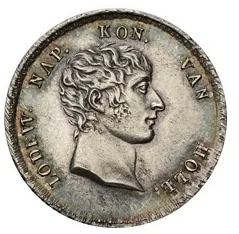
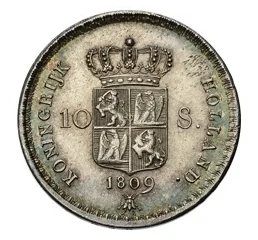
10 Stuivers – Netherlands
Netherlands
Context
Years: 1807–1809
Issuer: Netherlands 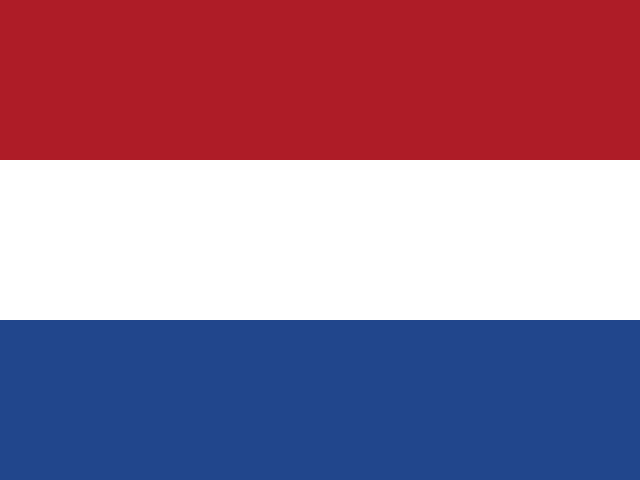
Ruler: Louis Napoléon Bonaparte
Currency:
(1581—1817)
Demonetized: Yes
Material
References
KM: #Click to copy to clipboard30
Numista: #24437
Value
Bullion value: $13.62
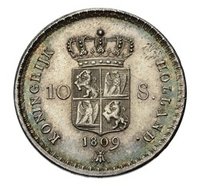
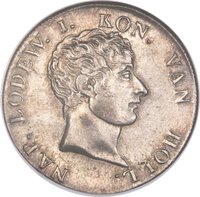
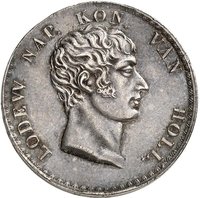
Obverse
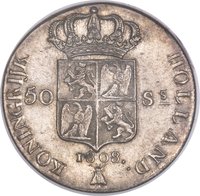
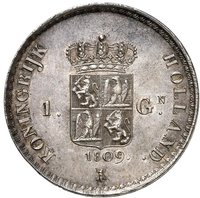
Reverse
Edge
Incused lettering
Legend:
DE NAAM DES HEEREN ZY GELOOFD
Translation:
The name of the Lord be praised.
Language: Dutch
Categories
| Symbol> Crown |
| Symbols> Coat of Arms |
Mintings
| Year | Mint Mark | Mintage | Quality | Collection |
|---|---|---|---|---|
| 1807 | — | — | ||
| 1808 | — | — | ||
| 1809 | — | — |
Historical background
In 1807, the Netherlands existed as the Kingdom of Holland, a French client state ruled by Napoleon Bonaparte’s brother, Louis. This period was one of profound financial strain and monetary confusion, a direct consequence of the Napoleonic Wars. The Continental System, Napoleon's blockade against British trade, severely disrupted Dutch commerce, the traditional lifeblood of the economy. This, coupled with the heavy requisitions and taxes demanded by France to fund its military campaigns, drained the treasury and led to widespread economic hardship, setting the stage for a complex currency crisis.
The monetary system itself was a chaotic patchwork. In circulation were a multitude of older Dutch guilders (also called florins), coins from the former Dutch Republic, and an increasing influx of French francs and other foreign currencies. Most critically, confidence in paper money had collapsed. The previous government, the Batavian Republic, had issued vast quantities of banknotes ("bankbiljetten") to cover its debts, leading to severe depreciation. By 1807, these notes were trading at a significant discount to their face value in silver, causing public distrust and price instability.
King Louis Napoleon made efforts to address the crisis. In 1806, he established the Bank of Holland (Bank van Holland) with the aim of restoring confidence and eventually replacing the discredited paper money. However, in 1807, this was still a work in progress. The fundamental problem remained: the state's finances were subservient to French imperial demands, preventing any true stabilization. The currency situation, therefore, reflected the kingdom's precarious position—caught between the need for domestic economic order and the overwhelming extractive pressures of the French Empire.
The monetary system itself was a chaotic patchwork. In circulation were a multitude of older Dutch guilders (also called florins), coins from the former Dutch Republic, and an increasing influx of French francs and other foreign currencies. Most critically, confidence in paper money had collapsed. The previous government, the Batavian Republic, had issued vast quantities of banknotes ("bankbiljetten") to cover its debts, leading to severe depreciation. By 1807, these notes were trading at a significant discount to their face value in silver, causing public distrust and price instability.
King Louis Napoleon made efforts to address the crisis. In 1806, he established the Bank of Holland (Bank van Holland) with the aim of restoring confidence and eventually replacing the discredited paper money. However, in 1807, this was still a work in progress. The fundamental problem remained: the state's finances were subservient to French imperial demands, preventing any true stabilization. The currency situation, therefore, reflected the kingdom's precarious position—caught between the need for domestic economic order and the overwhelming extractive pressures of the French Empire.

✨ Legendary