

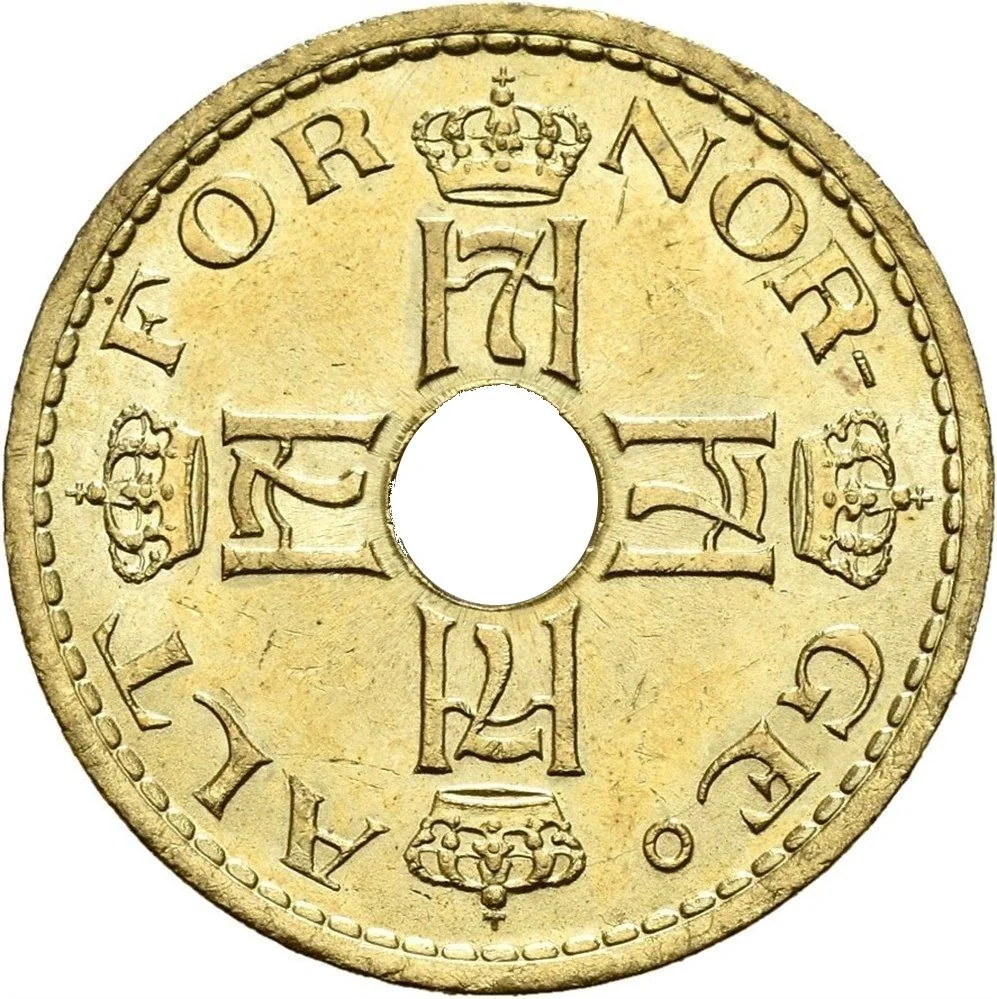
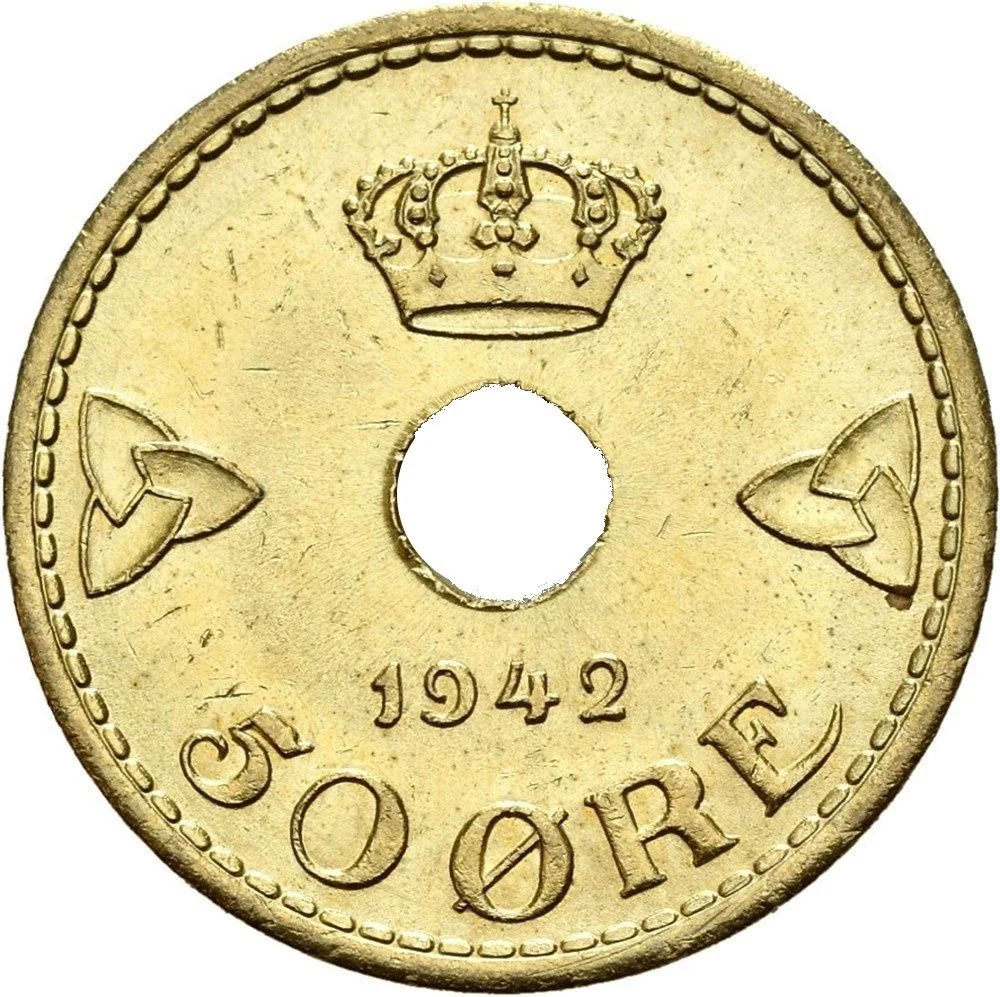
50 øre – Norway
Add to wishlist
Norway
Context
Year: 1942
Issuer: Norway
Ruler: Haakon VII
Currency:
(since 1875)
Demonetized: Yes
Total mintage: 1,600,000
Material
Diameter: 22 mm
Weight: 4.8 g
Thickness: 1.85 mm
Shape: Round with a round hole
Magnetic: No
Technique: Milled
Alignment: Medal alignment
flip
References
KM: #
Numista: #24393
Value
Exchange value: 0.50 NOK
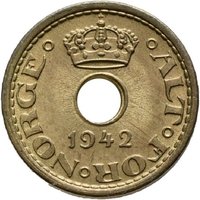
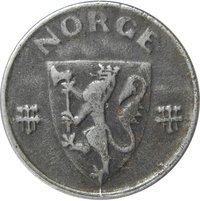
Obverse
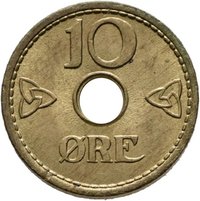
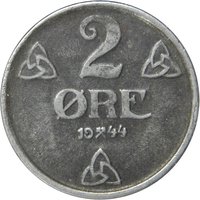
Reverse
Edge
Plain
Mints
| Name | Mark |
|---|---|
| Royal Mint (Tower Hill) | — |
Mintings
| Year | Mint Mark | Mintage | Quality | Collection |
|---|---|---|---|---|
| 1942 | — | 1,600,000 |
Historical background
In 1942, Norway’s currency situation was defined by its occupation by Nazi Germany, which had begun in April 1940. The occupying authorities, through the Reichskommissariat Norwegen, imposed strict financial control. A fixed, artificial exchange rate was established, pegging the Norwegian krone to the German Reichsmark at a rate of 1 Reichsmark = 1.67 kroner, which significantly overvalued the German currency. This mechanism served as a tool of economic exploitation, facilitating the systematic extraction of Norwegian resources and wealth to fund the German war effort through a system of occupation costs.
The financial burden was immense. Norway was forced to pay exorbitant "occupation costs" into an account at the Norwegian central bank (Norges Bank) for the use of the German authorities. These funds, which ultimately covered nearly all German expenditures in Norway, led to a massive expansion of the money supply. This, combined with wartime shortages and rationing, created strong inflationary pressures. While price controls were attempted to curb inflation, a thriving black market emerged where goods were traded at much higher real prices, effectively creating a dual currency system.
Despite the occupation, the legitimate Norwegian government-in-exile in London retained formal authority over Norges Bank. In a remarkable act of economic resistance, it invalidated the large gold and foreign currency reserves held abroad, preventing the Nazis from accessing them. Domestically, however, Norwegians had to navigate an economy where their currency was being deliberately devalued and exploited. The 1942 currency situation thus reflected a broader struggle: a compromised financial system under direct foreign control, straining under the weight of exploitation and inflation, while symbolic acts of resistance sought to preserve national assets for a future liberation.
The financial burden was immense. Norway was forced to pay exorbitant "occupation costs" into an account at the Norwegian central bank (Norges Bank) for the use of the German authorities. These funds, which ultimately covered nearly all German expenditures in Norway, led to a massive expansion of the money supply. This, combined with wartime shortages and rationing, created strong inflationary pressures. While price controls were attempted to curb inflation, a thriving black market emerged where goods were traded at much higher real prices, effectively creating a dual currency system.
Despite the occupation, the legitimate Norwegian government-in-exile in London retained formal authority over Norges Bank. In a remarkable act of economic resistance, it invalidated the large gold and foreign currency reserves held abroad, preventing the Nazis from accessing them. Domestically, however, Norwegians had to navigate an economy where their currency was being deliberately devalued and exploited. The 1942 currency situation thus reflected a broader struggle: a compromised financial system under direct foreign control, straining under the weight of exploitation and inflation, while symbolic acts of resistance sought to preserve national assets for a future liberation.
💎 Very Rare