

20 franga ari (Independence) – Albania
Add to wishlist
Non-circulating coins
Commemoration: 25th Anniversary of Independence
Series: 25th Anniversary of Independence
Albania
Context
Material
References
KM: #
Numista: #24318
Value
Exchange value: 100 ALK
Bullion value: $896.00
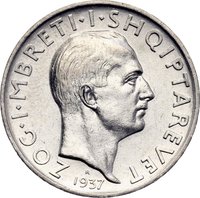
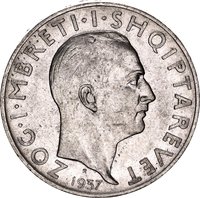
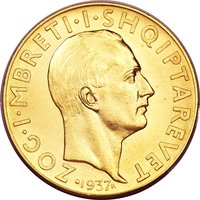
Obverse
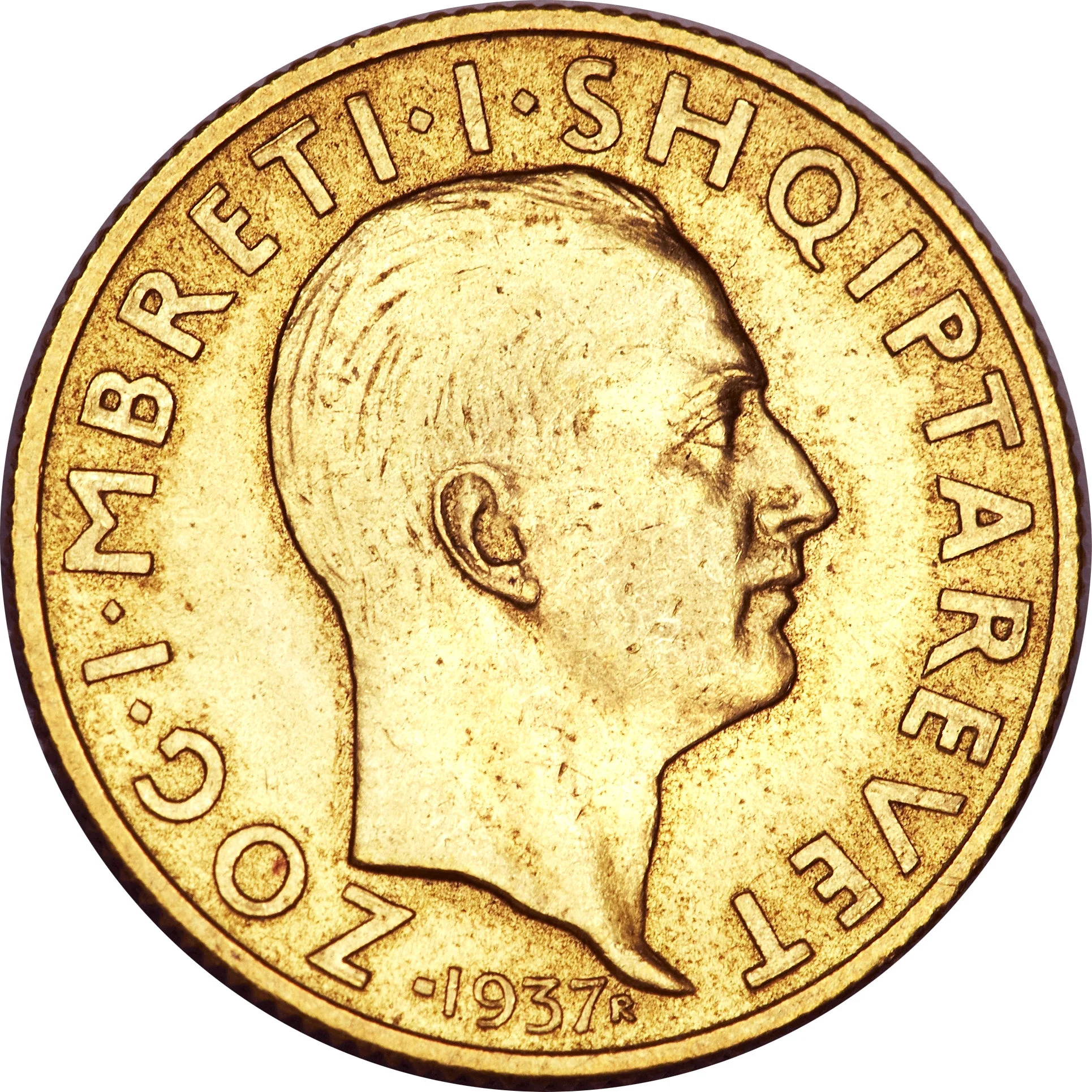
Description:
Right-facing bust
Inscription:
ZOG·I·MBRETI·I·SHQIPTAREVET
·1937 R
·1937 R
Script: Latin
Engraver: Giuseppe Romagnoli
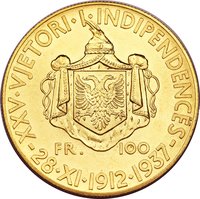
Reverse
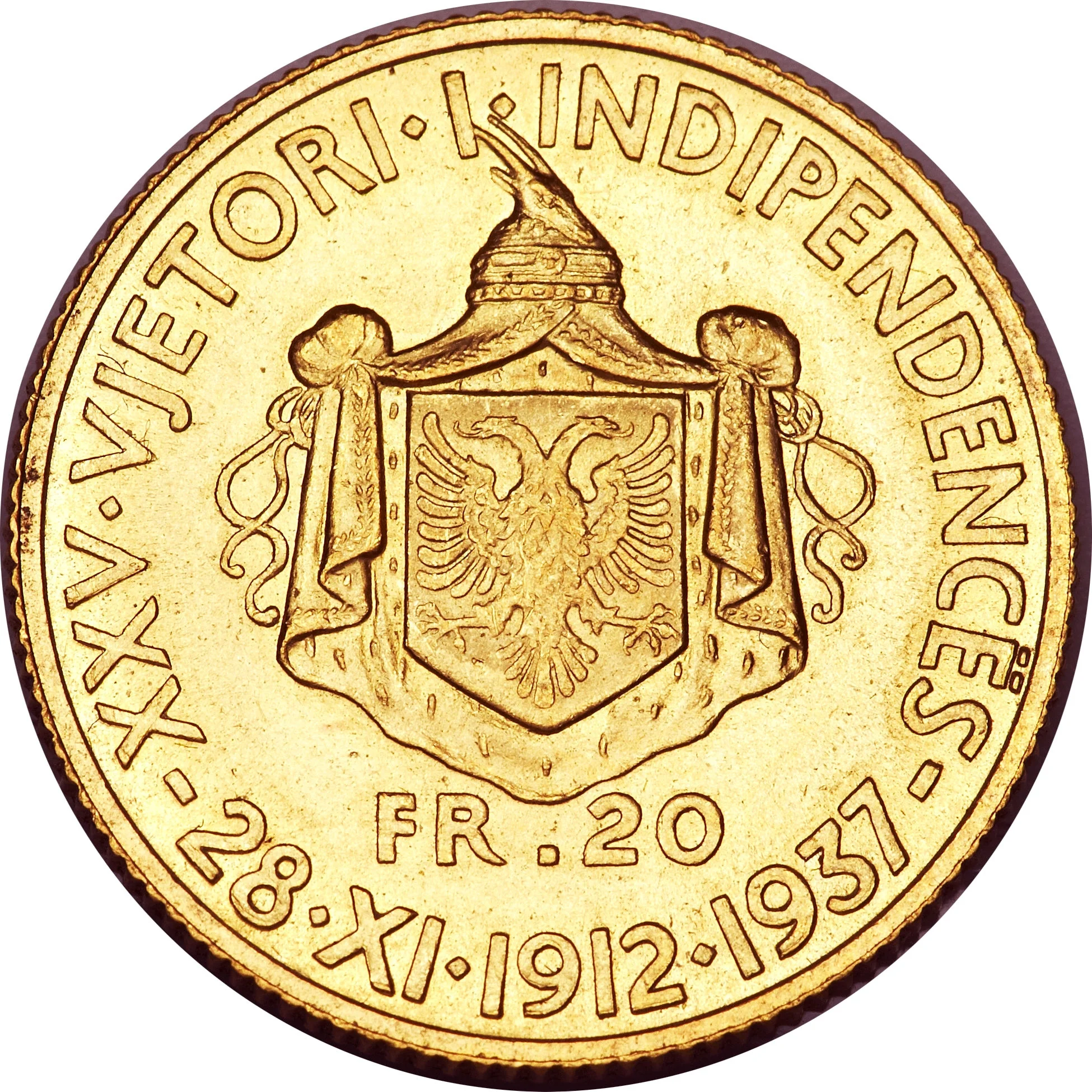
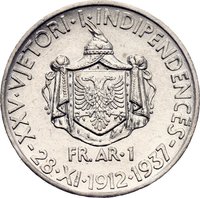
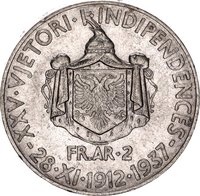
Description:
Heraldic emblem
Inscription:
FR.20
XVV.VJETORI.INDIPENDENCËS
-28.XI.1912-1937-
XVV.VJETORI.INDIPENDENCËS
-28.XI.1912-1937-
Translation:
20 FR.
15TH ANNIVERSARY OF INDEPENDENCE
-28 NOV. 1912-1937-
15TH ANNIVERSARY OF INDEPENDENCE
-28 NOV. 1912-1937-
Script: Latin
Language: Albanian
Engraver: Giuseppe Romagnoli
Edge
Categories
| Event> Independence |
| Person> Monarch |
| Symbols> Coat of Arms |
Mints
| Name | Mark |
|---|---|
| Rome | R |
Mintings
| Year | Mint Mark | Mintage | Quality | Collection |
|---|---|---|---|---|
| 1937 | R | 2,500 |
Historical background
In 1937, Albania's currency system was under the direct and conservative management of the National Bank of Albania, an institution effectively controlled by Italian capital since its founding in 1925. The official currency was the Albanian franc (Franga), which was pegged at a fixed rate to the Italian lira at 1 franga = 6.25 lire. This peg was a cornerstone of Italy's growing economic and political dominance over Albania, ensuring monetary stability that facilitated trade and investment, but which also tightly bound the Albanian economy to that of fascist Italy. The bank held a monopoly on note issuance, with gold and foreign exchange reserves, largely held in Rome, backing the currency.
Despite this formal stability, Albania's economy in 1937 remained predominantly agrarian and underdeveloped, with a limited need for a complex monetary system outside of major urban centers. Barter and in-kind transactions were still common in rural areas. The currency in circulation was a mixture of Albanian banknotes and, to a significant degree, metallic coinage, including the gold franc (franga ar) which was valued for its intrinsic worth. The system functioned without significant inflation or public debt, but this reflected a lack of industrial development and credit expansion more than robust economic health.
The situation in 1937 represented the calm before the storm. The currency's stability was entirely dependent on the Italian connection, which would lead to its abrupt end. Within two years, in April 1939, Italy militarily invaded and annexed Albania. Immediately following the invasion, the Italian lira was declared legal tender alongside the franga, and the fixed parity was forcibly maintained, formally subsuming Albania's monetary system into Italy's as part of the occupation. Thus, the 1937 arrangement proved to be the final chapter of Albania's independent, albeit Italian-influenced, currency before outright annexation.
Despite this formal stability, Albania's economy in 1937 remained predominantly agrarian and underdeveloped, with a limited need for a complex monetary system outside of major urban centers. Barter and in-kind transactions were still common in rural areas. The currency in circulation was a mixture of Albanian banknotes and, to a significant degree, metallic coinage, including the gold franc (franga ar) which was valued for its intrinsic worth. The system functioned without significant inflation or public debt, but this reflected a lack of industrial development and credit expansion more than robust economic health.
The situation in 1937 represented the calm before the storm. The currency's stability was entirely dependent on the Italian connection, which would lead to its abrupt end. Within two years, in April 1939, Italy militarily invaded and annexed Albania. Immediately following the invasion, the Italian lira was declared legal tender alongside the franga, and the fixed parity was forcibly maintained, formally subsuming Albania's monetary system into Italy's as part of the occupation. Thus, the 1937 arrangement proved to be the final chapter of Albania's independent, albeit Italian-influenced, currency before outright annexation.
Series: 25th Anniversary of Independence
💎 Extremely Rare