

2 Mu 1 Pe – Myanmar
Myanmar
Context
Year: 1867
Buddhist (Chulasakarat) Year: 1228
Issuer: Myanmar 
Ruler: Mindon Min
Currency:
(1852—1889)
Subdivision: 2 Mu 1 Pe = 5 Gold Pe = 80 Silver Pe
Demonetized: Yes
Material
References
KM: #Click to copy to clipboard20
Numista: #24239
Value
Bullion value: $458.51
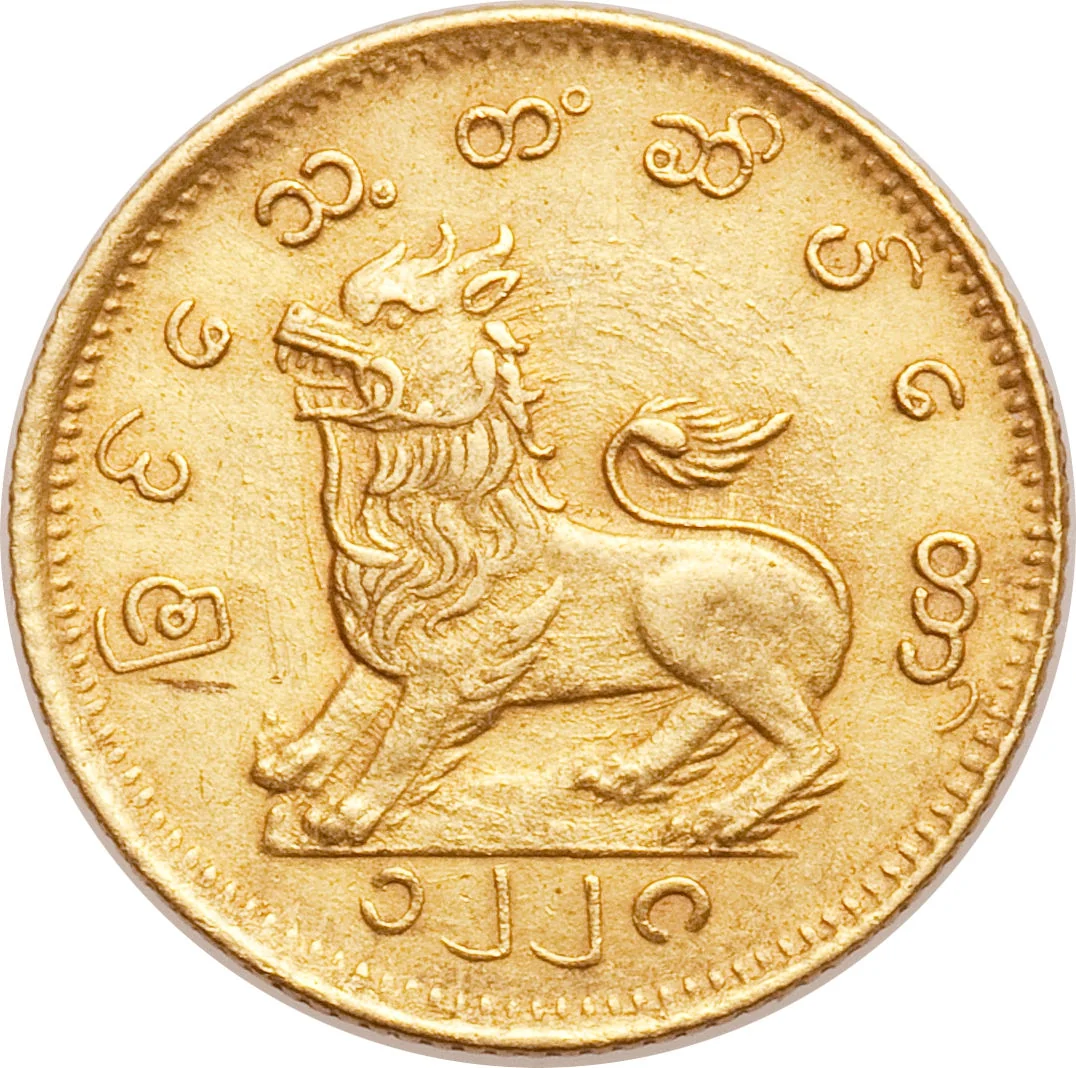
Obverse
Description:
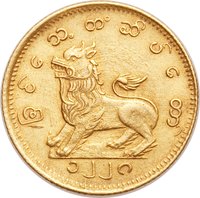
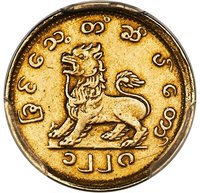
Chinze (Burmese lion-dragon hybrid).
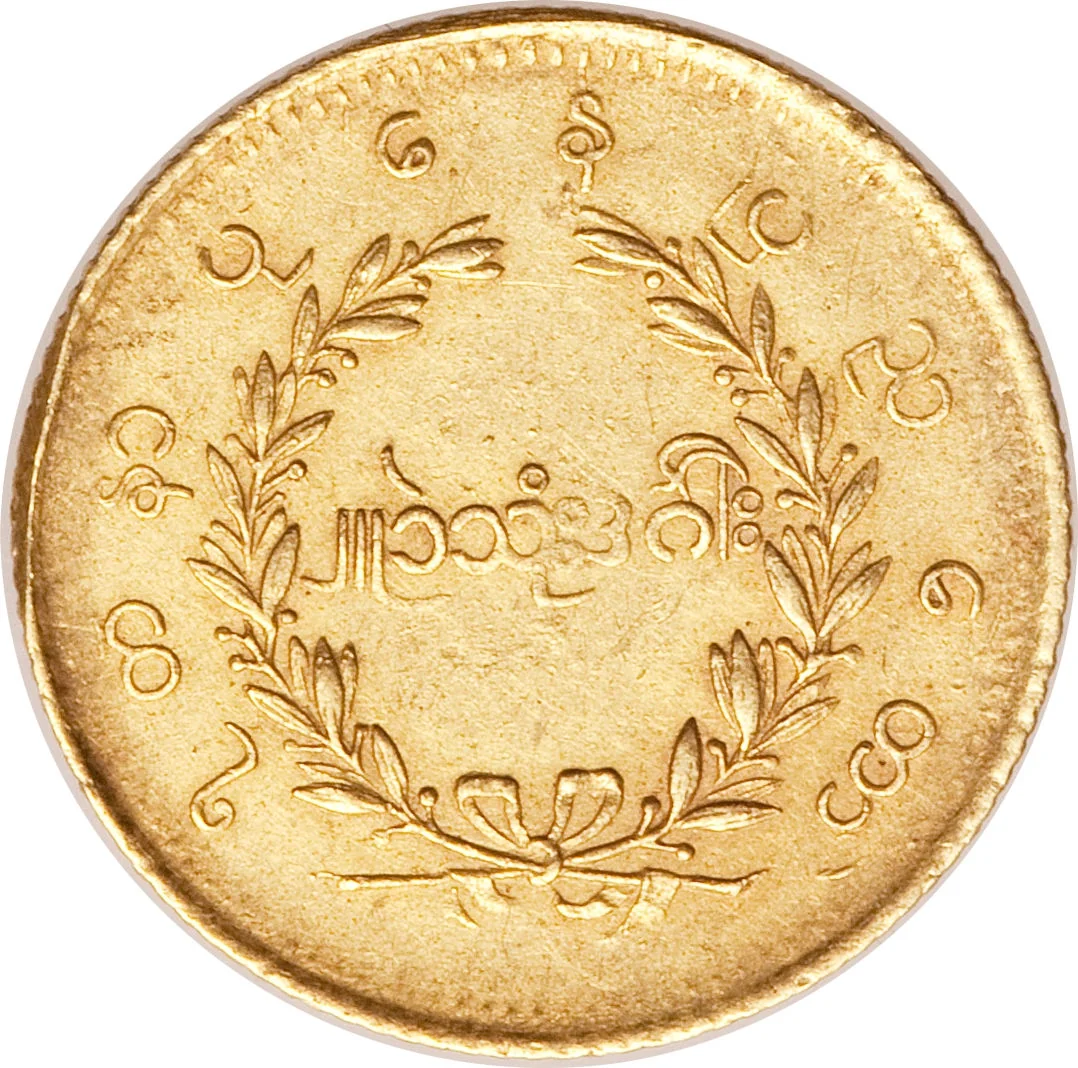
Reverse
Edge
Mintings
| Year | Mint Mark | Mintage | Quality | Collection |
|---|---|---|---|---|
| 1867 | — | — |
Historical background
In 1867, the currency situation in the Kingdom of Burma under King Mindon Min was characterized by a complex and fragmented system, typical of a pre-modern economy on the cusp of forced integration into the global market. The primary unit was the silver kyat, a flat, stamped disc not shaped like a coin, which was often cut into fractional pieces for smaller transactions. Alongside this, gold ticals and copper pe coins circulated, but the system was highly localized and lacked standardized minting, leading to variations in weight and purity that complicated trade. Furthermore, the widespread use of Indian Rupees from British India, especially in border regions and for larger commercial dealings, highlighted the growing economic influence of the colonial power to the west, which had already annexed Lower Burma after the Second Anglo-Burmese War (1852-53).
This monetary fragmentation presented significant challenges for both the royal treasury and international commerce. King Mindon, a modernizer, recognized these issues and had initiated efforts to reform the system. In the early 1860s, he established a modern mint in Mandalay, purchasing machinery from Birmingham, England, and even striking experimental pattern coins. However, by 1867, these efforts were still in a transitional phase. The new machine-struck coins, which included silver kyats and fractional pieces bearing the royal peacock emblem, were in circulation but coexisted uneasily with the older, hand-made silver lumps and foreign currencies. The state's attempt to fix exchange rates between gold, silver, and copper often failed in the face of market forces.
Ultimately, the currency situation of 1867 reflected a kingdom under immense pressure. While Mindon sought to centralize monetary authority as a symbol of sovereignty and economic modernization, the reality was a disjointed multi-currency environment. This instability was symptomatic of Burma's precarious position, caught between its traditional structures and the encroaching British colonial economy. The incomplete reforms of the 1860s would be further destabilized after Mindon's death in 1878, leaving the system vulnerable on the eve of the final British annexation in 1885.
This monetary fragmentation presented significant challenges for both the royal treasury and international commerce. King Mindon, a modernizer, recognized these issues and had initiated efforts to reform the system. In the early 1860s, he established a modern mint in Mandalay, purchasing machinery from Birmingham, England, and even striking experimental pattern coins. However, by 1867, these efforts were still in a transitional phase. The new machine-struck coins, which included silver kyats and fractional pieces bearing the royal peacock emblem, were in circulation but coexisted uneasily with the older, hand-made silver lumps and foreign currencies. The state's attempt to fix exchange rates between gold, silver, and copper often failed in the face of market forces.
Ultimately, the currency situation of 1867 reflected a kingdom under immense pressure. While Mindon sought to centralize monetary authority as a symbol of sovereignty and economic modernization, the reality was a disjointed multi-currency environment. This instability was symptomatic of Burma's precarious position, caught between its traditional structures and the encroaching British colonial economy. The incomplete reforms of the 1860s would be further destabilized after Mindon's death in 1878, leaving the system vulnerable on the eve of the final British annexation in 1885.
✨ Legendary