

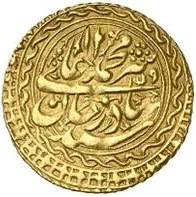
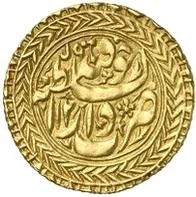
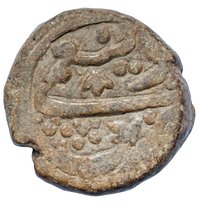
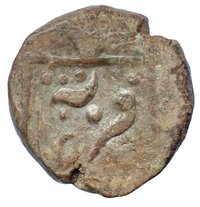
1 Tilla – Khoqand Khanate
Context
Years: 1843–1844
Country: Central Asia
Issuer: Khoqand Khanate
Ruler: Shir Ali Khan
Currency:
(1796—1876)
Demonetized: Yes
Material
References
Numista: #242359
Mintings
| Year | Mint Mark | Mintage | Quality | Collection |
|---|---|---|---|---|
| 1843 | — | — | ||
| 1844 | — | — |
Historical background
In 1843, the Khoqand Khanate's currency system was in a state of severe crisis, reflecting the broader political and economic instability of the realm. The primary circulating coin, the silver tanga, had been dramatically debased over the preceding decades by successive khans to finance military campaigns, bureaucratic expansion, and lavish court expenditures. By the 1840s, the silver content of the tanga had plummeted, leading to a collapse in public trust. This was compounded by the simultaneous circulation of older, full-value coins alongside the new, inferior issues, creating a chaotic multi-tiered currency market where exchange rates fluctuated wildly.
The debasement triggered rampant inflation, soaring prices, and significant hardship for the population, particularly salaried soldiers and fixed-income urban dwellers. The Khanate's economy, heavily reliant on trade along the Silk Road, suffered as merchants from neighboring regions like Bukhara, the Kazakh steppe, and China grew wary of Khoqand's unreliable money. In response, older Bukharan and even Russian coins often circulated at a premium within Khoqand's markets, effectively acting as more stable foreign currency. The state's attempts to mandate the value of its own debased coinage by decree were largely futile, as the market consistently rejected them.
This monetary turmoil occurred under the rule of Khan Muhammad Ali (Madali), whose reign was marked by internal rebellion and external threats. The currency crisis was both a symptom and a cause of his weakening authority, eroding the fiscal foundation needed to maintain the loyalty of the military and the administration. Ultimately, the inability to resolve the currency situation highlighted the Khanate's deepening governance problems, which would culminate in Madali's overthrow and assassination by the Emir of Bukhara just a year later, in 1844.
The debasement triggered rampant inflation, soaring prices, and significant hardship for the population, particularly salaried soldiers and fixed-income urban dwellers. The Khanate's economy, heavily reliant on trade along the Silk Road, suffered as merchants from neighboring regions like Bukhara, the Kazakh steppe, and China grew wary of Khoqand's unreliable money. In response, older Bukharan and even Russian coins often circulated at a premium within Khoqand's markets, effectively acting as more stable foreign currency. The state's attempts to mandate the value of its own debased coinage by decree were largely futile, as the market consistently rejected them.
This monetary turmoil occurred under the rule of Khan Muhammad Ali (Madali), whose reign was marked by internal rebellion and external threats. The currency crisis was both a symptom and a cause of his weakening authority, eroding the fiscal foundation needed to maintain the loyalty of the military and the administration. Ultimately, the inability to resolve the currency situation highlighted the Khanate's deepening governance problems, which would culminate in Madali's overthrow and assassination by the Emir of Bukhara just a year later, in 1844.
✨ Legendary