

5 Pounds – Isle of Man
Context
Years: 2004–2016
Country: British Crown dependencies
Issuer: Isle of Man 
Ruler: Elizabeth II
Currency:
(since 1971)
Material
References
KM: #Click to copy to clipboard1261
Numista: #24115
Value
Exchange value: 5 IMP
Obverse
Description:
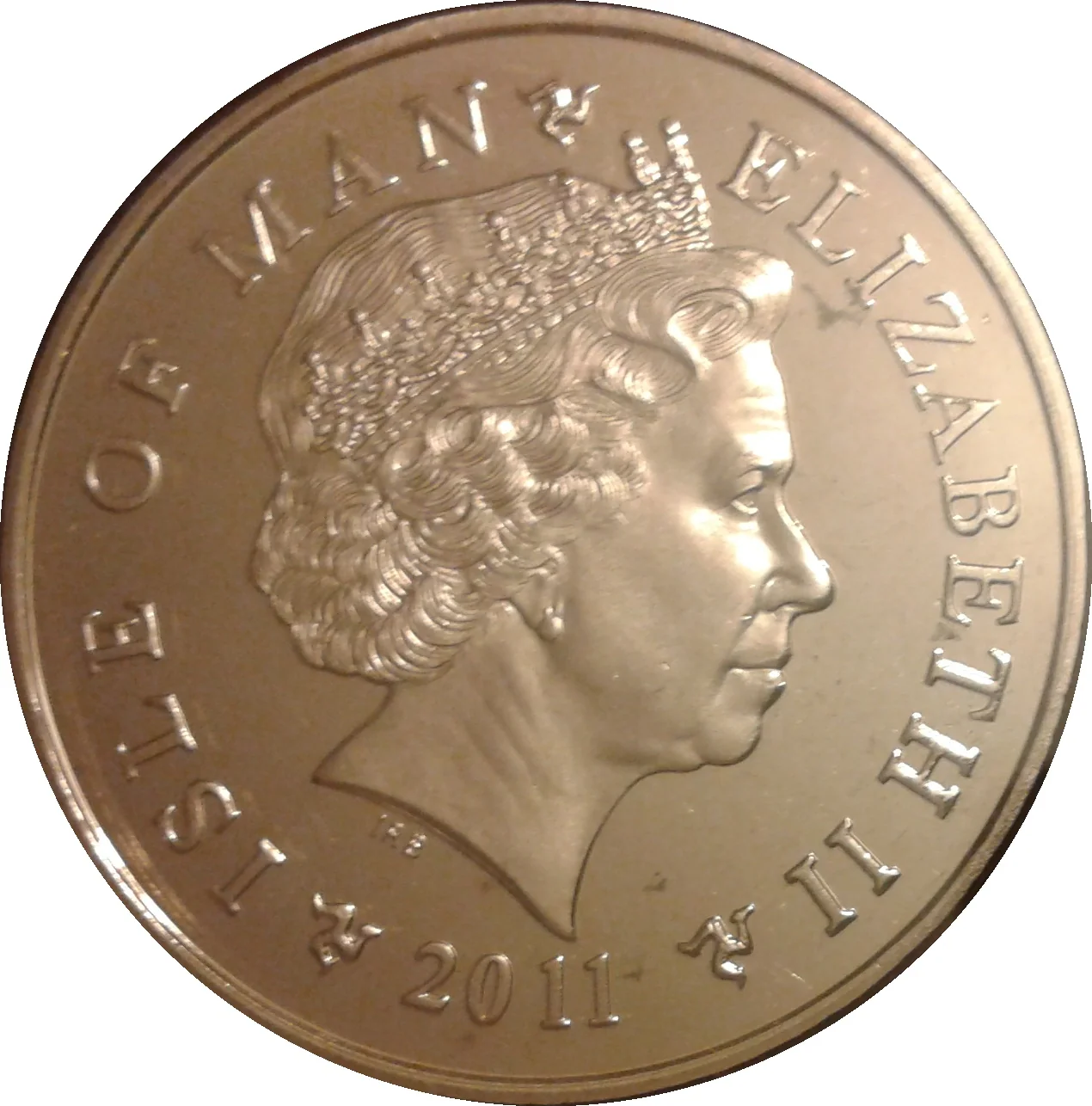
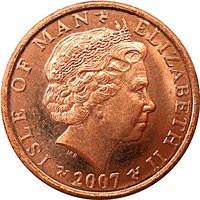
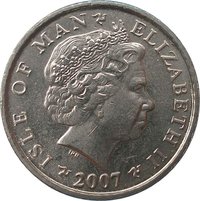
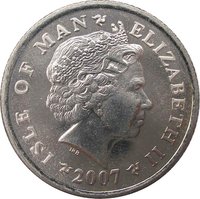
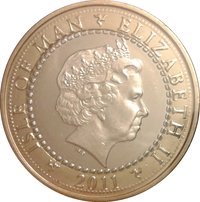
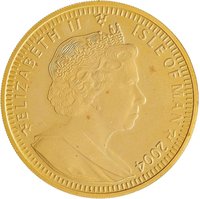
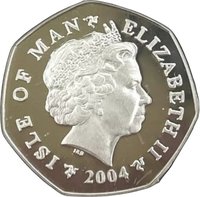
Queen Elizabeth II facing right, wearing the "Girls of Great Britain and Ireland" Tiara. Legend surrounds, date below.
Inscription:
ISLE OF MAN
ELIZABETH II
IRB
2011
ELIZABETH II
IRB
2011
Translation:
ISLE OF MAN
ELIZABETH II
IRB
2011
ELIZABETH II
IRB
2011
Script: Latin
Designer: Ian Rank-Broadley
Reverse
Edge
Alternating milled and plain sections (three each)
Categories
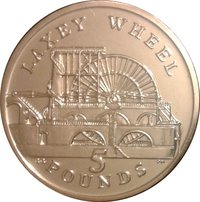
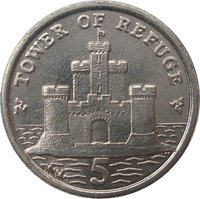
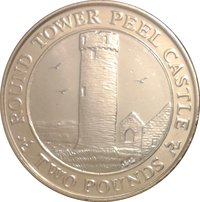
| Building |
Mints
| Name | Mark |
|---|---|
| Pobjoy Mint | (PM) |
Mintings
| Year | Mint Mark | Mintage | Quality | Collection |
|---|---|---|---|---|
| 2004 | PM | — | ||
| 2005 | PM | — | ||
| 2006 | PM | — | ||
| 2007 | PM | — | ||
| 2008 | PM | — | ||
| 2009 | PM | — | ||
| 2010 | PM | — | ||
| 2011 | PM | — | ||
| 2012 | PM | — | ||
| 2013 | PM | — | ||
| 2014 | PM | — | ||
| 2015 | PM | — | ||
| 2016 | — | — |
Historical background
In 2004, the Isle of Man's currency situation was defined by its unique constitutional position as a British Crown Dependency, which granted it autonomy over domestic matters, including the issuance of its own currency. The Manx pound (£) was pegged at par with the pound sterling (GBP), meaning the two currencies were accepted interchangeably across the Island. However, Manx notes and coins, issued by the Isle of Man Government Treasury, were distinct in design, featuring local imagery and historical figures, and were not legal tender in the United Kingdom, creating a practical one-way fungibility.
The system relied heavily on the stability of the UK's monetary policy set by the Bank of England, as the Island did not have a central bank of its own. This arrangement provided economic stability and certainty for trade and finance, which was crucial for the Isle of Man's significant offshore banking, insurance, and e-gaming sectors. A key operational feature was that Manx currency in circulation was fully backed by sterling reserves held in the Manx Treasury's Currency Fund, ensuring confidence in its value.
Overall, the 2004 landscape was one of stable and managed duality. The local currency served as a symbol of national identity and fiscal sovereignty, while the fixed link to sterling provided the economic bedrock for the Island's thriving international business sector. This pragmatic framework effectively balanced the Isle of Man's need for economic integration with the UK market and its desire for a degree of independent financial expression.
The system relied heavily on the stability of the UK's monetary policy set by the Bank of England, as the Island did not have a central bank of its own. This arrangement provided economic stability and certainty for trade and finance, which was crucial for the Isle of Man's significant offshore banking, insurance, and e-gaming sectors. A key operational feature was that Manx currency in circulation was fully backed by sterling reserves held in the Manx Treasury's Currency Fund, ensuring confidence in its value.
Overall, the 2004 landscape was one of stable and managed duality. The local currency served as a symbol of national identity and fiscal sovereignty, while the fixed link to sterling provided the economic bedrock for the Island's thriving international business sector. This pragmatic framework effectively balanced the Isle of Man's need for economic integration with the UK market and its desire for a degree of independent financial expression.
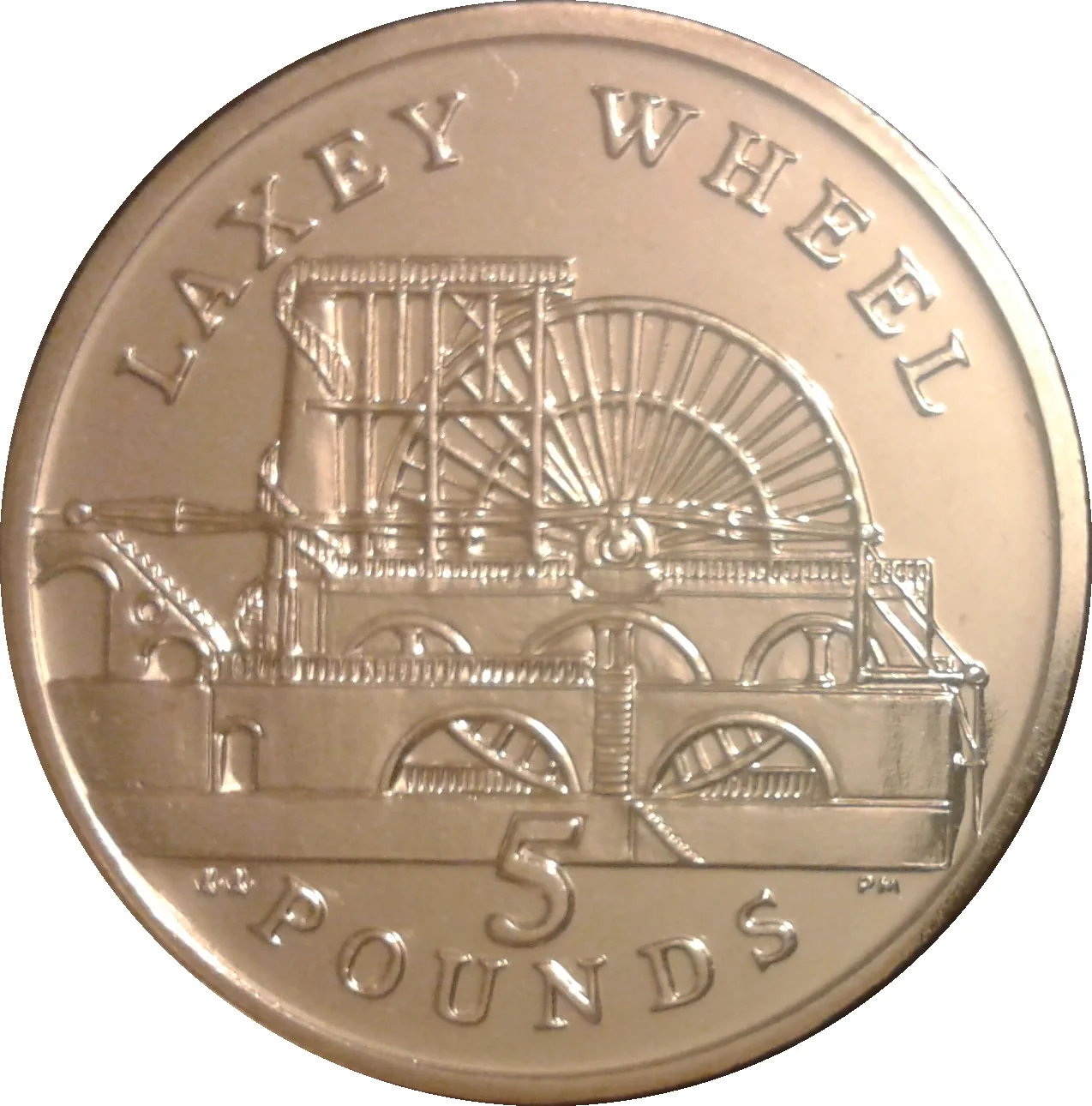
Series: IOM landmarks series
⭐ Rare