

50 Pence – Falkland Islands
United Kingdom
Context
Years: 2003–2004
Country: United Kingdom 
Issuer: Falkland Islands 
Ruler: Elizabeth II
Currency:
(since 1971)
Material
Diameter: 27.3 mm
Weight: 8 g
Thickness: 1.5 mm
Shape: Equilateral curve heptagon
Composition: Copper-nickel
Technique: Milled
Alignment: Medal alignment
flip
References
KM: #Click to copy to clipboard135
Numista: #10194
Value
Exchange value: 0.50 FKP
Inflation-adjusted value: 1.04 FKP
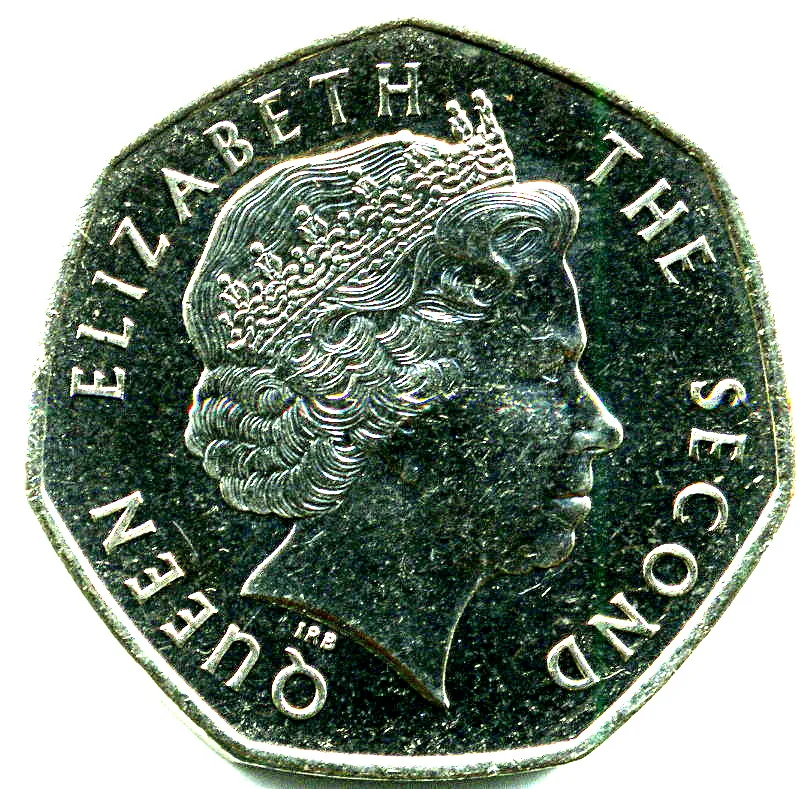
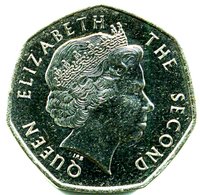
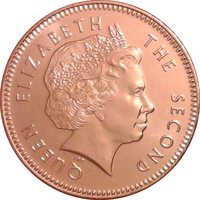
Obverse
Description:
Get in. Let's go.
Inscription:
QUEEN ELIZABETH THE SECOND
Script: Latin
Engraver: Ian Rank-Broadley
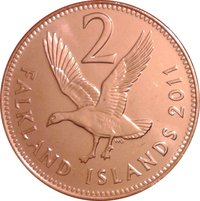
Reverse
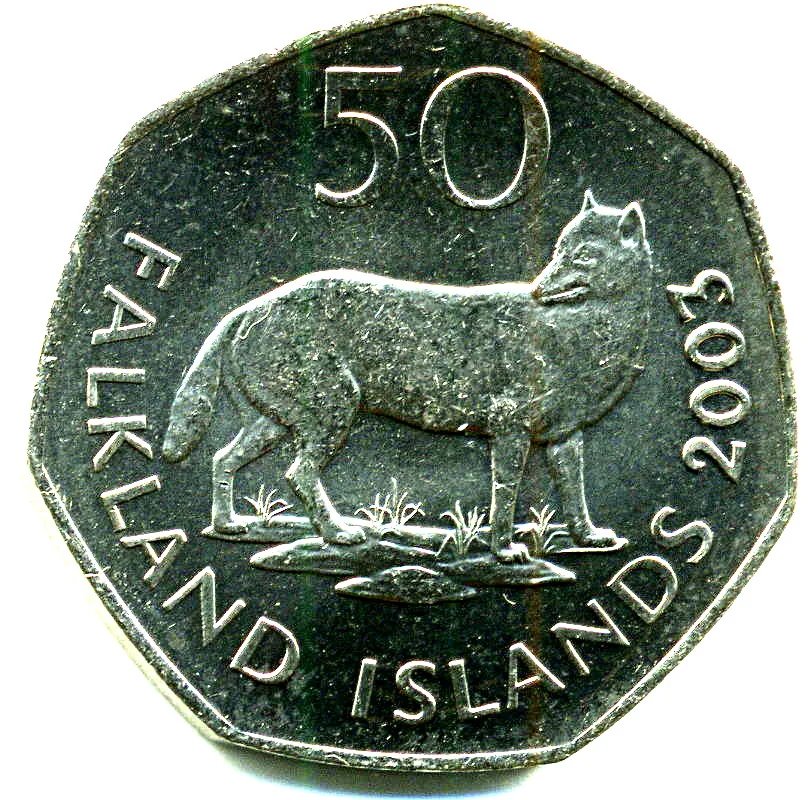
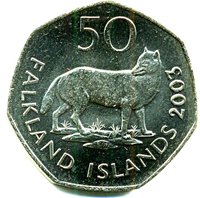
Description:
Warrah, standing.
Inscription:
50
FALKLAND ISLANDS 2003
FALKLAND ISLANDS 2003
Script: Latin
Engraver: William Maving Gardner
Edge
Plain
Mintings
| Year | Mint Mark | Mintage | Quality | Collection |
|---|---|---|---|---|
| 2003 | — | — | ||
| 2004 | — | — |
Historical background
In 2003, the currency situation in the Falkland Islands remained stable and unaltered, continuing its long-standing and unique dual-currency system. The official currency was (and remains) the Falkland Islands pound (FKP), which is pegged at par with the British pound sterling (GBP). This parity is guaranteed by the Falkland Islands Government, meaning the two currencies are interchangeable on the Islands. Both banknotes and coins, issued by the Falkland Islands Government, circulated alongside UK sterling notes and coins, providing a seamless financial link to the United Kingdom.
This system was, and is, fundamental to the Islands' economy, reflecting its status as a British Overseas Territory. The peg ensured monetary stability, controlled inflation, and facilitated vital trade, as the UK was the primary source of imports. Furthermore, it simplified transactions for the important fishing licensing industry and the growing tourism sector, as international visitors, particularly from cruise ships, could easily use sterling. There were no significant currency reforms or crises in 2003; the year was characterized by the continued reliability of this arrangement.
The economic context in 2003 was one of steady recovery and growth, driven largely by revenues from the sale of fishing licenses within the Islands' conservation zone. This income provided the government with the confidence and reserves to maintain the currency peg without difficulty. While the Argentine peso continued to be officially rejected due to the sovereignty dispute, the fixed link to sterling provided a secure monetary environment for investment and daily life, insulating the Islands from the economic volatility that affected Argentina in the early 2000s.
This system was, and is, fundamental to the Islands' economy, reflecting its status as a British Overseas Territory. The peg ensured monetary stability, controlled inflation, and facilitated vital trade, as the UK was the primary source of imports. Furthermore, it simplified transactions for the important fishing licensing industry and the growing tourism sector, as international visitors, particularly from cruise ships, could easily use sterling. There were no significant currency reforms or crises in 2003; the year was characterized by the continued reliability of this arrangement.
The economic context in 2003 was one of steady recovery and growth, driven largely by revenues from the sale of fishing licenses within the Islands' conservation zone. This income provided the government with the confidence and reserves to maintain the currency peg without difficulty. While the Argentine peso continued to be officially rejected due to the sovereignty dispute, the fixed link to sterling provided a secure monetary environment for investment and daily life, insulating the Islands from the economic volatility that affected Argentina in the early 2000s.
🌱 Common