

1 boliviano – Bolivia
Add to wishlist
Bolivia
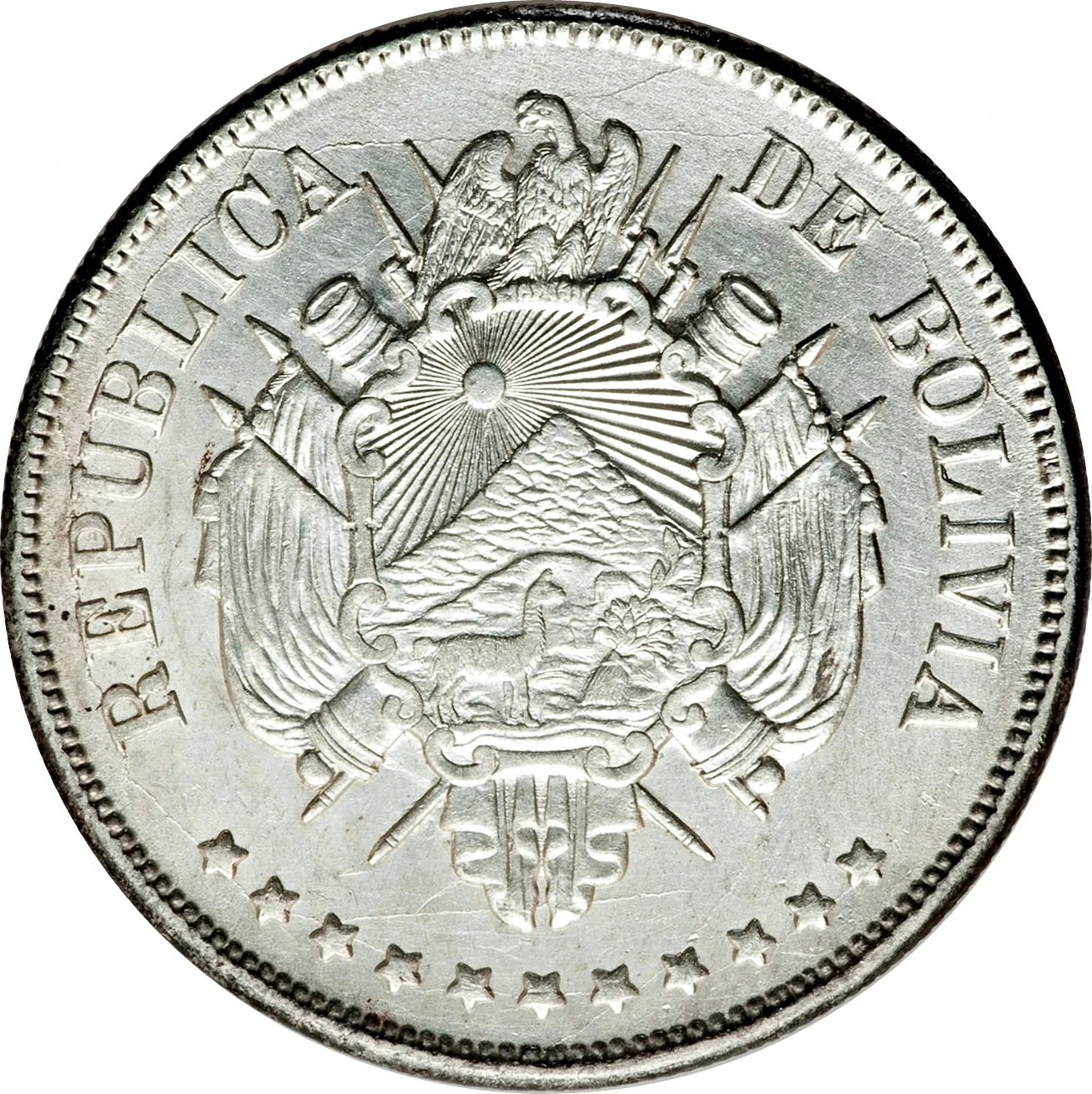
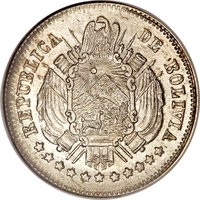
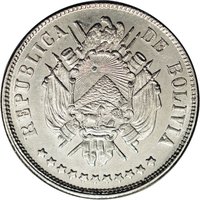
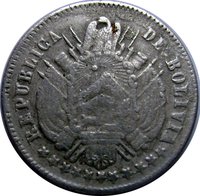
Obverse
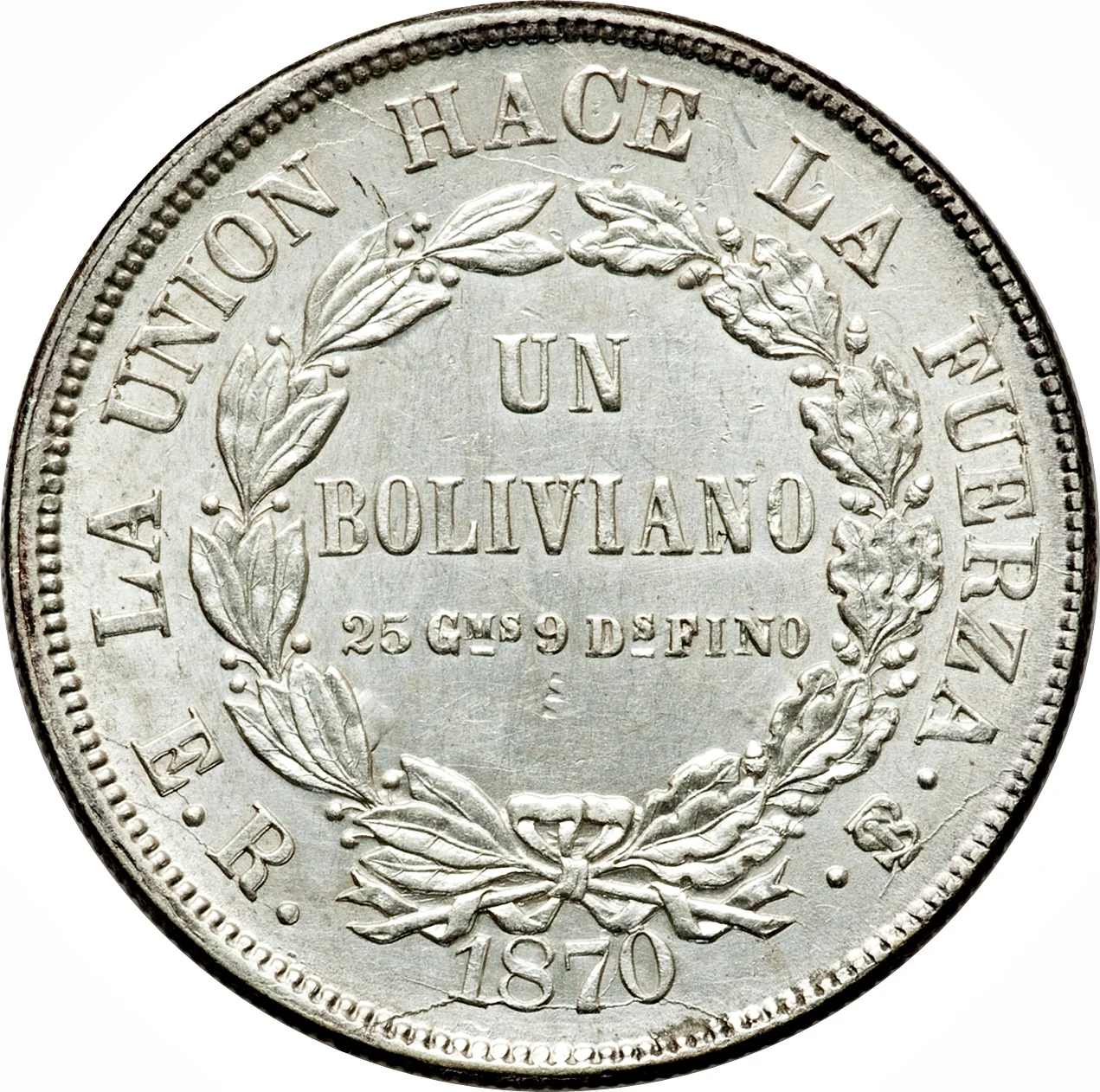
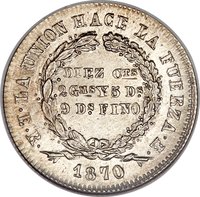
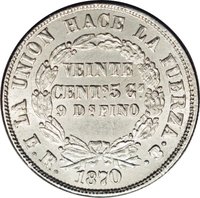
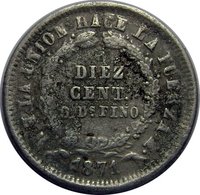
Reverse
Description:
Denomination inside wreath; date, motto, and rim outside.
Inscription:
LA UNION HACE LA FUERZA
UN BOLIVIANO
25 Gms 9 Ds FINO
E.R. 1870 .PTS.
UN BOLIVIANO
25 Gms 9 Ds FINO
E.R. 1870 .PTS.
Script: Latin
Edge
Reeded
Mints
| Name | Mark |
|---|---|
| Potosi | PTS |
Historical background
In 1870, Bolivia's currency situation was characterized by profound instability and fragmentation, a direct legacy of the economic devastation following the War of the Pacific (1879-1884) which had not yet occurred. The nation operated without a unified national currency. Instead, the monetary landscape was a chaotic mix of foreign and obsolete coins. Peruvian pesos, Chilean pesos, Bolivian soles from earlier mintings, and even Spanish colonial coins all circulated simultaneously, their values fluctuating based on metal content and local acceptance. This lack of a standardized medium of exchange severely hampered domestic trade and complicated fiscal policy for the government in Sucre.
The root of this disorder lay in the chronic fiscal weakness of the Bolivian state, which relied heavily on silver mining exports, particularly from the Cerro Rico of Potosí. Government revenues were volatile and insufficient, leading to repeated deficits. To finance spending, successive administrations, most notably that of General Mariano Melgarejo (1864-1871), resorted to debasing the coinage or issuing low-quality currency. Melgarejo's government was notorious for flooding the economy with "feble" (weak) silver coins of inferior alloy, which drove older, purer coins out of circulation (Gresham's Law) and destroyed public trust in the monetary system. This practice effectively created a dual system where "strong" and "weak" coins traded at different values.
Consequently, by 1870, Bolivia was trapped in a cycle of inflationary pressure, currency devaluation, and economic uncertainty. The absence of a central bank or any effective regulatory authority meant the market determined exchange rates between the myriad coin types, leading to confusion and exploitation. This monetary anarchy reflected the broader political instability of the era and crippled efforts at modernizing the economy. It created an urgent need for reform, a challenge that would only be addressed in the subsequent decades with the establishment of a single national currency, the boliviano, in 1864, though its implementation and acceptance remained problematic and incomplete throughout the period.
The root of this disorder lay in the chronic fiscal weakness of the Bolivian state, which relied heavily on silver mining exports, particularly from the Cerro Rico of Potosí. Government revenues were volatile and insufficient, leading to repeated deficits. To finance spending, successive administrations, most notably that of General Mariano Melgarejo (1864-1871), resorted to debasing the coinage or issuing low-quality currency. Melgarejo's government was notorious for flooding the economy with "feble" (weak) silver coins of inferior alloy, which drove older, purer coins out of circulation (Gresham's Law) and destroyed public trust in the monetary system. This practice effectively created a dual system where "strong" and "weak" coins traded at different values.
Consequently, by 1870, Bolivia was trapped in a cycle of inflationary pressure, currency devaluation, and economic uncertainty. The absence of a central bank or any effective regulatory authority meant the market determined exchange rates between the myriad coin types, leading to confusion and exploitation. This monetary anarchy reflected the broader political instability of the era and crippled efforts at modernizing the economy. It created an urgent need for reform, a challenge that would only be addressed in the subsequent decades with the establishment of a single national currency, the boliviano, in 1864, though its implementation and acceptance remained problematic and incomplete throughout the period.
Series: 1870 Bolivia circulation coins
🌟 Limited