

100 mun – Joseon
Add to wishlist
Context
Material
Diameter: 40.6 mm
Weight: 25.1 g
Thickness: 2.8 mm
Shape: Round with a square hole
Composition: Copper
Magnetic: No
Technique: Cast
Alignment: Medal alignment
flip
References
KM: #
Numista: #23762
Obverse
Description:
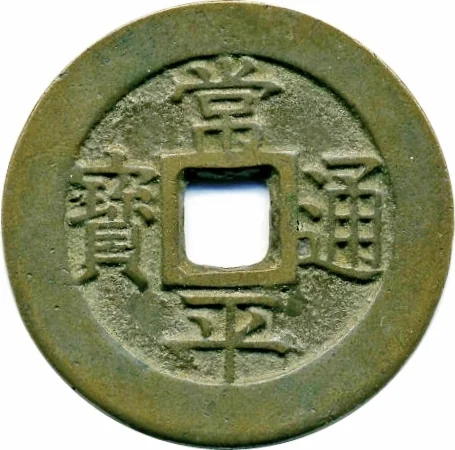
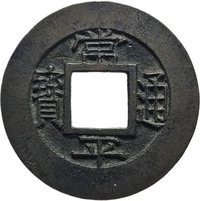
常平通寶 (Sang pyong Tong bo) - Yi Dynasty Korean currency.
Inscription:
常
寶 通
平
寶 通
平
Translation:
Eternal Treasure
Circulating Currency
Circulating Currency
Scripts: Chinese (traditional, regular script)
Language: Chinese
Reverse
Description:
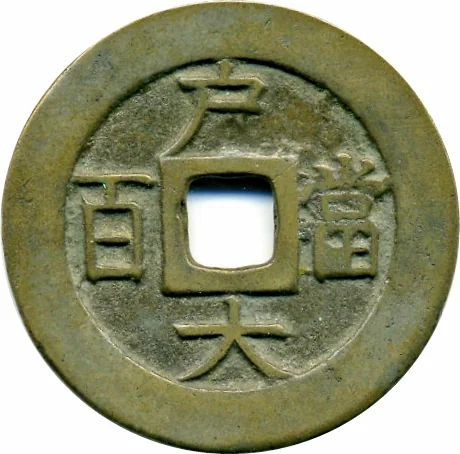
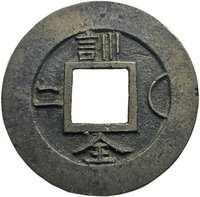
Mint mark top, serial bottom. Denomination: *户 (Ho) Treasury Department.
Inscription:
户
百 當
大
百 當
大
Translation:
Household
Hundred Equivalent
Large
Hundred Equivalent
Large
Scripts: Chinese (traditional, regular script)
Language: Chinese
Edge
Plain
Mints
| Name | Mark |
|---|---|
| Treasury Department | 户 |
Mintings
| Year | Mint Mark | Mintage | Quality | Collection |
|---|---|---|---|---|
| — | 户 | 1,784,038 |
Historical background
In 1866, the currency system of the Joseon Dynasty was in a state of severe crisis, characterized by rampant inflation and a profound loss of public trust. The primary circulating coin, the sangpyeong tongbo cash coin, had been heavily debased. The government, under the regency of Heungseon Daewongun and facing immense financial pressures from rebuilding palaces and strengthening national defenses, resorted to issuing vast quantities of new coins with reduced copper content and inferior quality. This reckless minting, done without adequate bullion reserves, flooded the market and drastically devalued the currency.
The inflationary spiral was exacerbated by the widespread circulation of privately minted counterfeit coins, which were often of even poorer quality than the official debased issues. The sheer volume of bad money in accordance with Gresham's Law drove the older, higher-quality coins out of circulation, as people hoarded them or melted them down for their intrinsic metal value. This led to a dramatic increase in market prices, particularly for rice and other essential goods, causing significant hardship for the common people and undermining the stability of the agrarian economy.
This monetary instability occurred within a broader context of internal strain and external pressure. The year 1866 is famously marked by the General Sherman incident and the subsequent French campaign against Korea, but the economic foundation was already crumbling. The currency crisis reflected the dynasty's weakening administrative control and its struggle to finance state projects through traditional means. The failed reforms and chaotic currency of this period highlighted the systemic vulnerabilities of late Joseon, contributing to the social discontent and fiscal weaknesses that would confront the kingdom in its final decades.
The inflationary spiral was exacerbated by the widespread circulation of privately minted counterfeit coins, which were often of even poorer quality than the official debased issues. The sheer volume of bad money in accordance with Gresham's Law drove the older, higher-quality coins out of circulation, as people hoarded them or melted them down for their intrinsic metal value. This led to a dramatic increase in market prices, particularly for rice and other essential goods, causing significant hardship for the common people and undermining the stability of the agrarian economy.
This monetary instability occurred within a broader context of internal strain and external pressure. The year 1866 is famously marked by the General Sherman incident and the subsequent French campaign against Korea, but the economic foundation was already crumbling. The currency crisis reflected the dynasty's weakening administrative control and its struggle to finance state projects through traditional means. The failed reforms and chaotic currency of this period highlighted the systemic vulnerabilities of late Joseon, contributing to the social discontent and fiscal weaknesses that would confront the kingdom in its final decades.

⭐ Rare