

20 Kronen – Liechtenstein
Liechtenstein
Context
Year: 1898
Issuer: Liechtenstein 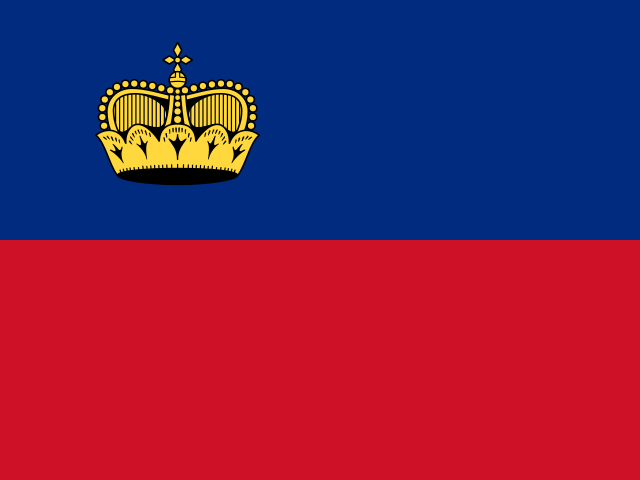
Ruler: John II
Currency:
(1898—1921)
Demonetization: 28 August 1920
Total mintage: 1,500
Material
References
Y: #Click to copy to clipboard6
Numista: #23758
Value
Bullion value: $1017.39
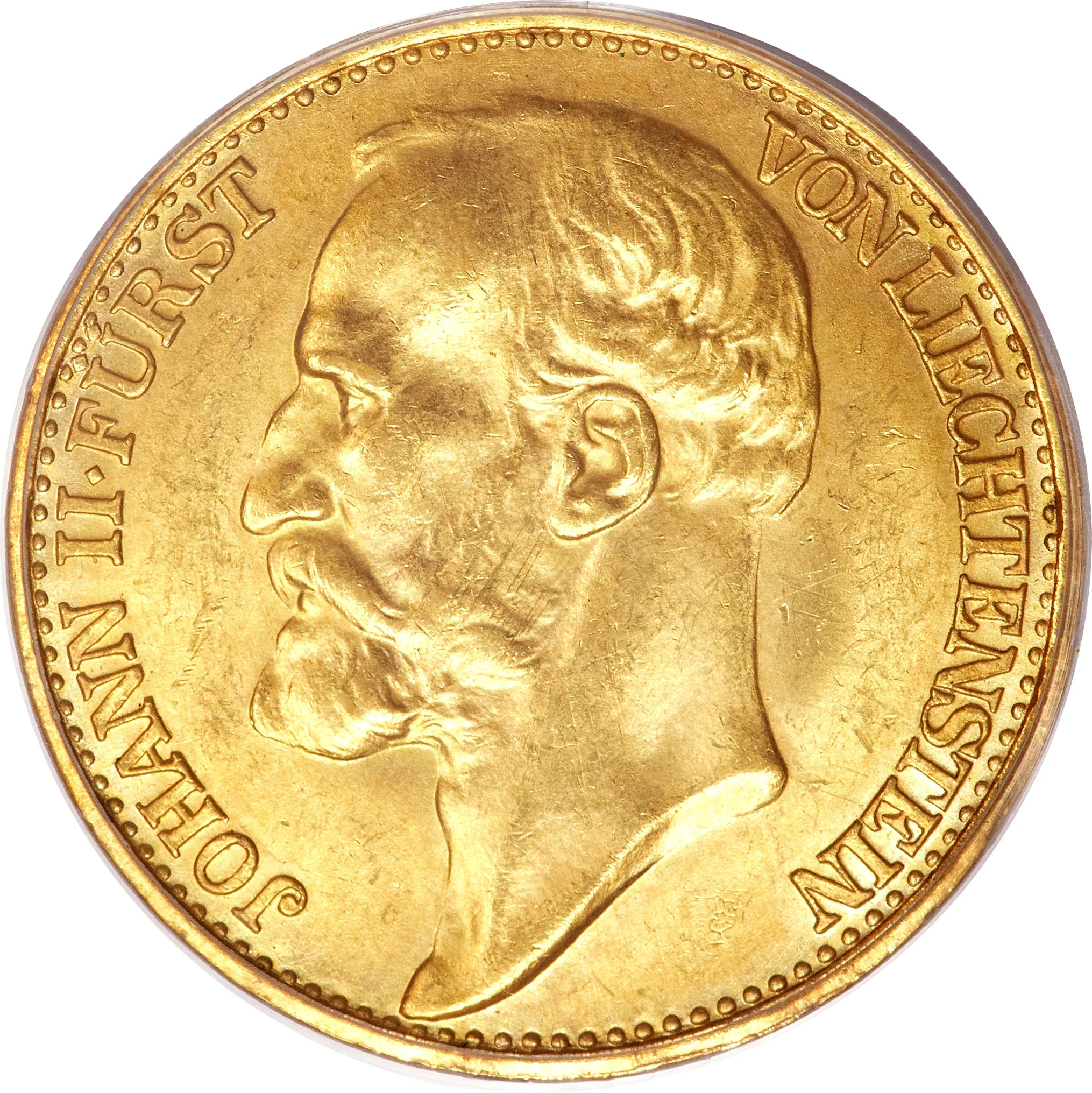
Obverse
Description:
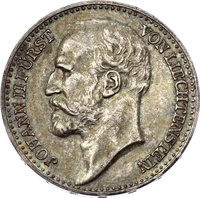
Johann II left-facing portrait with surrounding lettering.
Inscription:
JOHANN II·FÜRST VON LIECHTENSTEIN
Translation:
John II, Prince of Liechtenstein
Script: Latin
Language: German
Engraver: Gustave Deloye
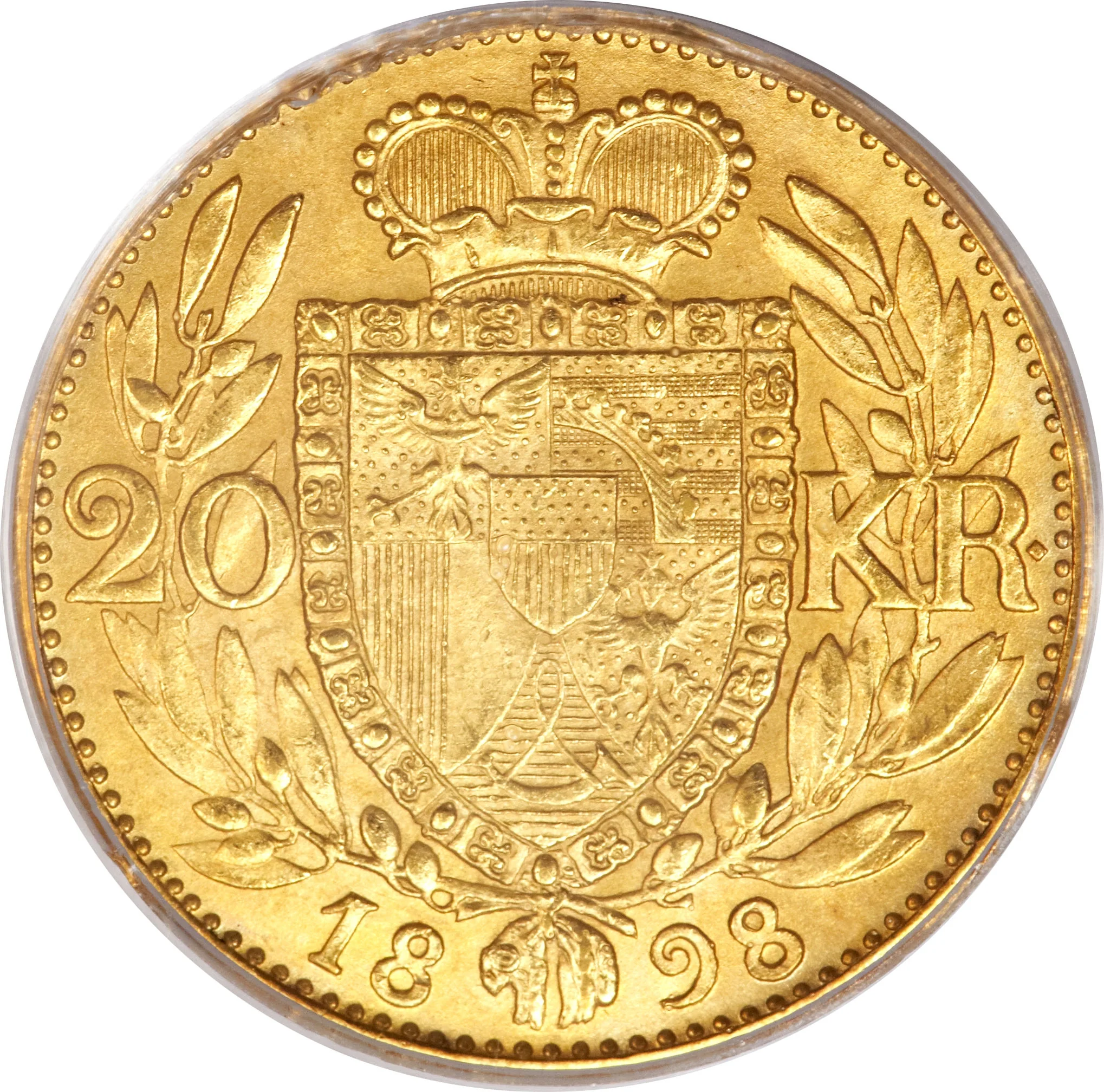
Reverse
Description:
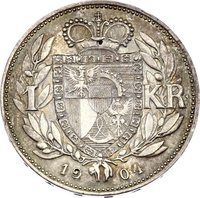
Liechtenstein coat of arms centered, flanked by branches with value and "KR·" above. Date below.
Inscription:
20 KR·
18 98
18 98
Translation:
20 KRONOR
18 98
18 98
Script: Latin
Language: Swedish
Engraver: Gustave Deloye
Edge
Categories
| Person> Monarch |
| Symbols> Coat of Arms |
Mintings
| Year | Mint Mark | Mintage | Quality | Collection |
|---|---|---|---|---|
| 1898 | — | 1,500 |
Historical background
In 1898, the Principality of Liechtenstein found itself in a complex and transitional currency situation, deeply intertwined with its political and economic union with Austria-Hungary. Since the signing of the Customs Treaty (Zollvertrag) in 1852, Liechtenstein had effectively been integrated into the Austrian economic sphere. Consequently, the official legal tender was the Austrian gulden (florin), divided into 100 kreuzer. This arrangement provided monetary stability and facilitated trade, but it also meant Liechtenstein had no independent monetary policy and was wholly subject to the financial systems and fluctuations emanating from Vienna.
However, this system was on the cusp of significant change. In 1892, Austria-Hungary had itself begun a major monetary reform, deciding to transition from the gulden to the gold-standard-based krone (crown). This process, which introduced the Krone (equal to 100 heller), was gradual, and by 1898 both the old gulden and the new krone were in concurrent circulation. Liechtenstein, bound by its treaty, necessarily followed this transition, meaning its economy in 1898 was navigating a dual-currency environment where values had to be constantly reconciled.
Thus, the background of 1898 is one of dependency and transition. Liechtenstein's currency was not its own but an extension of a reforming Austrian system. The period was marked by practical calculations for businesses and citizens as old gulden coins and notes were slowly phased out in favor of the new kronen. This monetary dependency would persist until the aftermath of World War I, when the dissolution of the Austro-Hungarian Empire forced Liechtenstein to sever its customs treaty and eventually align its currency with that of Switzerland.
However, this system was on the cusp of significant change. In 1892, Austria-Hungary had itself begun a major monetary reform, deciding to transition from the gulden to the gold-standard-based krone (crown). This process, which introduced the Krone (equal to 100 heller), was gradual, and by 1898 both the old gulden and the new krone were in concurrent circulation. Liechtenstein, bound by its treaty, necessarily followed this transition, meaning its economy in 1898 was navigating a dual-currency environment where values had to be constantly reconciled.
Thus, the background of 1898 is one of dependency and transition. Liechtenstein's currency was not its own but an extension of a reforming Austrian system. The period was marked by practical calculations for businesses and citizens as old gulden coins and notes were slowly phased out in favor of the new kronen. This monetary dependency would persist until the aftermath of World War I, when the dissolution of the Austro-Hungarian Empire forced Liechtenstein to sever its customs treaty and eventually align its currency with that of Switzerland.
💎 Extremely Rare