

¼ dollar – United States
Add to wishlist
Non-circulating coins
Commemoration: Pictured Rocks National Lakeshore, Michigan
United States
Context
Year: 2018
Issuer: United States
Period:
(since 1776)
Currency:
(since 1785)
Subdivision: ¼ dollar = 25 Cents
Material
References
KM: #
Numista: #131850
Value
Exchange value: ¼ USD = $0.25
Bullion value: $13.76
Inflation-adjusted value: 0.33 USD
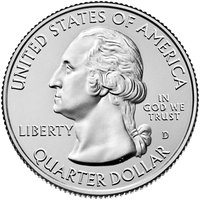
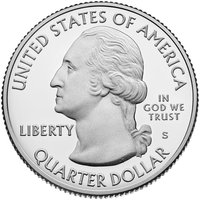
Obverse
Description:
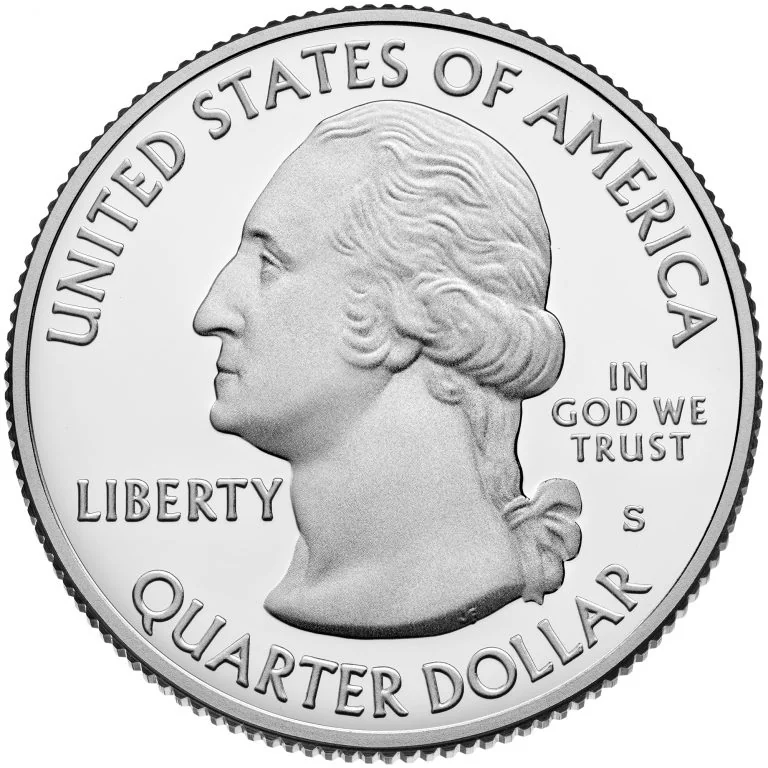
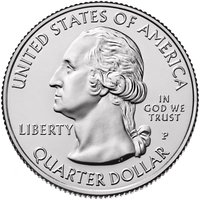
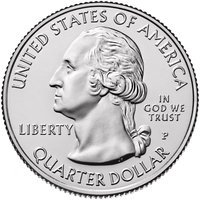
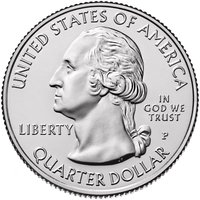
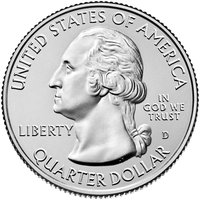
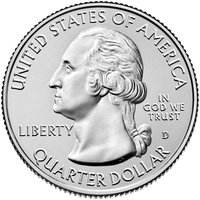
Left-profile portrait of George Washington with "IN GOD WE TRUST," "LIBERTY," the denomination, and "UNITED STATES OF AMERICA."
Inscription:
UNITED STATES OF AMERICA
LIBERTY
IN GOD WE TRUST
QUARTER DOLLAR
LIBERTY
IN GOD WE TRUST
QUARTER DOLLAR
Script: Latin
Engraver: John Flanagan
Reverse
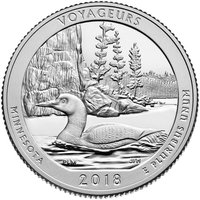
Description:
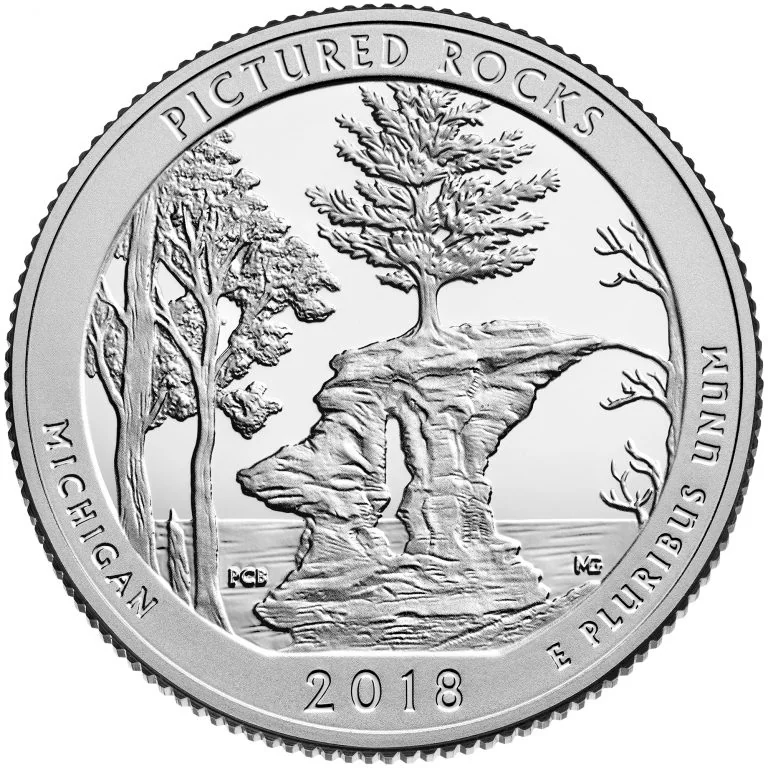
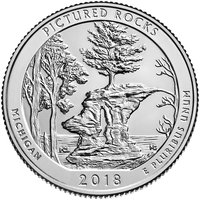
Chapel Rock with its pine-topped summit.
Inscription:
PICTURED ROCKS
MICHIGAN
2018
E PLURIBUS UNUM
MICHIGAN
2018
E PLURIBUS UNUM
Translation:
PICTURED ROCKS
MICHIGAN
2018
OUT OF MANY, ONE
MICHIGAN
2018
OUT OF MANY, ONE
Script: Latin
Engraver: Michael Gaudioso
Edge
Reeded
Mints
| Name | Mark |
|---|---|
| United States Mint of San Francisco | S |
Mintings
| Year | Mint Mark | Mintage | Quality | Collection |
|---|---|---|---|---|
| 2018 | S | — | Proof |
Historical background
In 2018, the United States currency situation was characterized by a period of monetary policy normalization and a strong U.S. dollar, set against a backdrop of robust economic growth. The Federal Reserve, under Chairman Jerome Powell, continued the tightening cycle it began in 2015, raising the benchmark federal funds rate four times over the year to a target range of 2.25% to 2.50%. This was driven by a strong labor market, solid GDP growth fueled by the 2017 Tax Cuts and Jobs Act, and a conscious effort to move interest rates away from the near-zero emergency levels of the post-2008 era. Concurrently, the Fed continued to gradually reduce its massive balance sheet, a process known as quantitative tightening, which further removed liquidity from the financial system.
The dollar's strength was a defining feature of 2018, with the U.S. Dollar Index (DXY) rising approximately 4.5% over the year. This appreciation was fueled by the Fed's comparatively hawkish stance at a time when other major central banks, like the European Central Bank and the Bank of Japan, maintained more accommodative policies. The "America First" trade agenda of the Trump administration also played a significant role, as escalating tariffs and trade tensions with China and other partners created global uncertainty. Investors often flocked to the dollar as a safe-haven asset during periods of market stress, further bolstering its value.
However, this environment presented significant crosscurrents. The stronger dollar made U.S. exports more expensive abroad, hurting some manufacturers and farmers, and also tightened financial conditions for emerging markets with dollar-denominated debt. By the fourth quarter, concerns emerged that the Fed's tightening, combined with fading fiscal stimulus and the ongoing trade war, could slow the economic expansion. These fears contributed to a sharp equity market sell-off in December, which led President Trump to publicly criticize the Fed's rate hikes and prompted investors to question whether the central bank would pause its tightening cycle in 2019.
The dollar's strength was a defining feature of 2018, with the U.S. Dollar Index (DXY) rising approximately 4.5% over the year. This appreciation was fueled by the Fed's comparatively hawkish stance at a time when other major central banks, like the European Central Bank and the Bank of Japan, maintained more accommodative policies. The "America First" trade agenda of the Trump administration also played a significant role, as escalating tariffs and trade tensions with China and other partners created global uncertainty. Investors often flocked to the dollar as a safe-haven asset during periods of market stress, further bolstering its value.
However, this environment presented significant crosscurrents. The stronger dollar made U.S. exports more expensive abroad, hurting some manufacturers and farmers, and also tightened financial conditions for emerging markets with dollar-denominated debt. By the fourth quarter, concerns emerged that the Fed's tightening, combined with fading fiscal stimulus and the ongoing trade war, could slow the economic expansion. These fears contributed to a sharp equity market sell-off in December, which led President Trump to publicly criticize the Fed's rate hikes and prompted investors to question whether the central bank would pause its tightening cycle in 2019.


🌟 Uncommon