

½ Crown – United Kingdom
United Kingdom
Context
Years: 1823–1824
Issuer: United Kingdom 
Ruler: George IV
Currency:
(1158—1970)
Demonetization: 31 December 1969
Total mintage: 16,353,900
Material
References
KM: #Click to copy to clipboard688
Numista: #13184
Value
Bullion value: $36.82
Obverse
Description:
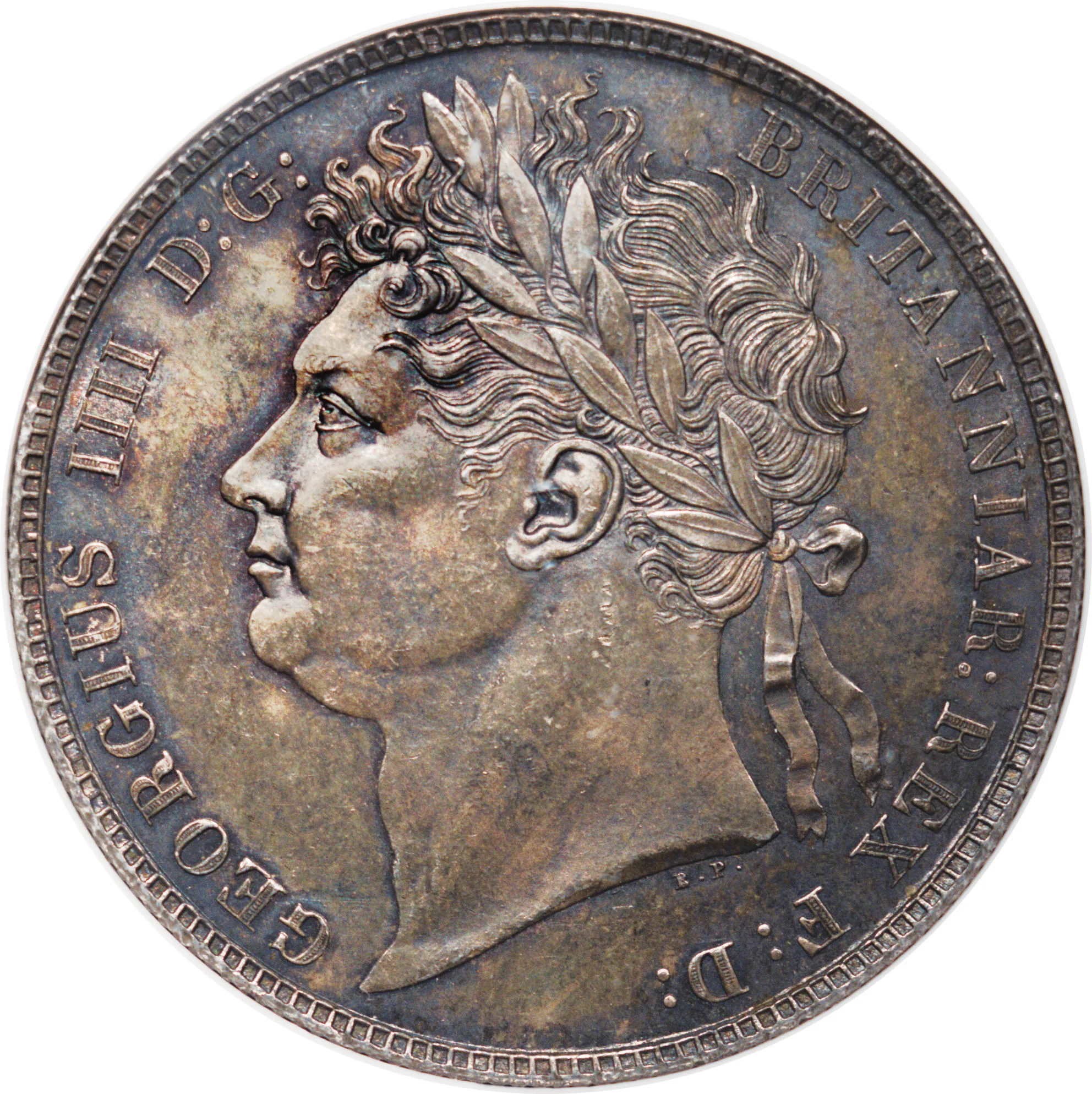
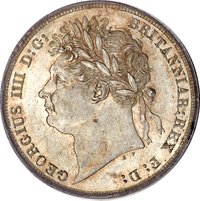
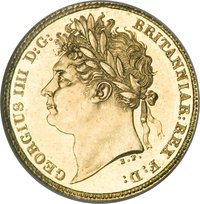
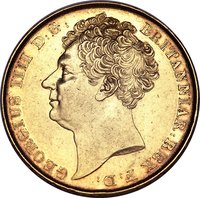
King George IV laureate bust left, legend surrounding.
Inscription:
GEORGIUS IIII D:G: BRITANNIAR: REX F: D:
Translation:
George IV, by the Grace of God, King of the Britains, Defender of the Faith.
Script: Latin
Language: Latin
Engraver: Benedetto Pistrucci
Reverse
Description:
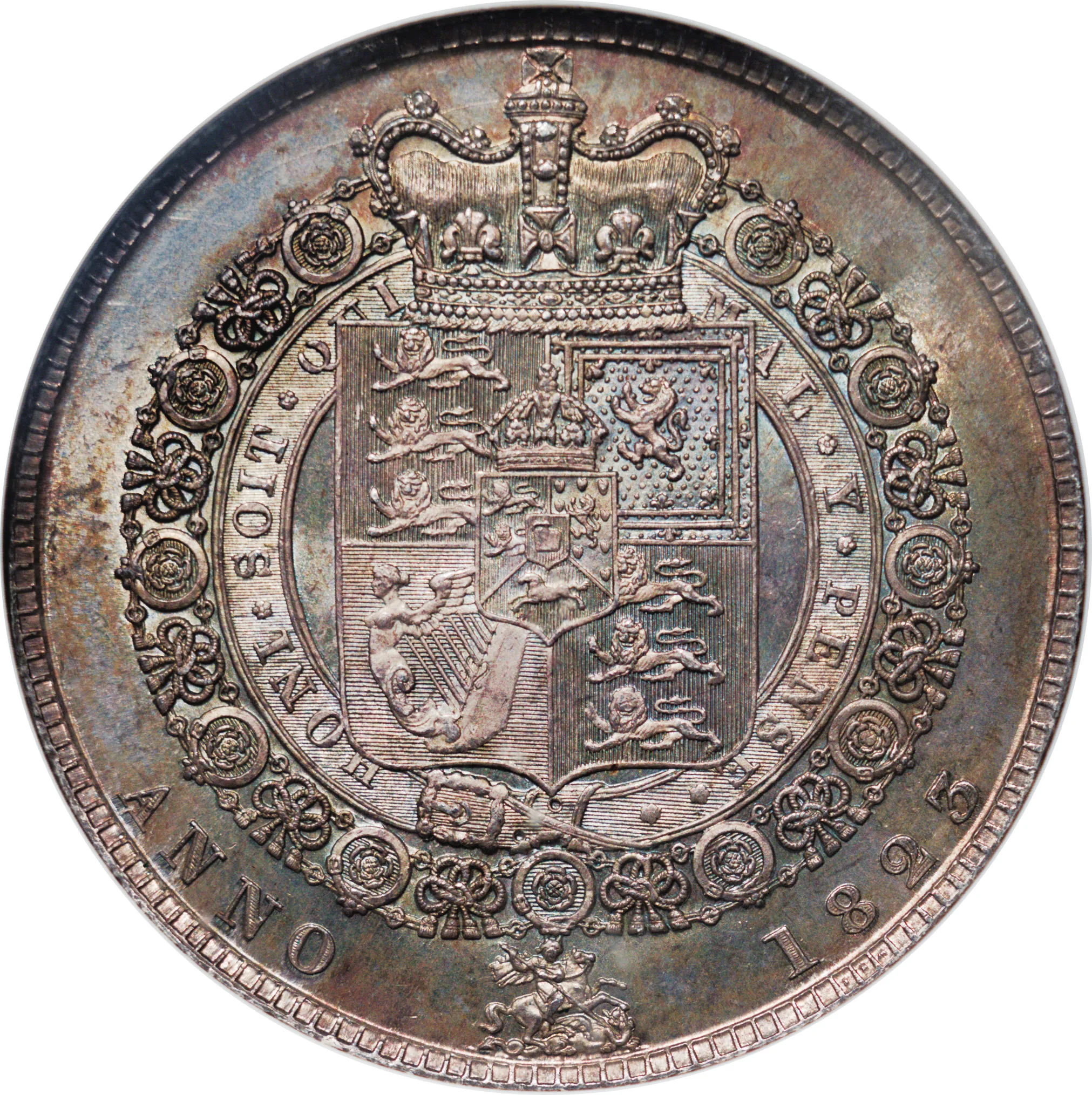
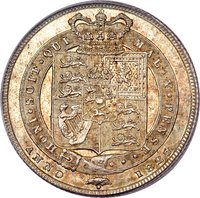
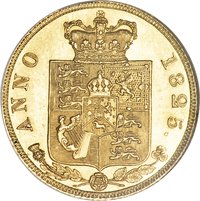
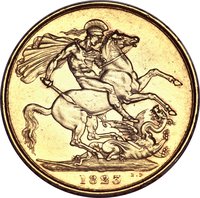
Second crowned shield with Garter, floral emblems, date beneath.
Inscription:
HONI·SOIT·QUI MAL·Y·PENSE··
ANNO 1823
ANNO 1823
Translation:
Shame on him who thinks evil of it.
ANNO 1823
ANNO 1823
Script: Latin
Engraver: Jean Baptiste Merlen
Edge
Categories
| Symbol> Crown |
| Plants> Flower |
| Mythology> Fantastic animal |
| Animal> Horse |
| Symbols> Coat of Arms |
Mints
| Name | Mark |
|---|---|
| Royal Mint (Tower Hill) | — |
Mintings
| Year | Mint Mark | Mintage | Quality | Collection |
|---|---|---|---|---|
| 1823 | mintage incl. KM#676 | 2,003,700 | ||
| 1823 | — | — | Proof | |
| 1823 | mintage incl. KM#676 | 2,003,700 | ||
| 1823 | mintage incl. KM#676 | 2,003,700 | ||
| 1823 | mintage incl. KM#676 | 2,003,700 | ||
| 1823 | mintage incl. KM#676 | 2,003,700 | ||
| 1823 | mintage incl. KM#676 | 2,003,700 | ||
| 1823 | — | 2,003,700 | ||
| 1824 | mintage data uncertain | 465,600 | ||
| 1824 | — | — | Proof | |
| 1824 | mintage data uncertain | 465,600 | ||
| 1824 | mintage data uncertain | 465,600 | ||
| 1824 | mintage data uncertain | 465,600 | ||
| 1824 | — | 465,600 |
Historical background
In 1823, the United Kingdom was navigating the complex aftermath of the Napoleonic Wars under a de facto gold standard, though it operated within a framework still recovering from wartime suspension. The Bank Restriction Act of 1797 had severed the link between Bank of England notes and gold, leading to inflation and currency depreciation. Although the Coinage Act of 1816 had formally demonetised silver and established gold as the sole standard of value, the full convertibility of notes into gold had not yet been restored. Consequently, the economy in 1823 functioned with a mixture of coin and paper money, with the value of banknotes still somewhat variable and a subject of intense economic and political debate.
The central financial question of the era was the timing and terms of a return to full convertibility at the pre-war parity. A parliamentary committee in 1819, led by Robert Peel, had recommended a phased resumption, which was achieved in law by Peel's Act of 1819. This mandated a return to gold at the old, pre-1797 price of £3 17s 10½d per ounce by 1823. The process, however, was deflationary and had caused significant economic distress, including falling agricultural prices and debtor protests. By 1823, the final stage of this resumption was imminent, placing the Bank of England under pressure to manage its gold reserves and note issue cautiously to ensure it could meet its impending obligation without causing a monetary crisis.
Thus, 1823 represents a pivotal juncture, poised between the era of wartime financial expediency and the forthcoming stability of the classical gold standard. The successful return to full convertibility in 1824 would usher in a century of monetary stability centred on gold, but in 1823 itself, uncertainty lingered. The government and the Bank were cautiously managing the transition, aware that the rigid discipline of the gold standard would now dictate monetary policy, fundamentally shaping Britain's economic expansion and its role as the world's foremost financial power throughout the 19th century.
The central financial question of the era was the timing and terms of a return to full convertibility at the pre-war parity. A parliamentary committee in 1819, led by Robert Peel, had recommended a phased resumption, which was achieved in law by Peel's Act of 1819. This mandated a return to gold at the old, pre-1797 price of £3 17s 10½d per ounce by 1823. The process, however, was deflationary and had caused significant economic distress, including falling agricultural prices and debtor protests. By 1823, the final stage of this resumption was imminent, placing the Bank of England under pressure to manage its gold reserves and note issue cautiously to ensure it could meet its impending obligation without causing a monetary crisis.
Thus, 1823 represents a pivotal juncture, poised between the era of wartime financial expediency and the forthcoming stability of the classical gold standard. The successful return to full convertibility in 1824 would usher in a century of monetary stability centred on gold, but in 1823 itself, uncertainty lingered. The government and the Bank were cautiously managing the transition, aware that the rigid discipline of the gold standard would now dictate monetary policy, fundamentally shaping Britain's economic expansion and its role as the world's foremost financial power throughout the 19th century.
🌟 Limited