

500 Dollars – Singapore
Non-circulating coins
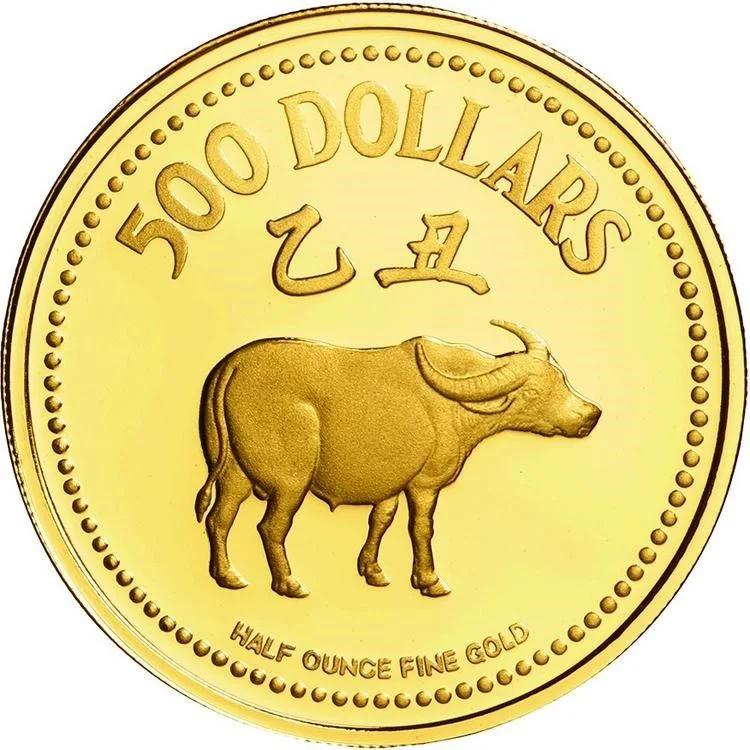
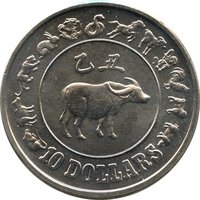
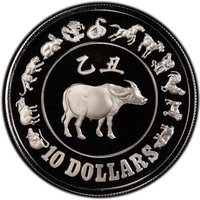
Commemoration: Year of the Ox
Singapore
Context

Material
References
KM: #Click to copy to clipboard45
Numista: #131810
Value
Exchange value: 500 SGD = $395.85
Bullion value: $2588.70
Obverse
Description:
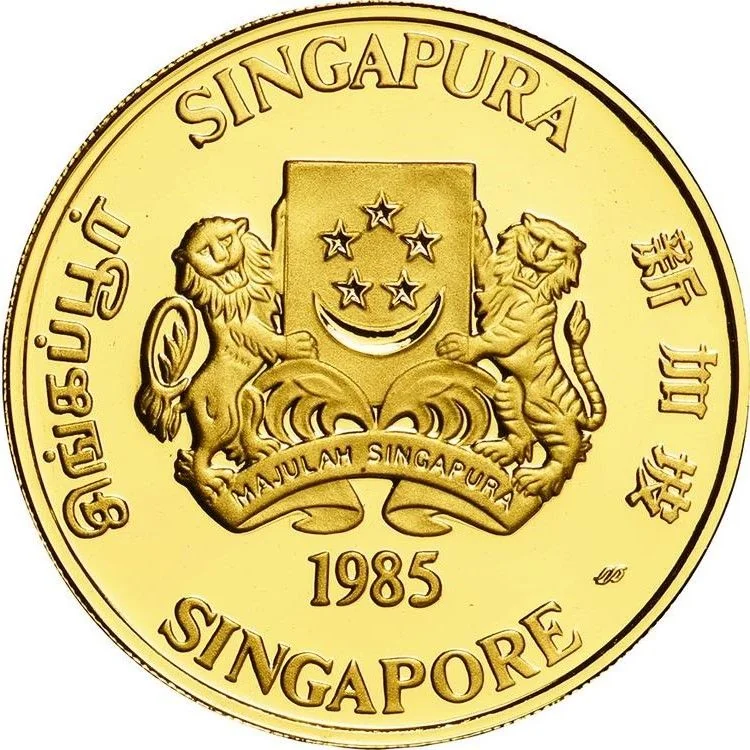
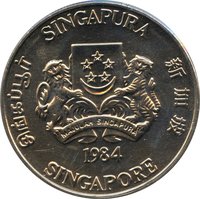
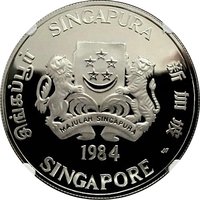
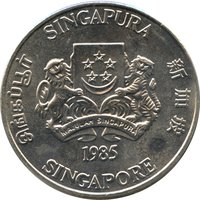
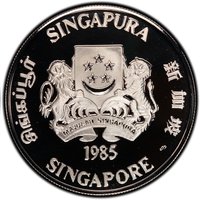
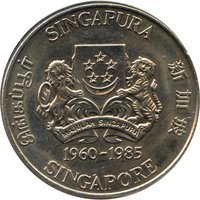
Emblem with date; 'Singapore' encircles it in English, Tamil, Chinese, and Malay.
Inscription:
SINGAPURA
சிங்கப்பூர் 新加坡
1985
SINGAPORE
சிங்கப்பூர் 新加坡
1985
SINGAPORE
Translation:
SINGAPORE
SINGAPORE SINGAPORE
1985
SINGAPORE
SINGAPORE SINGAPORE
1985
SINGAPORE
Engraver: Christopher Ironside
Reverse
Edge
Reeded
Categories
| Animal> Cow |
| Symbols> Coat of Arms |
| Astrology> Chinese calendar |
Mints
| Name | Mark |
|---|---|
| Singapore Mint | (sm) |
Mintings
| Year | Mint Mark | Mintage | Quality | Collection |
|---|---|---|---|---|
| 1985 | sm | 4,000 | Proof |
Historical background
In 1985, Singapore faced its first major recession since independence, with the economy contracting by 1.6%. This downturn was not primarily a currency crisis in the traditional sense, as the Singapore Dollar (SGD) remained strong and stable, managed by the Monetary Authority of Singapore (MAS) against a trade-weighted basket of currencies. However, the currency's strength was itself a contributing factor to the broader economic situation. The MAS's policy of allowing gradual appreciation to combat imported inflation had, over time, reduced the competitiveness of Singapore's exports, coinciding with a collapse in global demand for oil and marine products, which hit the important oil-rig building and refining sectors hard.
The government's policy response was multifaceted and did not involve devaluing the currency as a quick fix. Instead, it recognized that the high cost structure, including high Central Provident Fund (CPF) contributions and wages, was a root cause. A decisive move was the formation of the Economic Committee, led by then-First Deputy Prime Minister Goh Chok Tong, which recommended a significant shift in monetary policy. In 1985, the MAS moved from a policy of gradual currency appreciation to a zero-appreciation policy for the SGD within its managed band. This was a strategic pause to relieve pressure on exporters and help restore international competitiveness.
The 1985 episode cemented Singapore's reputation for prudent and innovative macroeconomic management. By choosing to address underlying cost factors through a wide-ranging package—including a 15% cut in employer CPF contributions and reduced corporate taxes—while using exchange rate policy as a stabilizing tool rather than a shock absorber, Singapore navigated the recession without monetary instability. This experience reinforced the managed float system and set a precedent for using the exchange rate as the primary tool to balance between controlling inflation and supporting growth, a cornerstone of monetary policy that continues to this day.
The government's policy response was multifaceted and did not involve devaluing the currency as a quick fix. Instead, it recognized that the high cost structure, including high Central Provident Fund (CPF) contributions and wages, was a root cause. A decisive move was the formation of the Economic Committee, led by then-First Deputy Prime Minister Goh Chok Tong, which recommended a significant shift in monetary policy. In 1985, the MAS moved from a policy of gradual currency appreciation to a zero-appreciation policy for the SGD within its managed band. This was a strategic pause to relieve pressure on exporters and help restore international competitiveness.
The 1985 episode cemented Singapore's reputation for prudent and innovative macroeconomic management. By choosing to address underlying cost factors through a wide-ranging package—including a 15% cut in employer CPF contributions and reduced corporate taxes—while using exchange rate policy as a stabilizing tool rather than a shock absorber, Singapore navigated the recession without monetary instability. This experience reinforced the managed float system and set a precedent for using the exchange rate as the primary tool to balance between controlling inflation and supporting growth, a cornerstone of monetary policy that continues to this day.
✨ Legendary