

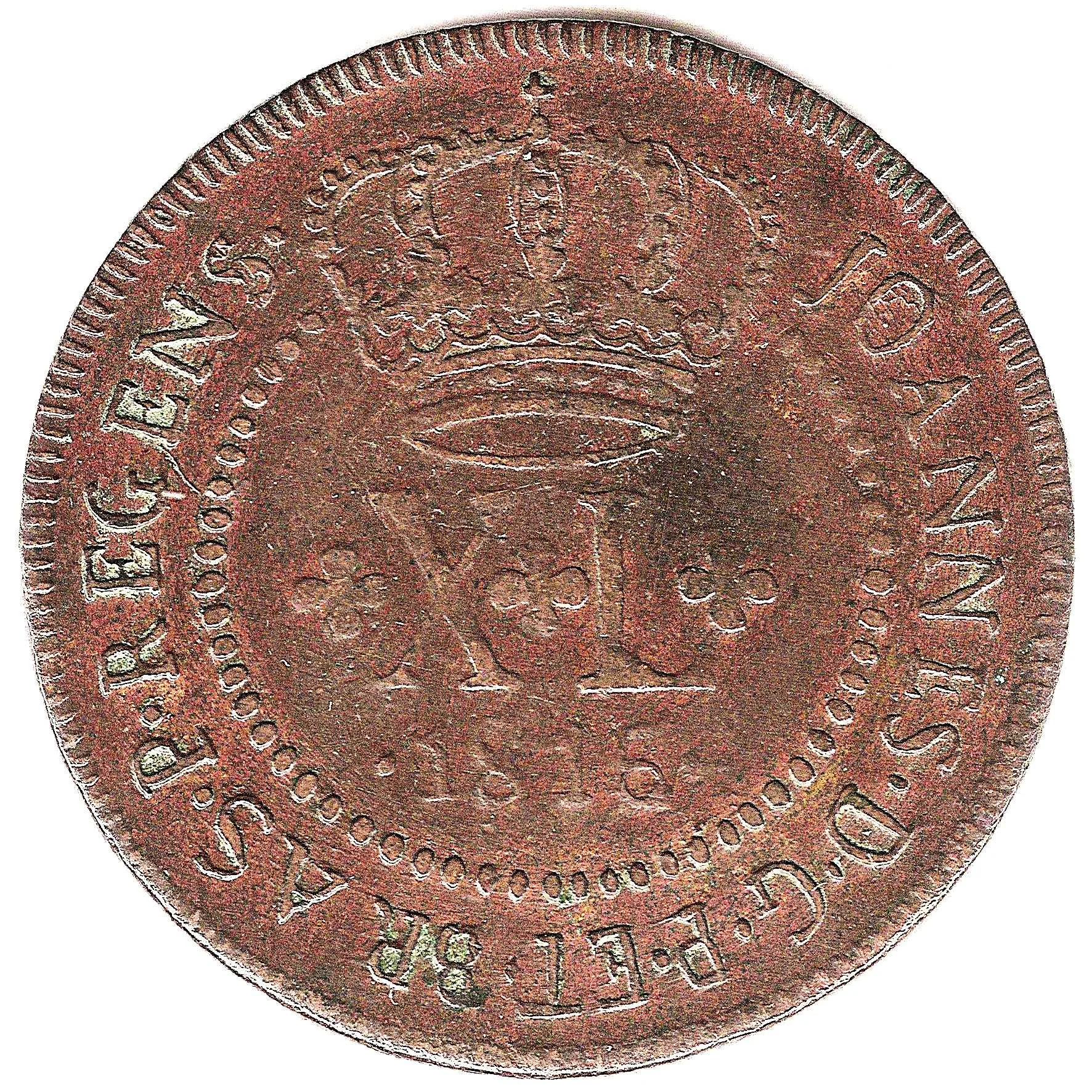
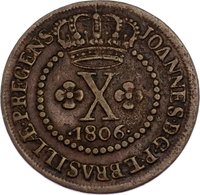
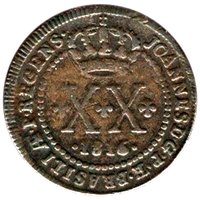
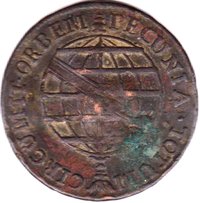
Obverse
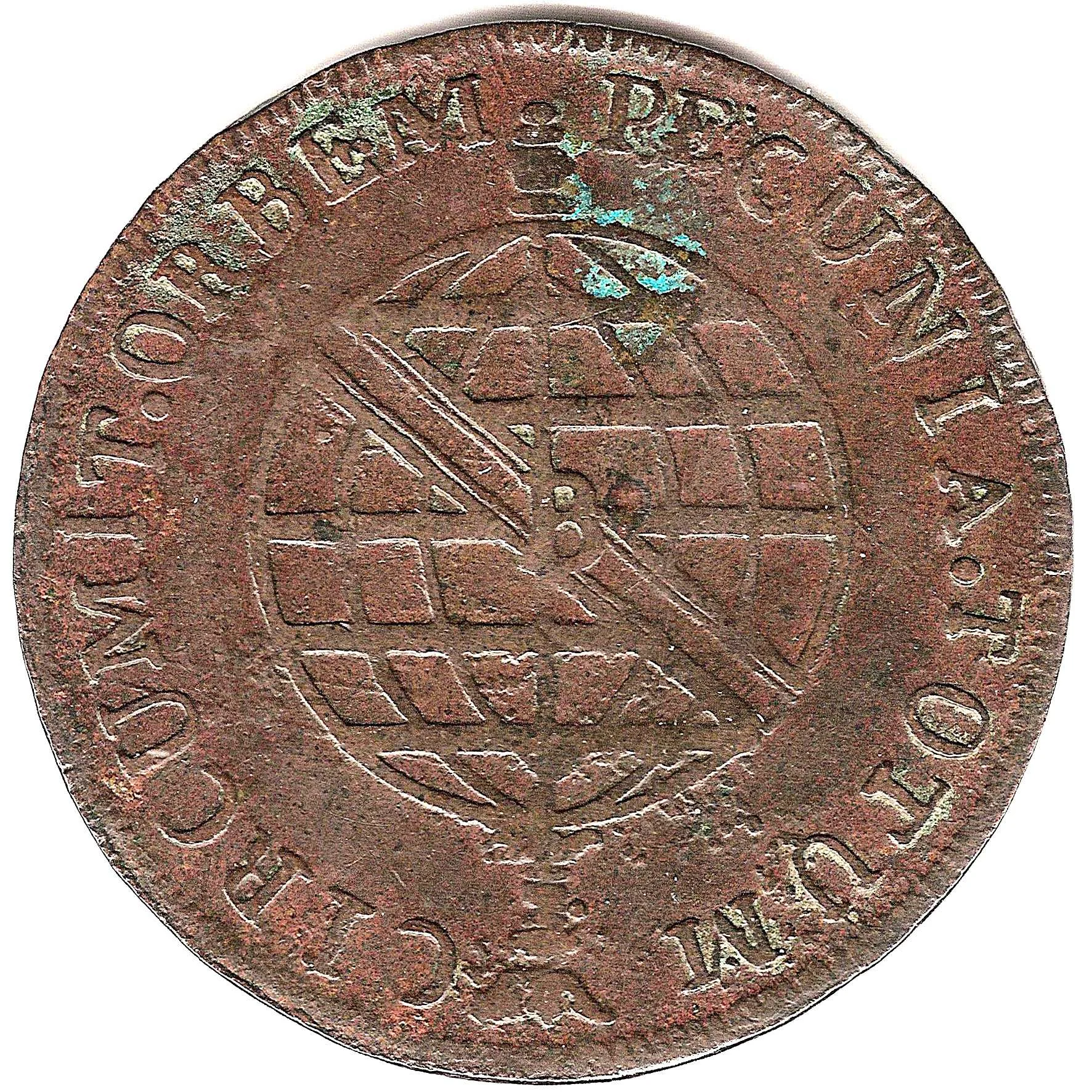
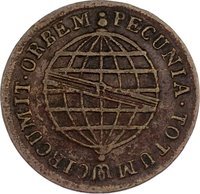
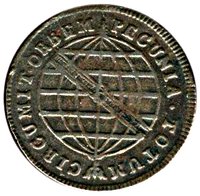
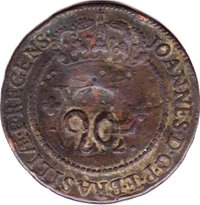
Reverse
Edge
Plain
Mints
| Name | Mark |
|---|---|
| Imprensa Nacional - Casa da Moeda | — |
| Bahia | B |
| Casa da Moeda do Brasil | R |
Mintings
Historical background
In 1802, Brazil's currency situation was a complex and strained system, reflecting its colonial status under the Portuguese Crown. The primary circulating medium was the Portuguese real (plural: réis), a currency of account that was chronically scarce in physical form. The economy relied heavily on a mix of gold and copper coinage, along with primitive paper notes known as vales reais, which had been issued since 1796 to address liquidity crises. However, these notes were not fully trusted and often traded at a significant discount to their face value, creating a dual system of metal-based and depreciating paper money.
The underlying problem was a severe shortage of small-denomination coins for everyday transactions, exacerbated by the outflow of gold to Portugal and the costs of maintaining the royal court in Rio de Janeiro. To fill this void, provincial governments, merchants, and even churches issued their own makeshift tokens and promissory notes, leading to a fragmented and unreliable monetary environment. This scarcity stifled internal trade and complicated commerce, as the value of money could vary significantly from one region to another.
Furthermore, the monetary policy was dictated by Lisbon, focusing on extracting Brazilian wealth rather than fostering a stable local economy. The Bank of Brazil, which would later attempt to unify the currency, would not be founded until 1808, following the arrival of the Portuguese royal family. Therefore, in 1802, Brazil remained in a precarious pre-modern financial state, characterized by scarcity, fragmentation, and inflationary pressures from depreciating paper—a situation that would soon demand drastic change with the impending shift of the Portuguese Empire's center to Rio de Janeiro.
The underlying problem was a severe shortage of small-denomination coins for everyday transactions, exacerbated by the outflow of gold to Portugal and the costs of maintaining the royal court in Rio de Janeiro. To fill this void, provincial governments, merchants, and even churches issued their own makeshift tokens and promissory notes, leading to a fragmented and unreliable monetary environment. This scarcity stifled internal trade and complicated commerce, as the value of money could vary significantly from one region to another.
Furthermore, the monetary policy was dictated by Lisbon, focusing on extracting Brazilian wealth rather than fostering a stable local economy. The Bank of Brazil, which would later attempt to unify the currency, would not be founded until 1808, following the arrival of the Portuguese royal family. Therefore, in 1802, Brazil remained in a precarious pre-modern financial state, characterized by scarcity, fragmentation, and inflationary pressures from depreciating paper—a situation that would soon demand drastic change with the impending shift of the Portuguese Empire's center to Rio de Janeiro.
Series: 1802 Brazil circulation coins
🌟 Uncommon