

1 rupia – Portuguese India
Add to wishlist
India
Context
Year: 1935
Country: India
Issuer: Portuguese India
Period:
(1910—1961)
Currency:
(1880—1958)
Subdivision: 1 rupia = 16 Tangas
Demonetization: 1947
Total mintage: 300,000
Material
References
KM: #
Numista: #23394
Value
Bullion value: $27.32
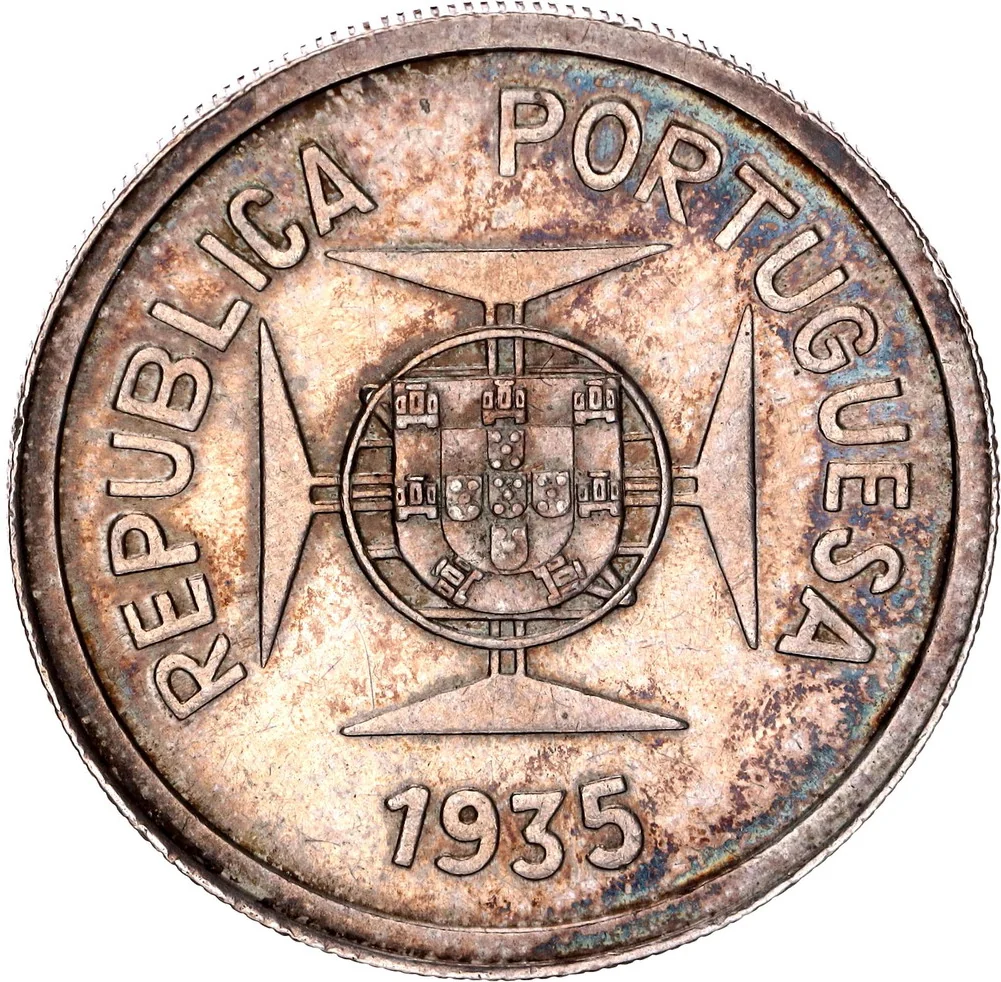
Obverse
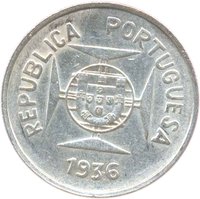
Description:
Shield on lined circle centered on Christus Cross; date beneath.
Inscription:
REPUBLICA PORTUGUESA
1935
1935
Translation:
PORTUGUESE REPUBLIC
1935
1935
Script: Latin
Language: Portuguese
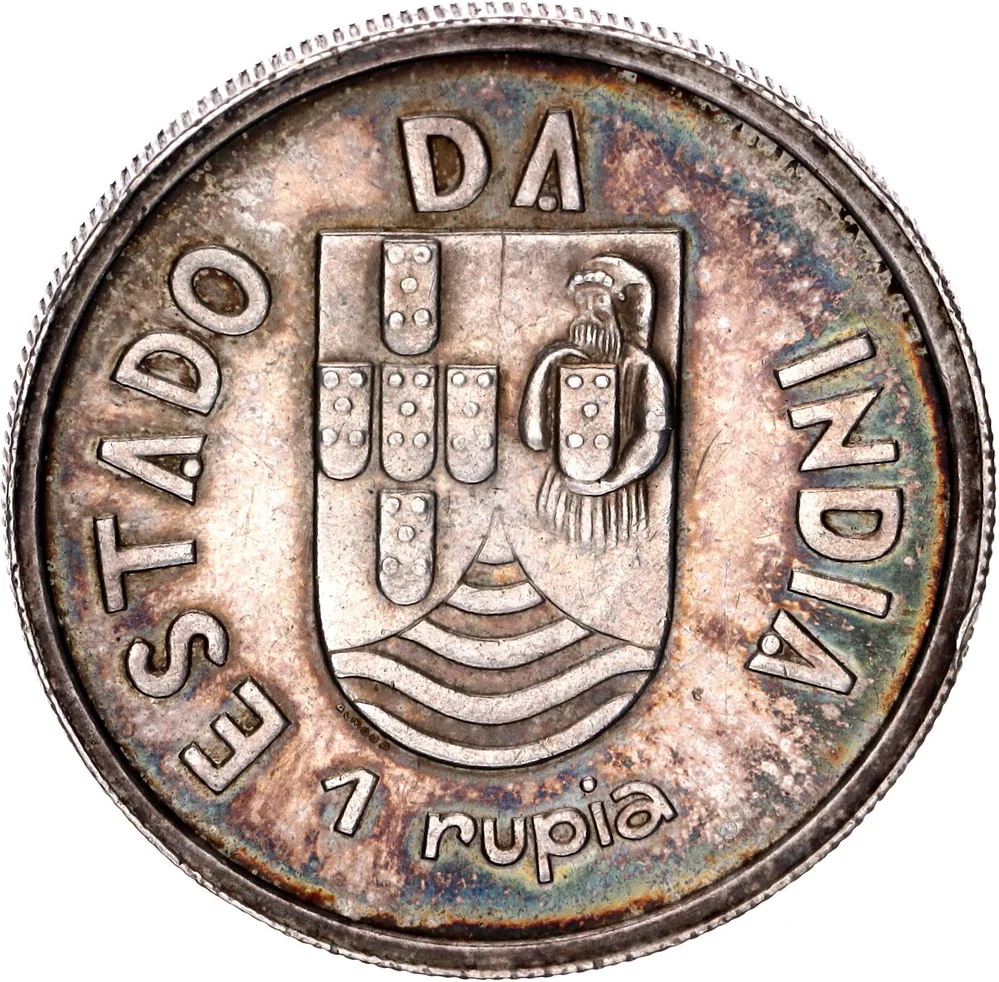
Reverse
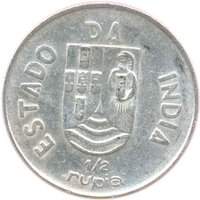
Description:
Divided shield, denomination beneath.
Inscription:
ESTADO DA INDIA
1 rupia
1 rupia
Script: Latin
Edge
Reeded
Mints
| Name | Mark |
|---|---|
| Imprensa Nacional - Casa da Moeda | — |
Mintings
| Year | Mint Mark | Mintage | Quality | Collection |
|---|---|---|---|---|
| 1935 | — | 300,000 |
Historical background
In 1935, the currency situation in Portuguese India (Goa, Daman, and Diu) was characterized by a complex and practical duality. Officially, the territory used the Portuguese Indian Rupia (INPR), which was pegged at a fixed rate to the Indian Rupee (INR) of British India. This peg was essential due to Goa's deep economic integration with its much larger British Indian neighbor, with which it conducted the vast majority of its trade. The Rupia was subdivided into 16 tangas or 960 reis, maintaining a traditional system distinct from the decimalized rupee of British India.
However, the reality on the ground was one of significant monetary convergence. British Indian Rupee notes and coins circulated freely and widely alongside the local Portuguese currency, often preferred for larger commercial transactions. This de facto acceptance stemmed from sheer economic necessity and convenience, as trade with British India was the lifeblood of the territory. The Portuguese administration tacitly accepted this reality, as attempting to enforce a strict ban on the British Indian currency would have been economically disruptive and nearly impossible to police.
This period represented a relatively stable but dependent monetary regime. The value of the Portuguese Indian Rupia was effectively anchored by its peg to the British Indian Rupee, which itself was linked to the Sterling standard. Therefore, while Portuguese authorities issued their own currency and derived seigniorage from it, the territory's monetary stability was ultimately underwritten by the British colonial monetary system. This arrangement would remain in place until the political upheavals of the mid-20th century, culminating in India's annexation of the territories in 1961.
However, the reality on the ground was one of significant monetary convergence. British Indian Rupee notes and coins circulated freely and widely alongside the local Portuguese currency, often preferred for larger commercial transactions. This de facto acceptance stemmed from sheer economic necessity and convenience, as trade with British India was the lifeblood of the territory. The Portuguese administration tacitly accepted this reality, as attempting to enforce a strict ban on the British Indian currency would have been economically disruptive and nearly impossible to police.
This period represented a relatively stable but dependent monetary regime. The value of the Portuguese Indian Rupia was effectively anchored by its peg to the British Indian Rupee, which itself was linked to the Sterling standard. Therefore, while Portuguese authorities issued their own currency and derived seigniorage from it, the territory's monetary stability was ultimately underwritten by the British colonial monetary system. This arrangement would remain in place until the political upheavals of the mid-20th century, culminating in India's annexation of the territories in 1961.

🌱 Fairly Common