

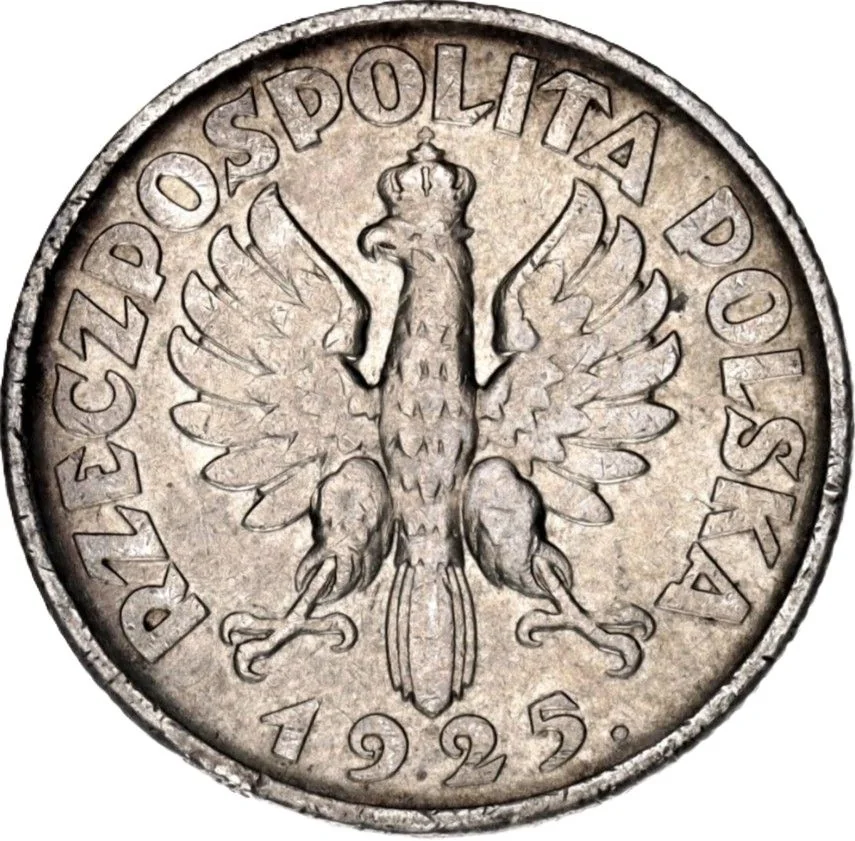
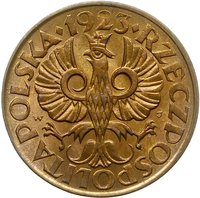
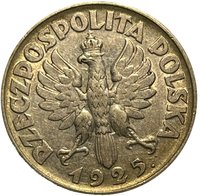
Obverse
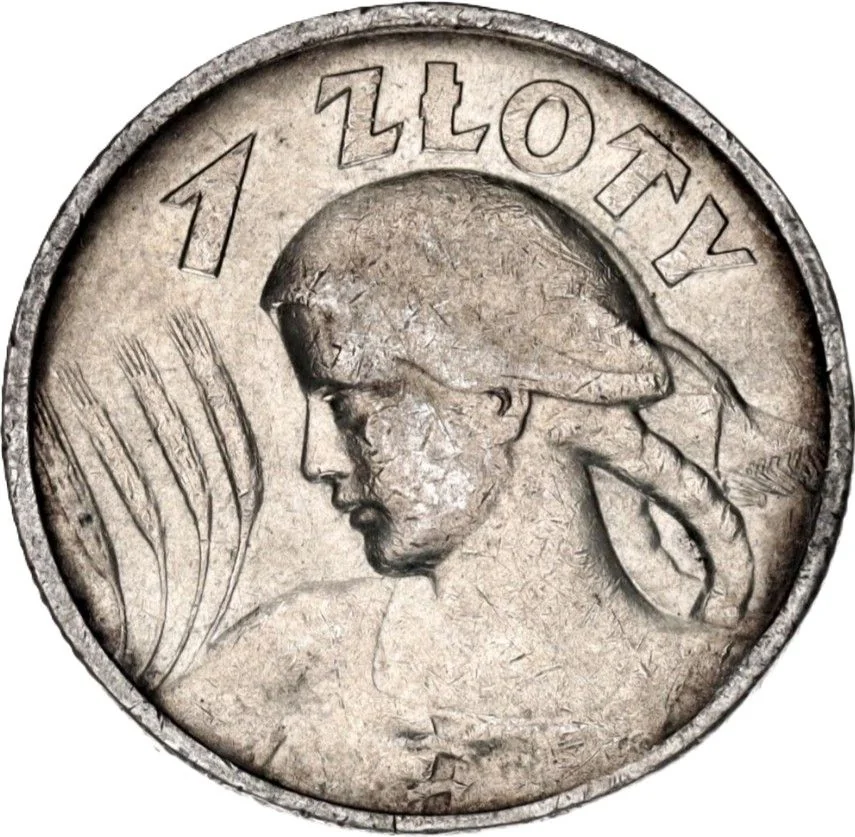
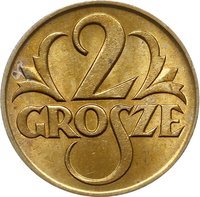
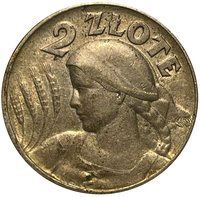
Reverse
Edge
Reeded
Mintings
| Year | Mint Mark | Mintage | Quality | Collection |
|---|---|---|---|---|
| 1924 | — | 8 | Proof | |
| 1924 | — | 16,000,000 | ||
| 1925 | — | 24,000,000 | ||
| 1925 | — | — | Proof |
Historical background
In the aftermath of World War I and the subsequent Polish-Soviet War, the newly reborn Polish Republic faced catastrophic hyperinflation. The country was using the Polish marka, a currency inherited from the German occupation that was not backed by substantial reserves or fiscal discipline. The government, covering massive deficits from reconstruction and military spending, simply printed money, leading to a complete loss of confidence. By late 1923, hyperinflation reached its peak, with prices doubling every few days and the exchange rate soaring to 6.4 million Polish marks for one US dollar, rendering the currency virtually worthless and causing widespread social unrest.
To resolve the crisis, the government of Prime Minister Władysław Grabski implemented radical reforms in early 1924. The cornerstone was the introduction of a new, fully independent currency—the złoty—which replaced the marka at a rate of 1 złoty to 1.8 million marks. Critically, the złoty was established on a gold standard, with its value defined as a specific weight of gold and backed by a combination of foreign currency loans and gold reserves. This was accompanied by the creation of the Bank of Poland as an independent central bank, prohibited from financing the government's budget deficit, thereby imposing much-needed fiscal and monetary discipline.
The 1924 reform, known as the "Grabski reform," successfully stabilized the Polish economy and ended hyperinflation almost overnight. The new złoty gained immediate public trust and provided a solid foundation for economic recovery and growth throughout the mid-1920s. However, the stability was partially reliant on foreign loans and later undermined by the Great Depression. Nonetheless, the reform remains a landmark success in Polish economic history, demonstrating how decisive institutional change can overcome monetary chaos.
To resolve the crisis, the government of Prime Minister Władysław Grabski implemented radical reforms in early 1924. The cornerstone was the introduction of a new, fully independent currency—the złoty—which replaced the marka at a rate of 1 złoty to 1.8 million marks. Critically, the złoty was established on a gold standard, with its value defined as a specific weight of gold and backed by a combination of foreign currency loans and gold reserves. This was accompanied by the creation of the Bank of Poland as an independent central bank, prohibited from financing the government's budget deficit, thereby imposing much-needed fiscal and monetary discipline.
The 1924 reform, known as the "Grabski reform," successfully stabilized the Polish economy and ended hyperinflation almost overnight. The new złoty gained immediate public trust and provided a solid foundation for economic recovery and growth throughout the mid-1920s. However, the stability was partially reliant on foreign loans and later undermined by the Great Depression. Nonetheless, the reform remains a landmark success in Polish economic history, demonstrating how decisive institutional change can overcome monetary chaos.
🌱 Fairly Common