


Obverse
Description:
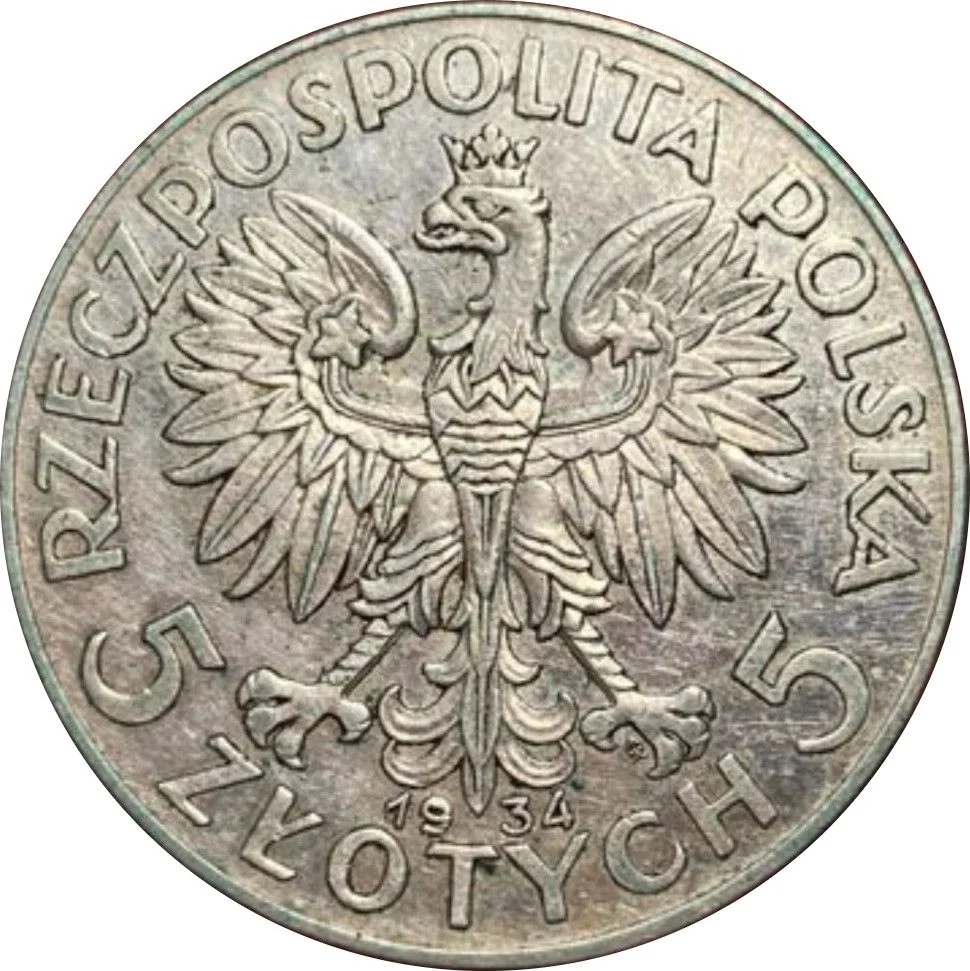
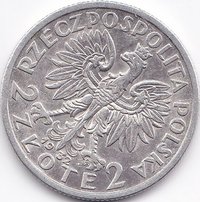
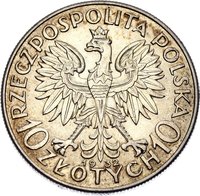
Polish heraldic emblem.
Inscription:
RZECZPOSPOLITA POLSKA
1933
5 ZŁOTYCH 5
1933
5 ZŁOTYCH 5
Translation:
REPUBLIC OF POLAND
1933
5 ZŁOTYCH 5
1933
5 ZŁOTYCH 5
Script: Latin
Language: Polish
Engraver: Antoni Madeyski
Reverse
Description:
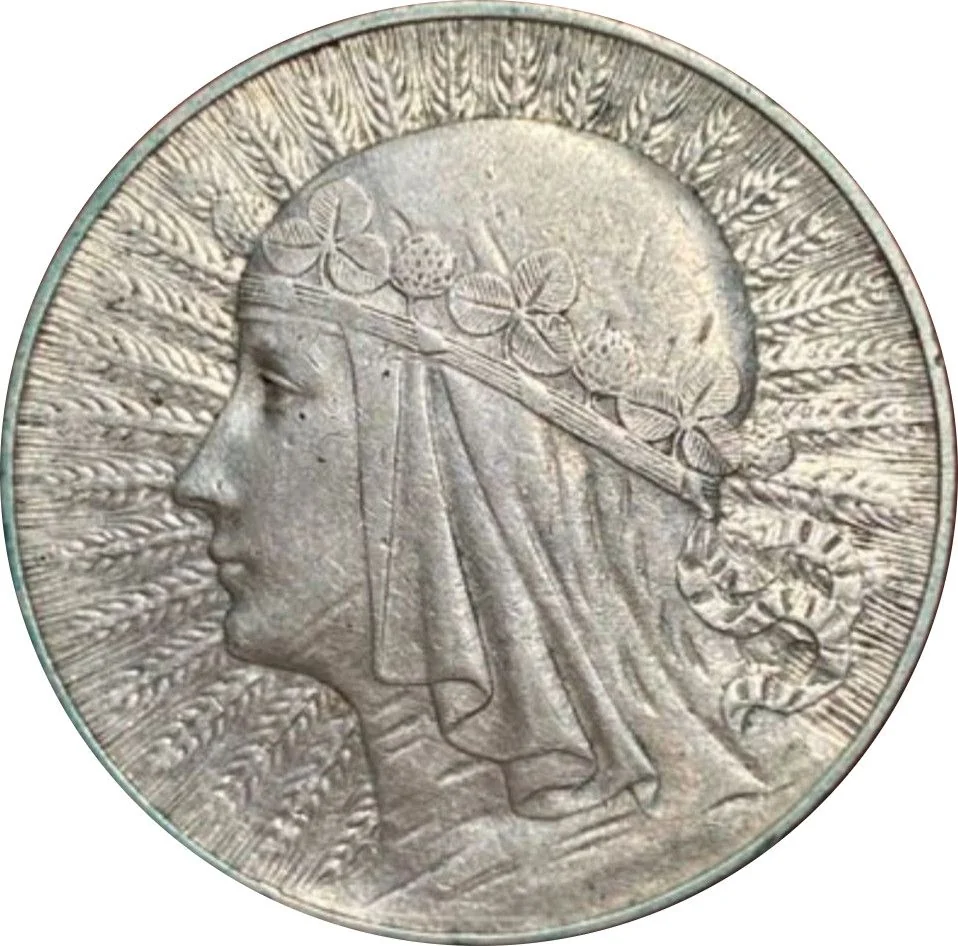
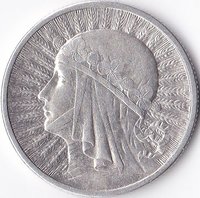
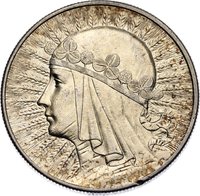
Inspired by Janina Żółtowska's features, which he considered ideal, Antoni Madeyski created this radiant, left-facing woman with a crown of grain. Her resemblance to Queen Jadwiga leads many to mistakenly identify the figure as the Polish queen.
Engraver: Antoni Madeyski
Edge
Reeded
Mints
| Name | Mark |
|---|---|
| Royal Mint (Tower Hill) | — |
| Mint of Poland | MW |
Mintings
Historical background
In 1932, Poland's currency situation was defined by the aftermath of the Great Depression and the struggle to maintain the stability of the złoty, which had been successfully reintroduced in 1924 following a period of hyperinflation. The cornerstone of this stability was the Gold Standard, with the złoty pegged to both gold and the US dollar. However, this peg became increasingly burdensome as the global economic crisis deepened after 1929. Plummeting agricultural prices and a collapse in international trade severely reduced Poland's export earnings and foreign currency reserves, putting immense deflationary pressure on the domestic economy to defend the fixed exchange rate.
The government, led by Prime Minister Aleksander Prystor, responded with a strict policy of austerity and deflation, known as the "Prystor deflation." To protect the gold reserves and the złoty's parity, the state slashed public spending, raised taxes, and forced down wages and prices. This approach succeeded in its narrow goal of maintaining the formal gold peg but at a devastating social cost. Industrial production fell sharply, unemployment soared, and widespread poverty fueled significant social unrest, making the currency's stability a source of economic hardship rather than confidence.
Consequently, 1932 represented the final, strained year of Poland's commitment to the orthodox Gold Standard. The policies meant to defend the złoty were deepening the domestic recession, creating an unsustainable contradiction. This tension would culminate the following year, in 1933, when global trends and domestic necessity forced Poland to follow other nations in abandoning gold convertibility. Thus, the 1932 currency situation was a precarious holding action, preserving the złoty's external value on paper while the economy contracted beneath it, setting the stage for an inevitable and major monetary policy shift.
The government, led by Prime Minister Aleksander Prystor, responded with a strict policy of austerity and deflation, known as the "Prystor deflation." To protect the gold reserves and the złoty's parity, the state slashed public spending, raised taxes, and forced down wages and prices. This approach succeeded in its narrow goal of maintaining the formal gold peg but at a devastating social cost. Industrial production fell sharply, unemployment soared, and widespread poverty fueled significant social unrest, making the currency's stability a source of economic hardship rather than confidence.
Consequently, 1932 represented the final, strained year of Poland's commitment to the orthodox Gold Standard. The policies meant to defend the złoty were deepening the domestic recession, creating an unsustainable contradiction. This tension would culminate the following year, in 1933, when global trends and domestic necessity forced Poland to follow other nations in abandoning gold convertibility. Thus, the 1932 currency situation was a precarious holding action, preserving the złoty's external value on paper while the economy contracted beneath it, setting the stage for an inevitable and major monetary policy shift.
🌱 Common