

20 dollars – United States
Add to wishlist
United States
Context
Years: 1907–1908
Issuer: United States
Period:
(since 1776)
Currency:
(since 1785)
Total mintage: 4,935,302
Material
References
KM: #
Numista: #23129
Value
Exchange value: 20 USD = $20.00
Bullion value: $4617.23
Obverse
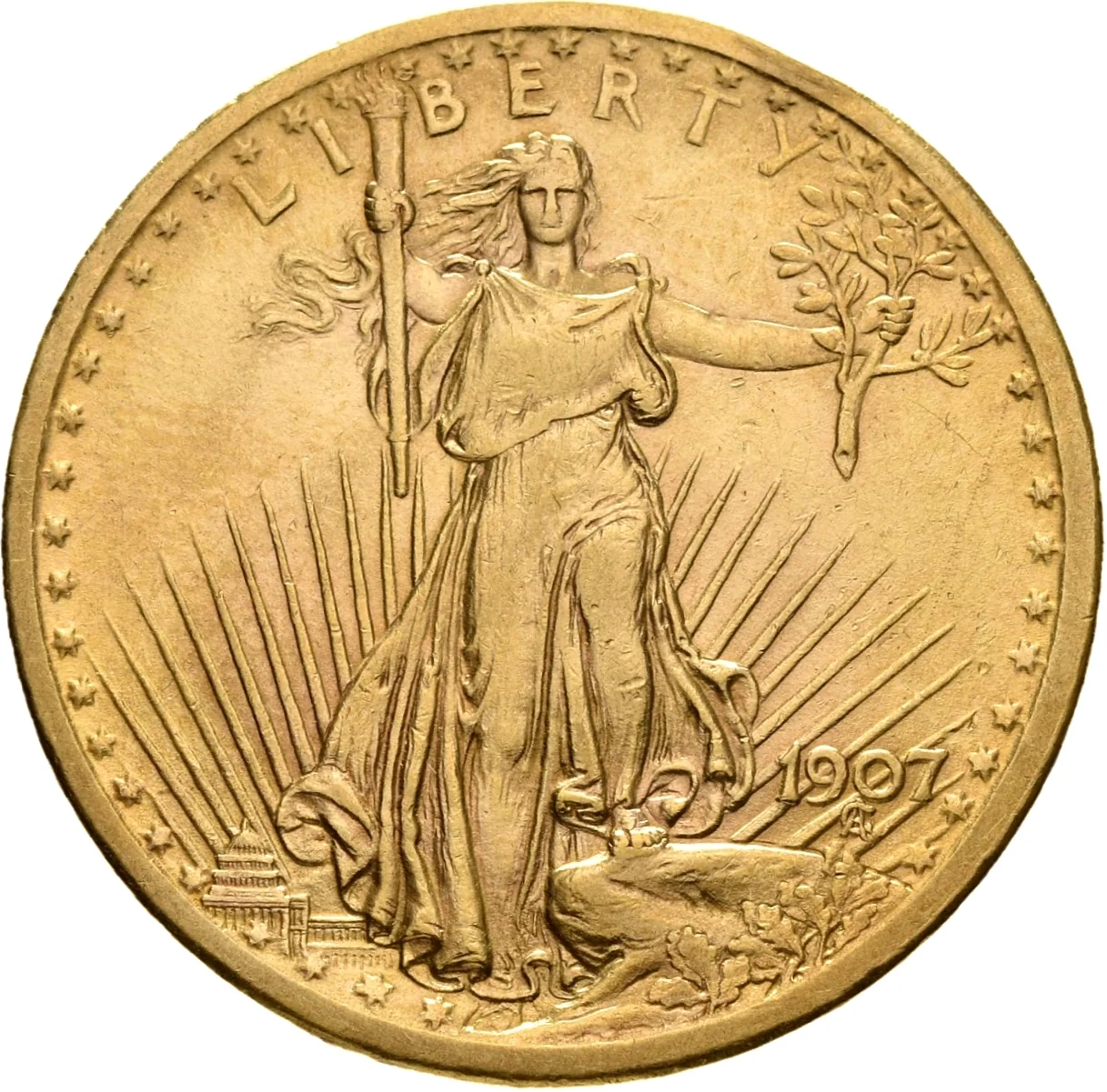
Description:
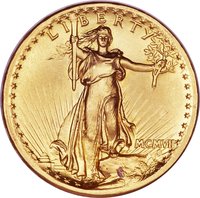
Liberty holding torch and olive branch, 46 stars, Capitol in background.
Inscription:
LIBERTY
1907
1907
Script: Latin
Engraver: Augustus Saint-Gaudens
Reverse
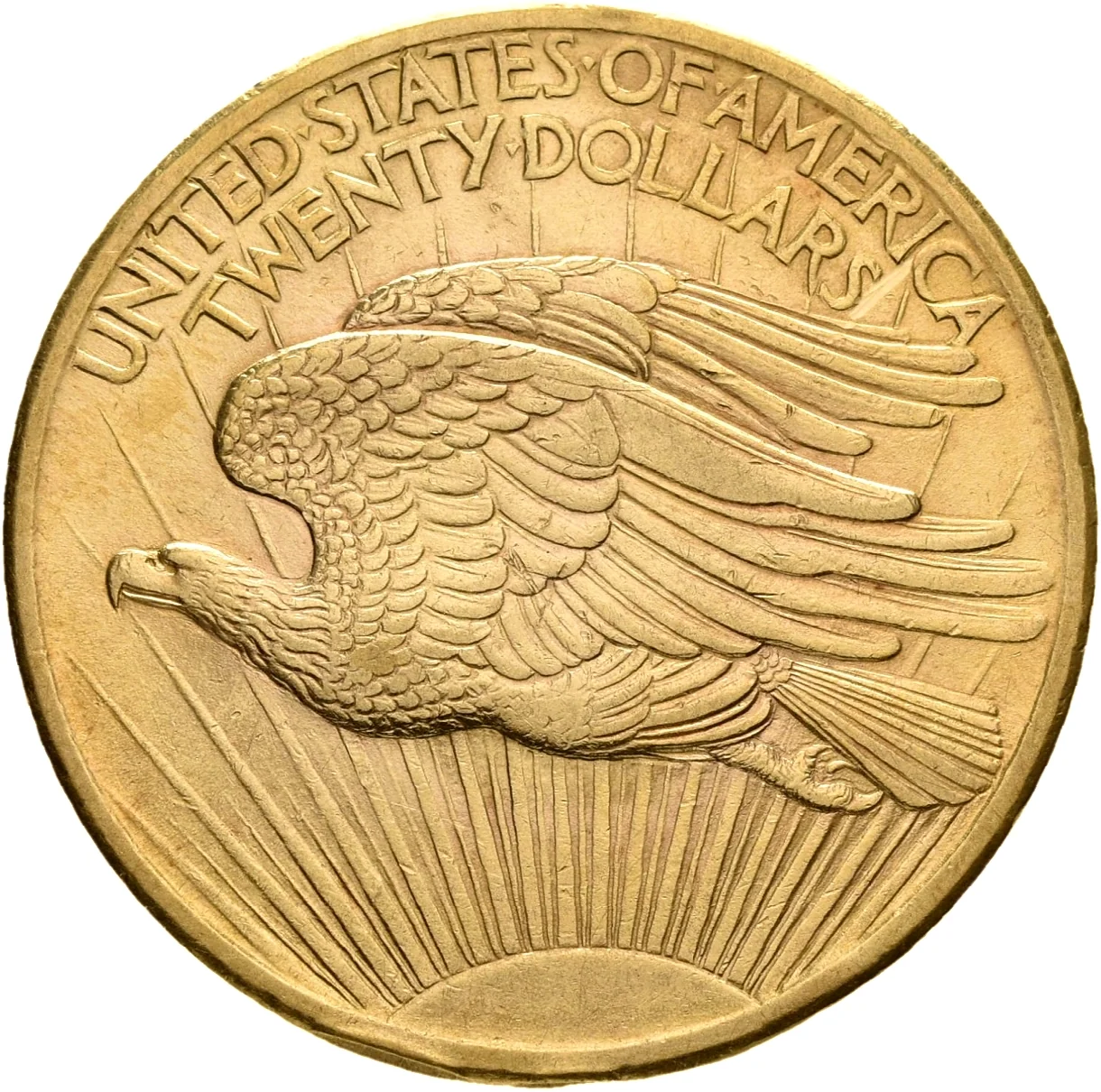
Description:
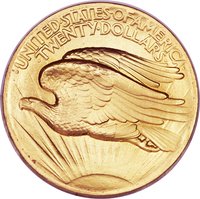
Eagle soaring leftward across sunbeams.
Inscription:
UNITED·STATES·OF·AMERICA
TWENTY·DOLLARS
TWENTY·DOLLARS
Script: Latin
Engraver: Augustus Saint-Gaudens
Edge
Lettered with words divided by stars
Legend:
E PLURIBUS UNUM
Translation:
Out of many, one.
Language: Latin
Mints
| Name | Mark |
|---|---|
| United States Mint of Philadelphia | — |
| United States Mint of Denver | D |
Mintings
| Year | Mint Mark | Mintage | Quality | Collection |
|---|---|---|---|---|
| 1907 | — | 1 | ||
| 1908 | — | 4,271,551 | ||
| 1908 | D | 663,750 |
Historical background
The United States in 1907 operated under the National Banking System, established during the Civil War. This system lacked a central bank and was inherently inflexible, with the money supply largely tied to the government's holdings of U.S. bonds. This structure created a perennial problem of "inelastic currency," meaning the supply of money could not easily expand or contract to meet the seasonal demands of commerce, particularly the need for cash during the autumn harvest. Furthermore, the system concentrated the nation's gold reserves in New York City, where major national banks used them to finance large-scale speculation in the stock market and risky industrial trusts, leaving the broader economy vulnerable.
This fragility was exposed in October 1907 when a failed attempt to corner the stock of the United Copper Company triggered a cascade of panic. As trust companies (less regulated than banks) faced runs, the crisis spread to the New York banks at the system's core. With no lender of last resort, the banking system seized up. Interest rates soared, depositors scrambled to withdraw cash, and a severe liquidity crisis threatened to collapse healthy businesses alongside speculative ones. The panic starkly revealed the system's inability to mobilize reserves to stop a spreading loss of confidence.
The crisis was ultimately contained through the extraordinary personal intervention of financier J.P. Morgan, who used his immense influence to pool resources from other bankers and U.S. Treasury deposits to shore up failing institutions. While this stopped the panic, it underscored a dangerous reliance on private power to maintain public financial stability. The 1907 Panic became the definitive catalyst for monetary reform, creating a political consensus that led to the creation of the Federal Reserve System in 1913, designed to provide an elastic currency and act as a central banking authority to prevent future crises.
This fragility was exposed in October 1907 when a failed attempt to corner the stock of the United Copper Company triggered a cascade of panic. As trust companies (less regulated than banks) faced runs, the crisis spread to the New York banks at the system's core. With no lender of last resort, the banking system seized up. Interest rates soared, depositors scrambled to withdraw cash, and a severe liquidity crisis threatened to collapse healthy businesses alongside speculative ones. The panic starkly revealed the system's inability to mobilize reserves to stop a spreading loss of confidence.
The crisis was ultimately contained through the extraordinary personal intervention of financier J.P. Morgan, who used his immense influence to pool resources from other bankers and U.S. Treasury deposits to shore up failing institutions. While this stopped the panic, it underscored a dangerous reliance on private power to maintain public financial stability. The 1907 Panic became the definitive catalyst for monetary reform, creating a political consensus that led to the creation of the Federal Reserve System in 1913, designed to provide an elastic currency and act as a central banking authority to prevent future crises.
🌟 Uncommon