

1 dollar – Australia
Add to wishlist
Australia
Context
Material
Diameter: 40.6 mm
Weight: 31.1 g
Silver Weight:: 31.10 g
Thickness: 3 mm
Shape: Round
Composition: 99.99% Silver
Standard: Silver ounce
Magnetic: No
Technique: Milled
Alignment: Medal alignment
flip
References
KM: #
Numista: #110020
Value
Exchange value: 1 AUD
Bullion value: $77.61
Inflation-adjusted value: 1.27 AUD
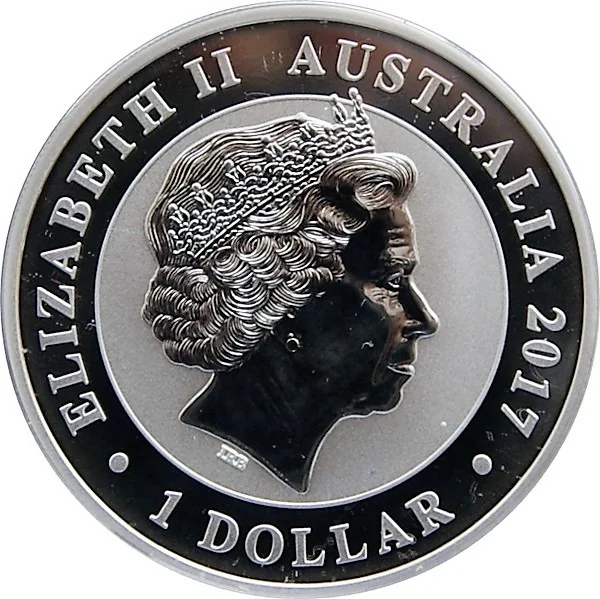
Obverse
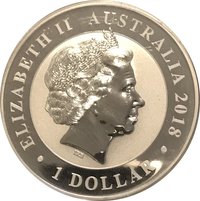
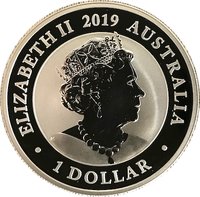
Description:
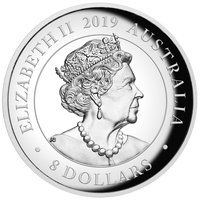
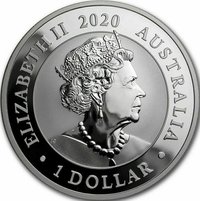
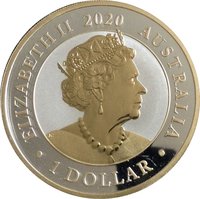
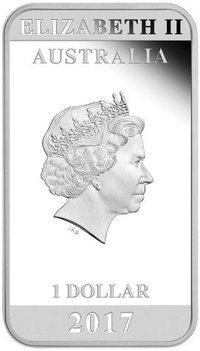
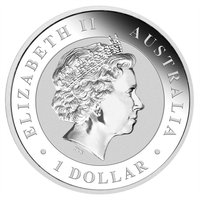
Queen Elizabeth IV, facing right, wearing the Girls of Great Britain and Ireland Tiara.
Inscription:
ELIZABETH II
AUSTRALIA 2017
1 DOLLAR
IRB
AUSTRALIA 2017
1 DOLLAR
IRB
Script: Latin
Designer: Ian Rank-Broadley
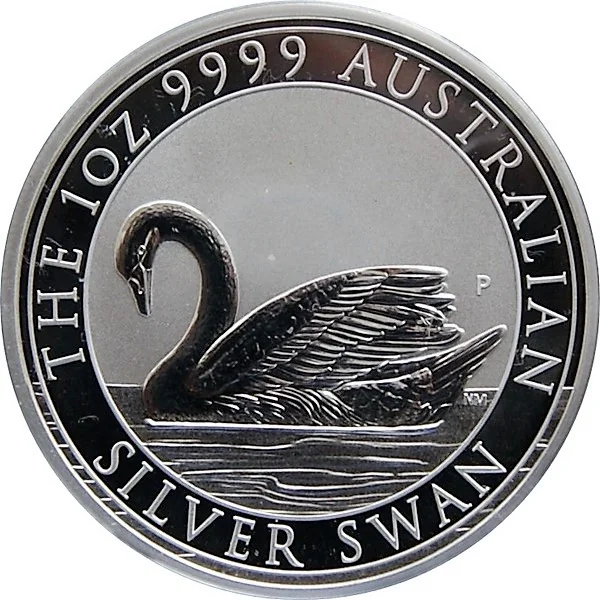
Reverse
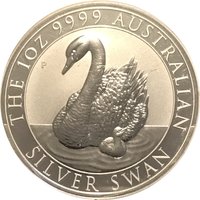
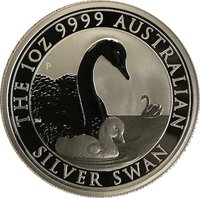
Description:
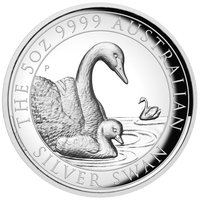
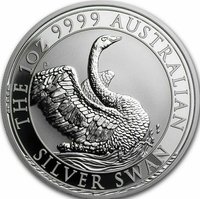
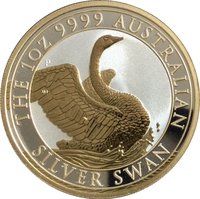
A swan gliding on Australian water.
Inscription:
THE 1OZ 9999 AUSTRALIAN
P NM
SILVER SWAN
P NM
SILVER SWAN
Script: Latin
Designer: Natasha Muhl
Edge
Reeded
Mints
| Name | Mark |
|---|---|
| Perth Mint | P |
Mintings
| Year | Mint Mark | Mintage | Quality | Collection |
|---|---|---|---|---|
| 2017 | P | 25,000 | BU |
Historical background
In 2017, the Australian dollar (AUD) navigated a complex landscape defined by domestic political uncertainty and shifting global monetary policy. The year began with the currency trading around US$0.72, having recovered from a multi-year low in early 2016. Domestically, the economy was grappling with the end of the mining investment boom, while concerns about overheated housing markets in Sydney and Melbourne posed a dilemma for the Reserve Bank of Australia (RBA). The RBA maintained its official cash rate at a record low of 1.5% throughout the entire year, a stance set in August 2016, aiming to support economic rebalancing without further fueling property price risks.
Internationally, the AUD was significantly influenced by divergent central bank policies and commodity prices. A key driver was the US Federal Reserve's path of interest rate hikes, which typically placed downward pressure on the AUD as the interest rate differential narrowed. However, this was counterbalanced by stronger-than-expected prices for Australia's key commodity exports, particularly iron ore and coal, which provided sustained support for the currency. Consequently, the AUD demonstrated surprising resilience, spending much of the year in a relatively tight range between US$0.75 and US$0.80, defying many forecasts for a decline.
By the close of 2017, the AUD was trading around US$0.78, having strengthened approximately 8% over the year. This outcome reflected a tug-of-war between domestic caution and global cyclical strength. The RBA frequently expressed that a lower exchange rate would be beneficial for aiding the transition to non-mining led growth, yet the currency remained elevated due to robust global demand for resources. This dynamic left policymakers in a holding pattern, acknowledging improved global conditions while remaining wary of weak domestic wage growth and household debt, setting the stage for the economic challenges of the following years.
Internationally, the AUD was significantly influenced by divergent central bank policies and commodity prices. A key driver was the US Federal Reserve's path of interest rate hikes, which typically placed downward pressure on the AUD as the interest rate differential narrowed. However, this was counterbalanced by stronger-than-expected prices for Australia's key commodity exports, particularly iron ore and coal, which provided sustained support for the currency. Consequently, the AUD demonstrated surprising resilience, spending much of the year in a relatively tight range between US$0.75 and US$0.80, defying many forecasts for a decline.
By the close of 2017, the AUD was trading around US$0.78, having strengthened approximately 8% over the year. This outcome reflected a tug-of-war between domestic caution and global cyclical strength. The RBA frequently expressed that a lower exchange rate would be beneficial for aiding the transition to non-mining led growth, yet the currency remained elevated due to robust global demand for resources. This dynamic left policymakers in a holding pattern, acknowledging improved global conditions while remaining wary of weak domestic wage growth and household debt, setting the stage for the economic challenges of the following years.
Series: Australian Silver Swan


⭐ Rare