

1 birr / thaler – Ethiopian Empire
Add to wishlist
Ethiopia
Context
Years: 1895–1897
Country: Ethiopia
Issuer: Ethiopian Empire
Ruler: Menelik II
Currency:
(1893—1931)
Demonetized: Yes
Total mintage: 438,200
Material
References
KM: #
Numista: #22984
Value
Bullion value: $58.86
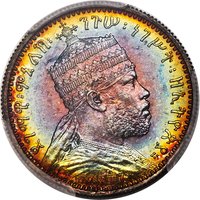
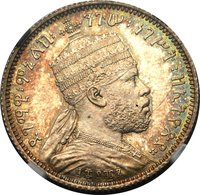
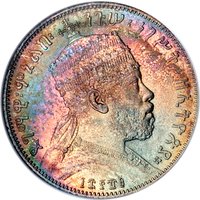
Obverse
Description:
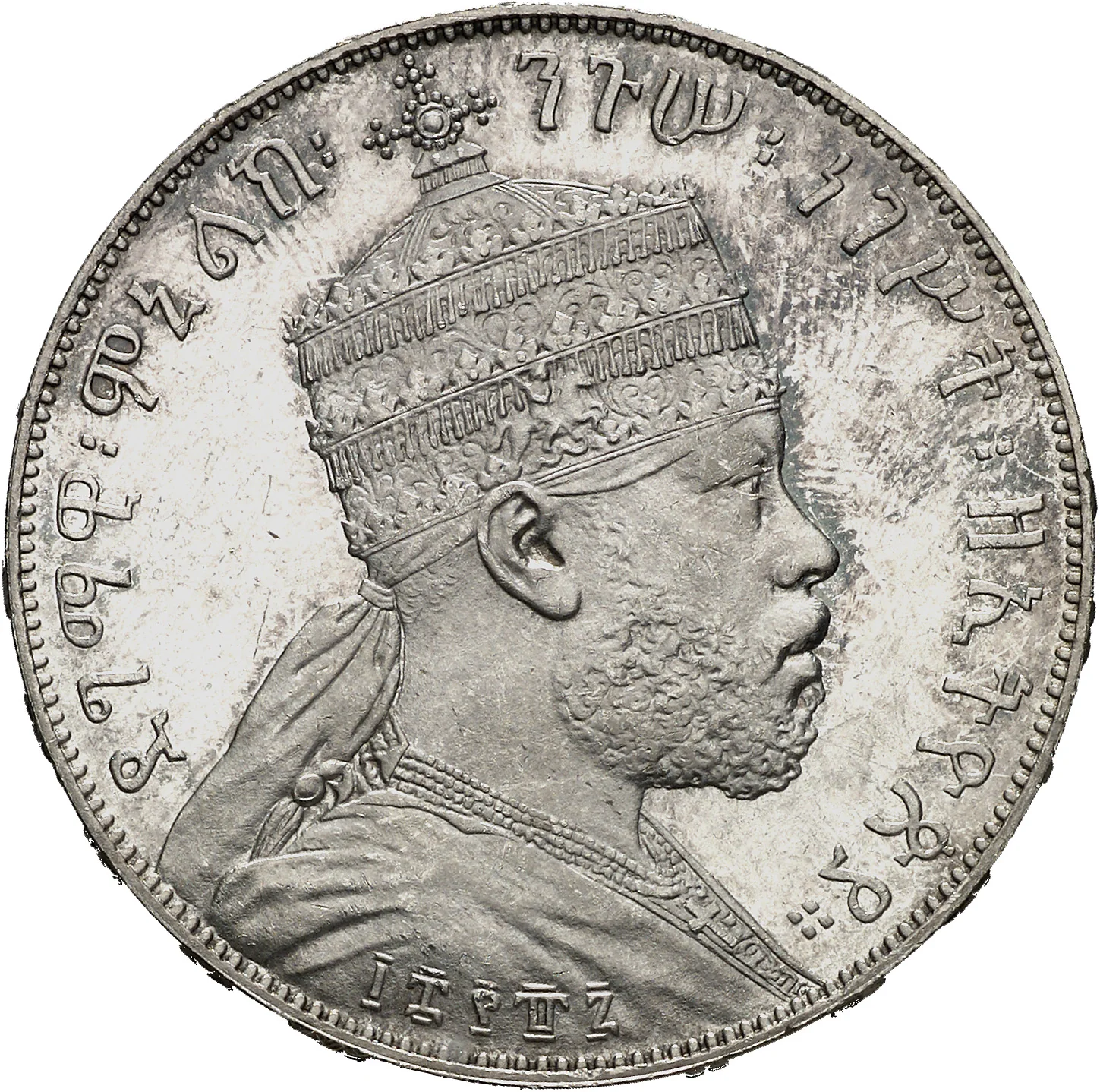
Menelik II right-profile bust.
Inscription:
ደግማዊ ፡ ምኒልክ ፡ ንጉሠ ፡ ነገሥት ፡ ዘኢትዮጵያ።
፲፰፻፹፱
፲፰፻፹፱
Translation:
Mighty Menelik, King of Kings of Ethiopia.
1889
1889
Script: Ge'ez
Language: Amharic
Engraver: Jean Lagrange
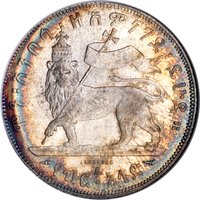
Reverse
Edge
Plain with letters
Mints
| Name | Mark |
|---|---|
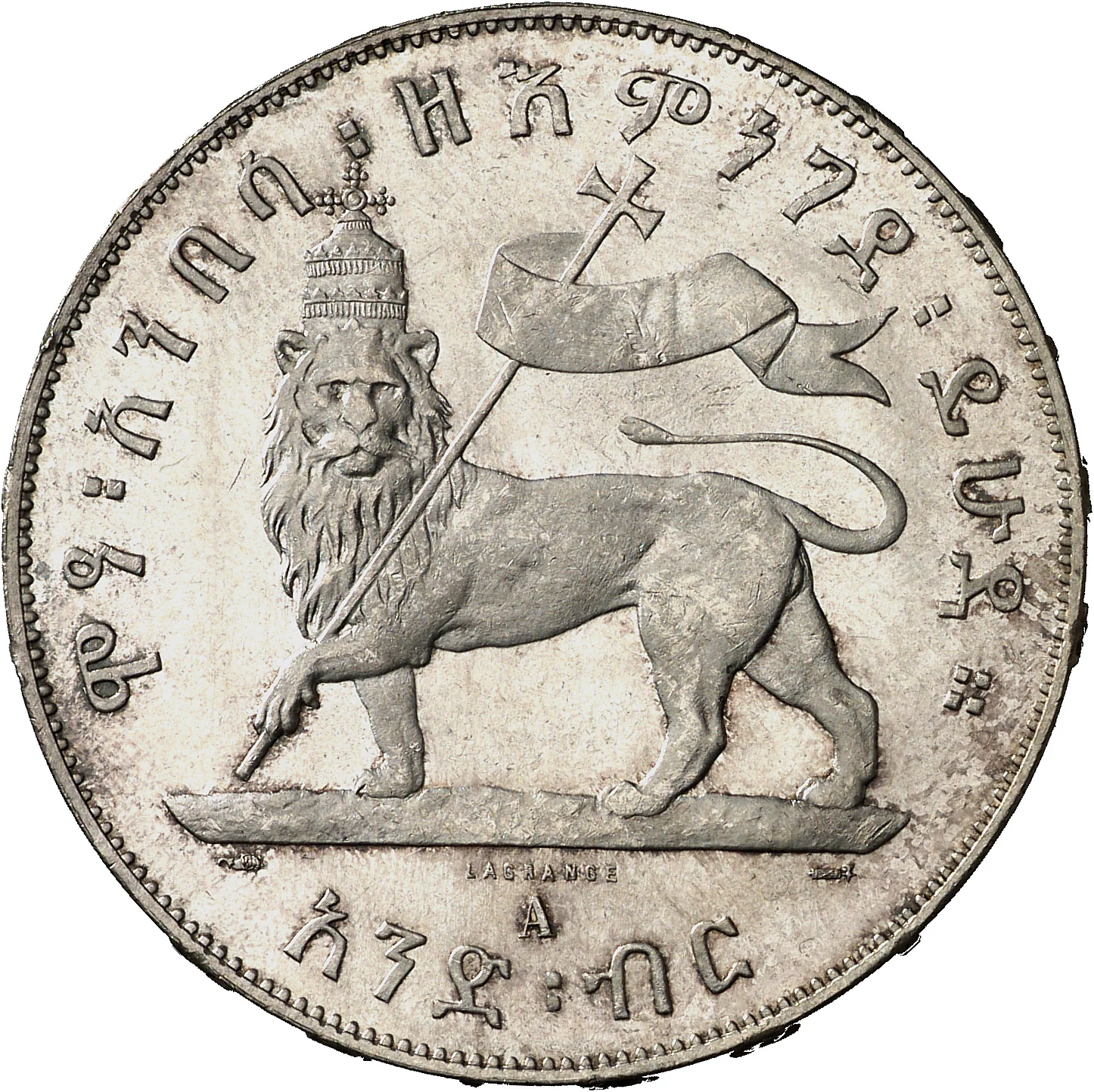
| Monnaie de Paris | (A) |
Mintings
| Year | Mint Mark | Mintage | Quality | Collection |
|---|---|---|---|---|
| 1895 | — | 20,000 | ||
| 1895 | — | — | Proof | |
| 1896 | — | 200 | ||
| 1897 | — | 418,000 |
Historical background
In 1895, the currency system of the Ethiopian Empire was a complex mosaic of traditional, imported, and newly minted forms of money, reflecting its position at the crossroads of indigenous African, Middle Eastern, and European economic spheres. The primary unit was the Maria Theresa thaler (MT$), a silver coin minted in Austria but ubiquitous in the Horn of Africa and the Red Sea trade. Its consistent silver content and recognizable image of the empress made it the de facto standard for large transactions, state finance, and international trade. Alongside the thaler, the Ottoman kurush (piastre) and various barter commodities, such as salt bars (amole), cloth, and bullets, circulated widely, especially in regional markets and for everyday local trade.
Emperor Menelik II, consolidating his modernizing empire on the eve of the historic Battle of Adwa, recognized the political and economic necessity of a national currency. In 1894, he had taken a decisive step by establishing the first modern mint in the palace at Harar, producing Ethiopia's own silver talari (modeled closely on the MT$ in weight and size) and smaller fractional copper coins. By 1895, these new coins were in active but limited circulation, symbolizing sovereign monetary authority. Their introduction was a strategic move to reduce dependence on foreign coinage, centralize economic power, and fund the massive logistical preparations for the impending war with Italy.
Thus, the currency situation on the eve of Adwa was one of transition and duality. The traditional, multi-faceted system of imported thalers, barter goods, and older Ottoman coins still underpinned much of the economy, especially in rural areas. Simultaneously, Menelik's new national coinage was being actively propagated, representing a forward-looking drive for modernization and financial independence. This hybrid system successfully financed the Ethiopian mobilization, demonstrating the empire's ability to harness both its deep-rooted economic traditions and its emerging state institutions to meet a defining national challenge.
Emperor Menelik II, consolidating his modernizing empire on the eve of the historic Battle of Adwa, recognized the political and economic necessity of a national currency. In 1894, he had taken a decisive step by establishing the first modern mint in the palace at Harar, producing Ethiopia's own silver talari (modeled closely on the MT$ in weight and size) and smaller fractional copper coins. By 1895, these new coins were in active but limited circulation, symbolizing sovereign monetary authority. Their introduction was a strategic move to reduce dependence on foreign coinage, centralize economic power, and fund the massive logistical preparations for the impending war with Italy.
Thus, the currency situation on the eve of Adwa was one of transition and duality. The traditional, multi-faceted system of imported thalers, barter goods, and older Ottoman coins still underpinned much of the economy, especially in rural areas. Simultaneously, Menelik's new national coinage was being actively propagated, representing a forward-looking drive for modernization and financial independence. This hybrid system successfully financed the Ethiopian mobilization, demonstrating the empire's ability to harness both its deep-rooted economic traditions and its emerging state institutions to meet a defining national challenge.
🌱 Fairly Common